

Gemini 4 Argon: our next era of frontier intelligence
Announcing Gemini 4 Argon, our frontier model for real-world coding, enterprise knowledge work and cyber defense, rolling out soon.
More from the blog
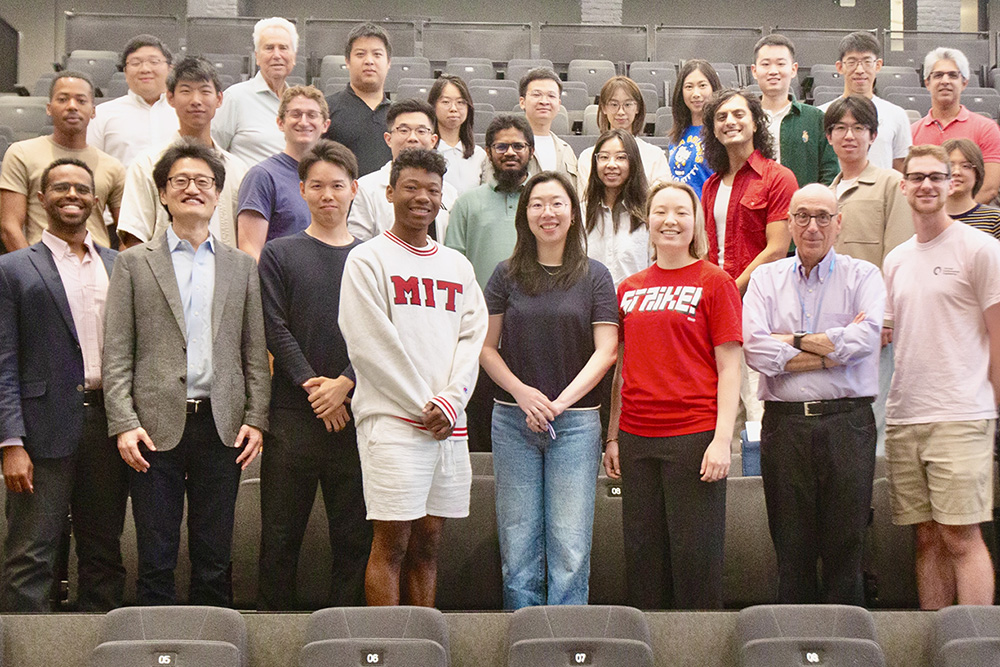
MIT Transit Lab to develop an AI platform for public transit agencies
With $2.1 million funding from Google.org, the open-source Public Transit Intelligence Hub will unify public transit monitoring, operations, and passenger communication.
Open TTS Leaderboard: Scalable Evaluation for Multilingual Text-to-Speech and Voice Cloning
We’re on a journey to advance and democratize artificial intelligence through open source and open science.
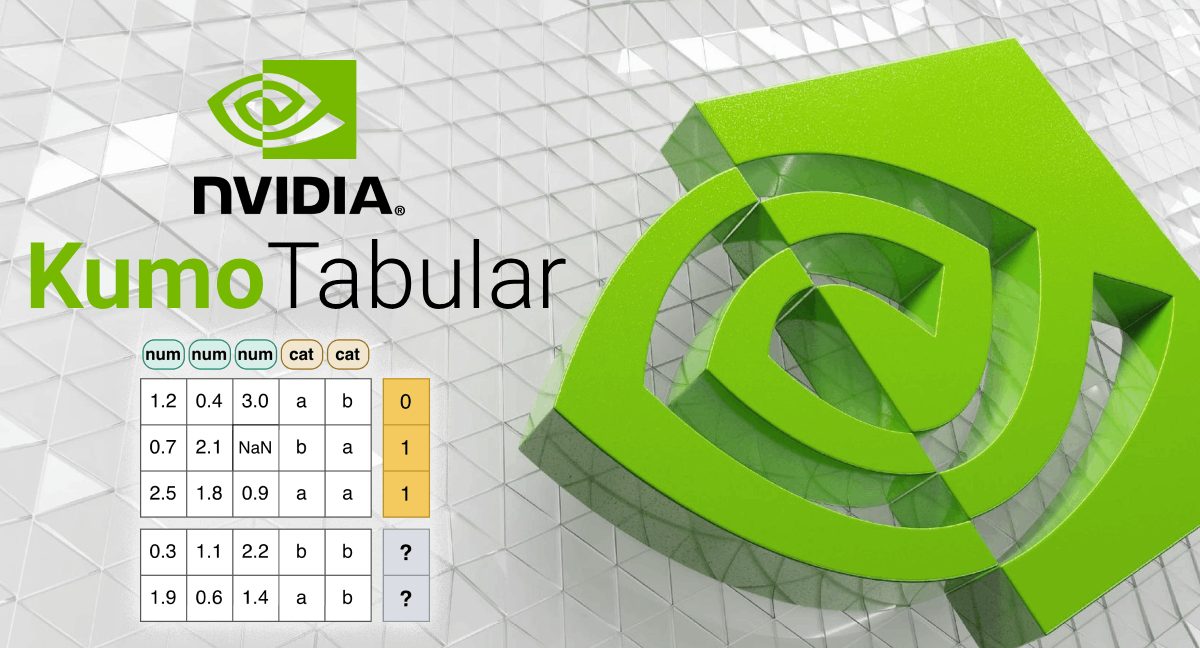
NVIDIA Kumo Tabular Sets a New Accuracy-Efficiency Frontier for Tabular Prediction
A Blog post by NVIDIA on Hugging Face

One year in: How Microsoft Research Asia – Singapore is advancing research, partnership and talent for real-world impact
Since launching a year ago, the Microsoft Research Asia — Singapore lab has established a strong foundation, deepened collaboration across government, academia, and industry, and explored how frontier AI research can create real-world value. The post One year in: How Microsoft Research Asia – Singapore is advancing research, partnership and talent for real-world impact appeared first on Microsoft Research.
Related papers
Evaluating the Performance of Large Language Models on GAOKAO Benchmark
GAOKAO-Bench is introduced, an intuitive benchmark that employs questions from the Chinese GAOKAO examination as test samples, including both subjective and objective questions that contribute a robust evaluation benchmark for future large language models and offers valuable insights into the advantages and limitations...
Gender, Race, and Intersectional Bias in Resume Screening via Language Model Retrieval
This work investigates the possibilities of using LLMs in a resume screening setting via a document retrieval framework that simulates job candidate selection and finds that the MTEs are biased, significantly favoring White-associated names in 85% of cases and female-associated names in only 11.1% of cases.
PRISM: Self-Pruning Intrinsic Selection Method for Training-Free Multimodal Data Selection
Empirically, PRISM reduces the end-to-end time for data selection and model tuning to just 30% of conventional pipelines, and achieves this efficiency while simultaneously enhancing performance, surpassing models fine-tuned on the full dataset across eight multimodal and three language understanding benchmarks.
Grammar-Aligned Decoding
This paper proposes adaptive sampling with approximate expected futures (ASAp), a decoding algorithm that guarantees the output to be grammatical while provably producing outputs that match the conditional probability of the LLM's distribution conditioned on the given grammar constraint.