Using robots to estimate the location of the radiation source is an effective way to improve efficiency and safety. Existing methods focus on planning the robot's path to achieve precise estimation, typically approaching the source. However, approaching the source increases the risk of radiation damage to a robot. In addition, a path-planning algorithm designed solely for radiation source localization (RSL) limits the flexibility of missions that deploy robots into radioactive environments. This study presents an automation framework for robotic RSL that leverages a physics-informed machine learning (PIML) model to precisely estimate the source location, regardless of measurement paths, in unknown environments. Physics-inspired model tensors have been designed for PIML to handle attenuated gamma-ray flux signals from unknown obstacles, and multiple models are computed in parallel to improve the robustness and precision of the RSL. The proposed method is evaluated in high-fidelity simulation environments using Monte Carlo particle transport across diverse randomized domains, including spatial scales, radiation source types, obstacle materials and geometries, and robot trajectories. The method is also validated through physical experiments on configurations that are not included in the simulation-based evaluation. The continuous learning technique is applied in real-robot deployment to enhance the practical applicability of the online robotic RSL system. The proposed method advances robot radiation perception from pointwise flux detection to spatial intelligence.
Robust geo-localization under changing environmental and operational conditions is critical for long-term aerial autonomy. Aerial visual place recognition (VPR) commonly uses pre-acquired remote-sensing imagery of the intended operating area, so the geographic label space can remain fixed while successive airborne missions introduce substantial visual distribution shifts. Continual adaptation to these shifts can cause catastrophic forgetting. We therefore formulate aerial VPR as a mission-based domain-incremental learning (DIL) problem and develop a heterogeneous memory framework. Before sequential adaptation, the satellite reference dataset is used once to train the initial model and construct a static satellite exemplar memory; a bounded replay buffer then retains selected airborne observations across missions. For replay management, we compare loss- and diversity-based selection criteria and introduce DBS-Hybrid, which combines prototype-based diversity trimming with representative-first feature-space coverage. Experiments on 21 visible and infrared UAV missions evaluate generalization to held-out missions, immediate adaptation, and knowledge retention. Under the primary Forward mission order, DBS-Hybrid achieves the highest mean final average accuracy, generalization, and knowledge retention among the evaluated methods, improving over the Random baseline by $5.06$, $5.32$, and $6.33$ percentage points, respectively, and improving backward transfer from -6.41% to 1.07%. Across five additional random mission orders, DBS-Hybrid ranks second in mean final average accuracy, backward transfer, generalization, and knowledge retention. Overall, heterogeneous memory and diversity-aware replay provide an effective basis for continual aerial VPR in mapped operating areas.
Xingyu Shao, Zhiqiang Yan, Liangzheng Sun et al.· 0 citations
Understanding the composition of large-scale autonomous driving datasets is essential for safety, robustness, and reliable operation across domains. For example, domain shift between locations could lead to the operating environment being misaligned with the training data, resulting in potentially dangerous performance degradation. Yet, existing data analysis pipelines largely rely on metadata, predefined labels, or manual inspection, which provide limited semantic insight or do not scale. This paper studies set difference captioning: given two subsets of images, the goal is to produce a natural-language hypothesis describing differences between the target and reference set. Building on a two-stage formulation, we adapt the method to autonomous driving by focusing on object-centric patches derived from object detection, which simplifies aggregation and enables attribution of differences to specific object instances or categories. To evaluate this setting in-domain, we introduce a new benchmark, AD-Diff Bench. Low-concentration experiments assess the suitability of set-difference-captioning approaches to sparse, real-world differences. We restrict our experiments to open-weight models to support reproducibility and ease of deployment. The proposed benchmark and analysis provide a step towards practical, human-interpretable dataset introspection for autonomous driving datasets. Our implementation and benchmark dataset are available at https://github.com/KIT-MRT/AD-Diff
Julian Truetsch, Felix Hauser, Christoph Stiller et al.· 0 citations
Vision-Language-Action (VLA) policies fuse multimodal sensory inputs, but training on limited and homogeneous robot demonstrations encourages spurious inter-sensor correlations rather than task-relevant signal, a failure we term modality entanglement. Under real-world occlusions and distractors, this manifests as nuisance sensitivity to corruption of uninformative sensors and single-modality insufficiency when only one informative sensor remains intact. We propose Evidence-Gated Regularization (EGR), a modality-agnostic training objective that introduces zero inference-time overhead. EGR derives a per-frame and per-sensor task-relevance signal to gate two state-conditional consistency objectives: invariance on low-evidence sensors, and single-sensor sufficiency on high-evidence ones. We introduce a benchmark based on BEHAVIOR-1K, comprising a fast inference-only diagnostic suite and 47 rollout-based skills targeting modality entanglement. We validate EGR on this benchmark and on two real-robot setups with fundamentally different embodiments: a bi-manual setup with two Kinova arms and three RGB cameras, and a single-arm MELFA ASSISTA setup combining vision and GelSight tactile sensors. EGR improves simulation success rates (SR) from 12.5% to 16.4% under full modalities (+31%), from 9.4% to 16.5% under uninformative-sensor corruption (+75%), and from 2.8% to 6.1% under single-sensor fallback (+120%). Under physical-object distractors, EGR boosts SR from 30% to 85% on the bi-manual setup (+183%) and from 55% to 70% on the tactile setup (+27%).
Yue Yang, Diego Romeres, Chiori Hori et al.· 0 citations
Reach audiences
Advertise in front of researchers, engineers, and readers.
Wildlife field operations demand efficient parallel deployment methods to identify and interact with specific individuals, enabling simultaneous collective behavioral analysis, and health and safety interventions. Previous robotics solutions approach the problem from the herd perspective, or are manually operated and limited in scale. We propose a decentralized vision-based multi-quadrotor system for wildlife monitoring that is scalable, low-bandwidth, and sensor-minimal (single onboard RGB camera). Our approach enables robust identification and tracking of large species in their natural habitat. We develop novel vision-based coordination and tracking algorithms designed for dynamic, unstructured environments without reliance on centralized communication or control. We validate our system through real-world experiments, demonstrating reliable deployment in diverse field conditions.
Makram Chahine, William Yang, Alaa Maalouf et al.· 0 citations
Rapid advances in vision-language models (VLMs) have generated growing interest in their application to autonomous driving. A prevailing assumption is that successive VLM generations will continually improve driving performance and eventually outperform state-of-the-art methods. To systematically examine this assumption, we introduce LightEMMA, a longitudinal framework for evaluating the autonomous driving performance of VLMs. LightEMMA uses a lightweight, unified evaluation protocol that assesses each model's intrinsic driving capability without model-specific fine-tuning, architectural changes, or prompt engineering. Using this protocol, we evaluate 15 models from five major families on the challenging nuScenes prediction benchmark. Empirical findings show that, despite increased model scale and enhanced general reasoning capabilities, successive VLM generations do not consistently achieve better driving performance. Further analysis of driving scenarios reveals recurring failure modes, including overreliance on historical actions and difficulty reconciling conflicting visual cues. These findings highlight the need for domain-specific adaptation to improve the safety of VLM-based autonomous driving systems. The source code is available at https://github.com/michigan-traffic-lab/LightEMMA.
Zhijie Qiao, Haowei Li, Zhong Cao et al.· 0 citations
This paper presents a low-cost, open experimental platform for research in end-to-end autonomous driving with miniature Ackermann vehicles. The platform combines a physical vehicle, a printed urban track, data collection tools, trajectory registration, and a Webots digital twin, enabling controlled experiments that connect simulation-based autonomous-driving methods to real-world execution. As a first baseline, we implement command-conditioned behavior cloning, in which a neural policy receives an on-board camera image and a high-level navigation command and outputs steering and speed. The system is evaluated both on the physical vehicle and in simulation. In real closed-loop experiments, the learned policy follows lanes and executes commanded turns, reaching a mean cross-track error of 6.1 cm with respect to the reference route, close to the 4.7 cm observed in human demonstrations. In the digital twin, camera field of view has a strong effect on performance, reducing the mean cross-track error from 35.6 to 3.3 cm when widened from 58 to 120 degrees. Using the digital twin to generate synthetic driving data and a learned sim-to-real image translator to reduce the appearance gap, we further show that a higher-capacity policy trained on this synthetic data combined with real demonstrations is the only configuration that completes all four track routes in closed loop, whereas the compact baseline and the same network trained on real data alone complete fewer. These results establish the open platform as a practical testbed for sim-to-real studies and provide an initial command-conditioned imitation-learning baseline; we release it to support reproducible research.
Gustavo Claudio Karl Couto, Eric Aislan Antonelo, Gabriel George Zipperer· 0 citations
This paper proposes AdaRoboVLG, a task-adaptive Vision-Language-Grasp (VLG) framework that supports generalizable grasp synthesis across different robotic hands. Unlike existing VLG methods that tightly couple foundation models with end-to-end grasp policies, AdaRoboVLG learns an efficient generalizable base policy that generates and evaluates physically feasible grasp candidates through explicit kinematic mapping and force-closure-based stability estimation, while offloading task-dependent understanding to specialized foundation-model modules. These modules provide composable priors that are integrated into the grasp synthesis process, enabling contextually adaptive grasp synthesis without retraining the underlying grasp policy. Through extensive simulation and real-world experiments, we demonstrate that (i) the base policy exhibits efficient learning and strong cross-hand generalization, (ii) the framework effectively incorporates spatial, cognitive, and temporal priors to address three representative grasping challenges without compromising grasp synthesis performance compared to state-of-the-art methods, and (iii) these priors can operate jointly to enable functional grasping in cluttered and dynamic environments. These results indicate that decoupling physical grasp synthesis from task-dependent understanding provides a scalable paradigm for robotic grasping, allowing future advances in foundation models to be directly translated into improved grasp capabilities without redesigning or retraining the underlying grasp policy. Supplementary videos are available at https://adarobovlg.github.io/
Sixu Yan, Shikang Wang, Binhua Huang et al.· 0 citations
Reinforcement learning from human feedback (RLHF) has emerged as a powerful yet sample-inefficient approach for learning reward models from human preferences, making active learning a critical component in synthesizing informative preference queries. However, effective uncertainty quantification required for active learning remains a key challenge for large neural network reward models. In this paper, we introduce PreferenceEKF, a sample-efficient approach that tracks reward model uncertainty by framing active preference learning as a sequential Bayesian filtering problem. Instead of relying on computationally prohibitive posterior inference over the full neural network parameter space, our method performs sequential inference via an extended Kalman filter within a low-dimensional parameter subspace, continuously updating the reward model posterior as new preference queries arrive. Our approach enables scalable sampling of neural network parameters to efficiently compute acquisition functions for active reward learning. Experiments on the D4RL and V-D4RL benchmarks demonstrate that our approach achieves better sample efficiency, runtime, scalability, and calibration compared to other Bayesian deep learning approaches, and the learned reward models lead to competitive offline reinforcement learning policy performance. This highlights the potential of scalable Bayesian methods for preference-based reward modeling in RLHF. Our code is available at https://github.com/yutaizhou/bnn_pref.
Verifying that manufactured batches of milling tools or carbide rotary burrs conform to production order sheets remains a largely manual and error-prone quality assurance task. Automating this process with computer vision faces a critical cold-start constraint since no labelled imagery is available, leaving manufacturer catalogue photography as the sole source of supervision. We investigate how far catalogue supervision can support an industrial recognition pipeline under domain shift, explicitly measuring the gap between catalogue separability and performance on held-out field photographs. Our findings reveal three key insights. First, off-the-shelf frozen feature extractors do not reliably separate the two task attributes, head shape and tooth profile, motivating targeted representation learning. Second, metric learning produces near-perfect unsupervised cluster discovery on catalogue images (adjusted Rand index 0.94--0.97), but less than half of this gain transfers to field photographs. Third, the largest transfer gains do not come from model scale or representation complexity, but from simple changes that reduce domain sensitivity: converting images to grayscale (+0.22) and constraining retrieval using the known order sheet via Hungarian assignment (+0.11). We therefore treat catalogue photography as a useful cold start rather than a deployment-ready training domain, and provide empirical baselines and an evaluation protocol for catalogue-to-field transfer in precision tool manufacturing.
Abilash Philip Madavath, Chandra Yuvesh Aubeeluck, Augustin Raju et al.· 0 citations
3D spatial reasoning underpins understanding and acting in the physical world, yet it remains unreliable in current multimodal large language models (MLLMs). These models falter at precise geometric measurement, at transforming between egocentric and allocentric viewpoints, and at grounding fine-grained appearance. The most common remedies fine-tune the model on large-scale curated spatial-reasoning datasets or attach dedicated encoders for 3D geometry, which typically couples the solution to costly supervision and a specific backbone. We instead introduce GraFT, a training-free framework that supplies the missing 3D structure through a compact, easily maintained 3D scene graph (3DSG). From this 3DSG, GraFT provides three spatial reasoning capabilities: (1) deterministic geometry through symbolic tools, (2) allocentric layout through a bird's-eye-view (BEV) rendering, and (3) visual-attribute grounding through task-relevant egocentric frames. On ScanQA, GraFT improves every metric over the same-backbone baseline, raising CIDEr by 27%. On VSI-Bench, GraFT improves frozen MLLMs by up to 65%, surpassing every proprietary and general-purpose open-source baseline, and several prominent fine-tuned spatial models.
Junqing Du, Fernando Ropero, Erkin Turkoz et al.· 0 citations
Contact-rich loco-manipulation requires a bridge between semantic action generation and physical interaction control. Existing Vision-language-action (VLA) models generate task-level actions from visual and linguistic observations, but cannot interpret the physical interactions induced by those actions. While the whole-body control (WBC) policy can stabilize the robot, it cannot distinguish task-relevant interaction forces from forces induced by external disturbances during manipulation. Although force/torque sensors provide direct measurements of physical interactions, retrofitting them entails additional hardware costs and substantial integration effort, particularly for platforms not designed with sensor integration in mind. To address this problem, we propose FWBC-VLA, a force-aware framework that bridges task-level VLA action generation and low-level whole-body compensation control for wheeled-legged robots. First, we introduce HSR-Force, a sensorless residual-torque estimator for inferring contact strength and its temporal variation. These contact estimates are then encoded as tokens and injected into the VLA action expert during action decoding, enabling the policy to perceive contact onset, sustained loading, and release. For loco-manipulation tasks, all parameters of the pretrained VLA backbone are fine-tuned on our WL\&Arm Dataset, which comprises more than 5,000 episodes. Moreover, the robot's proprioceptive state, the Jacobian-derived body-frame force estimate, and the estimated contact state are jointly fed into a compensation generator to produce corrective actions. The manipulation-centric actions are subsequently combined with the corrective actions and passed to the WBC policy for execution. Real-world experiments on whiteboard wiping and door opening with a door closer demonstrate the effectiveness of our FWBC-VLA in contact-rich loco-manipulation.
Yutian Zhang, Siyuan Ma, Liwen Yang et al.· 0 citations
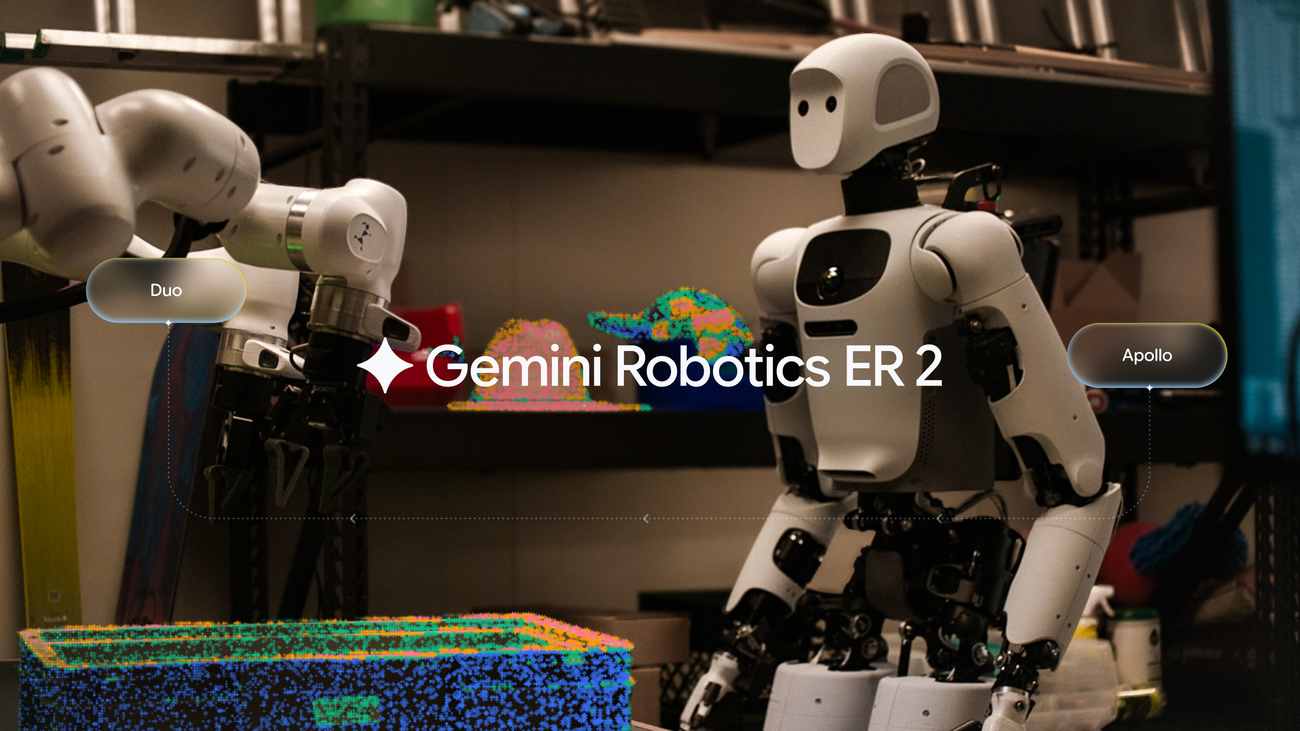
Gemini Robotics ER 2 helps robots reason, collaborate, and solve real-world tasks. It represents a step change in video understanding, tool orchestration, and multi-robot collaboration for robotic applications.
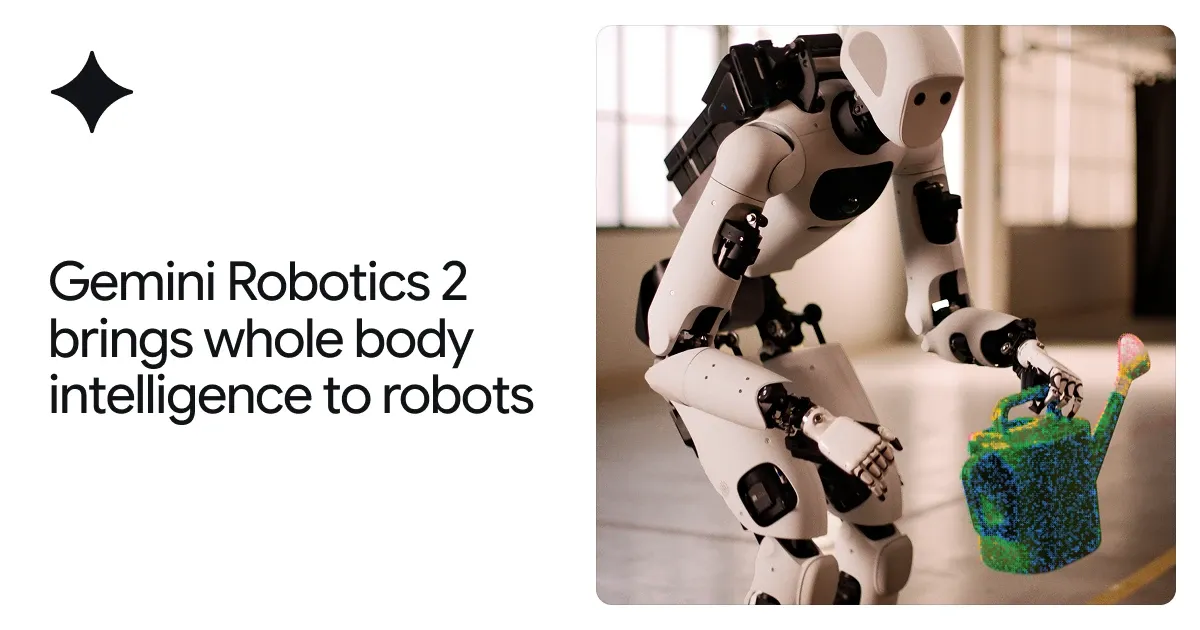
From feet to fingertips — we are teaching robots intelligent whole-body control, fine dexterity, and teamwork to complete a broad range of complex tasks.