Vision-Language Models (VLMs) are increasingly used to evaluate robot manipulation outcomes, but existing benchmarks offer limited evidence of cross-domain generalization. We introduce FailBench, a benchmark for robot failure detection comprising 2,197 manipulation attempts across 14 public sources (12 real-world, 2 simulated). In FailBench, 75% of failures occur naturally, and six real-world sources come from non-failure-detection datasets. Evaluating 13 VLM-based detectors, we find the best model achieves only 0.77 mean balanced accuracy. Notably, models fine-tuned for failure detection consistently underperform general-purpose VLMs and their own pretrained baselines. Performance depends heavily on required visual evidence: models approach saturation when outcomes depend on observable object motion, but degrade to near-chance (<0.60 balanced accuracy) on contact-intensive assembly tasks. Error analysis reveals a systematic bias toward predicting success under ambiguous evidence, which persists even with increased reasoning effort. Finally, we show that input-level intervention--spatially localizing and cropping outcome-relevant regions--improves the top detector by 2.4 percentage points without extra training.
Action-conditioned JEPA world models enable planning toward visually specified goals without reconstructing future pixels, yet latent prediction alone does not explicitly encourage the learned representations to retain information relevant to robotic control. We introduce an end-to-end JEPA world model that augments latent prediction with inverse dynamics (IDM) and state alignment (SA). While inverse dynamics discourages latent collapse and makes latent transitions informative of the actions that produced them, state alignment grounds consecutive representations in their associated physical configuration and motion. Across four benchmark tasks, our model attains the highest success rates on TwoRoom (100%), PushT (98%), and OGBench-Cube (87%), while performing comparably to LeWorldModel on Reacher. Our ablation further shows that adding state alignment consistently improves planning success over IDM alone across all four tasks. Although LeWorldModel, our primary baseline, attains higher average straightening on OGBench-Cube, transition-subspace analysis shows that its transition energy is concentrated in a substantially lower-dimensional subspace. Our state-aligned model exhibits a higher effective transition dimension than LeWorldModel and improves planning over IDM alone, supporting state alignment as an effective complement to inverse dynamics for robotic planning.
Muyuan Liu (GENISOM AI, Beijing, China) et al.· 0 citations
Developing humanoid robots capable of leveraging human behavioral data is essential for general-purpose embodiment, yet conventional development remains bottlenecked by a decoupled paradigm that isolates hardware design from whole-body control. This approach leads to suboptimal systems that compromise human-like fluidity and agility. To bridge this gap, we introduce a data-driven morphology-control co-design framework that optimizes humanoid morphology for human-like movement. To quantify morphological fidelity, we also introduce a novel metric that jointly considers kinematic retargeting fidelity to human motion and dynamic tracking performance. Our framework achieves state-of-the-art (SOTA) performance across all metrics compared to baseline humanoids (Bumi, K1, and Toddlerbot). Finally, we realize this design in Bridge, an open-source, 88cm-tall humanoid platform released alongside its control policy. We demonstrate that Bridge captures human motion data with superior fidelity, exhibiting exceptional performance across foundational locomotion, robust balance, and highly dynamic maneuvers. Videos and open-source materials: https://sites.google.com/view/bridgerobot.
Jianren Wang, Letian Qian, Zikai Wang et al.· 0 citations
Air-ground collaborative Vision-and-Language Navigation (VLN) pairs an unmanned aerial vehicle (UAV) with a global bird's-eye view and an unmanned ground vehicle (UGV) with a local first-person view, yet the setting remains largely unexplored: existing training-free methods solve single-agent tasks but offer no collaboration mechanism, and a recent CARLA-Air evaluation found no stable cooperative behavior across five state-of-the-art VLA models; naive semantic communication or bidirectional coupling even degrades performance. We establish AGC-VLN (Air-Ground Collaborative VLN), the first training-free baseline for air-ground collaborative VLN. The key insight is that training-free methods decompose navigation into VLM-based semantic reasoning and deterministic geometric execution, exposing a collaboration interface: the UAV's global view, over which it renders the UGV's reported pose and the VLM-anchored target as CAR/GOAL markers with distance labels, yielding a shared bird's-eye map. From this map, the UGV acquires global spatial context its first-person view cannot provide, plans a road-following path with a frozen VLM, and executes it under closed-loop control; in parallel, the UAV runs 3D-SPF, a spatial-search upgrade of SPF that localizes the target in the downward view and flies toward it. On 100 closed-loop episodes in CARLA-Air's Town10HD scene, AGC-VLN reaches a 77.0% joint success rate, a collaboration gain of +27.0% over the weaker individual agent (the UAV, 50.0%), and exceeds the strongest published single-agent baseline (Travel UAV, 53.0%) by 24.0 points, stemming from the complementarity of the UAV's global view and the UGV's road-following execution. Project page: https://github.com/ZSN2024/AGC-VLN.
Shuning Zhang, Liang Li, Yunheng Wang et al.· 0 citations
Reach audiences
Advertise in front of researchers, engineers, and readers.
World models have progressed from compact latent dynamics to generative, controllable, and interactive simulators of embodied environments. However, high predictive likelihood and visual fidelity do not necessarily ensure that a model preserves the evidence required for safe decision-making. This perspective identifies three structural mismatches in current world modeling: likelihood versus risk, prediction versus intervention, and finite-horizon prediction versus accumulated consequences. We propose the Risk-Informed World Model (RIWM) as a decision-centric research direction for safety-critical embodied systems. RIWM organizes world modeling around consequences, intervention, epistemic uncertainty, and recoverability, and integrates four interdependent capabilities: decision-relevant representation, counterfactual reasoning, safety-critical episodic memory, and runtime safety assurance. It distinguishes physical, social, and operational consequences while using epistemic uncertainty to qualify the evidence supporting action. We further discuss open challenges in identifying consequential futures, validating counterfactual reasoning, maintaining revisable safety memories, translating learned consequences into executable constraints, and determining when evidence is sufficient to act. This perspective argues that future world models should move beyond predicting likely futures toward identifying which futures matter, revising judgments through experience, and recognizing when to act, revise, sense, defer, or abstain.
Kailang Ma, Heye Huang, Inhi Kim et al.· 0 citations
Chain-of-thought (CoT) reasoning powers generative models by eliciting intermediate steps before producing an answer. In autonomous driving, the answer is a continuous action. Thus its reasoning must share the same spatiotemporal structure as the physical world. This survey studies the resulting shift from textual CoT to action-grounded reasoning. Surveying 171 papers, including 130 method papers and 41 benchmarks, datasets, surveys, and analysis papers, we propose a representation-centered taxonomy that treats the form of the intermediate state as the organizing axis. We systematize the 130 methods into four categories: language-based, visual-spatial, latent-dynamic, and externalized reasoning, further divided into 13 subtypes tied to distinct regions of interests. Our synthesis shows that the open frontier of reasoning in driving agents lies in intermediate representations that can be grounded in the real world, coupled to real-time action, and verified under safety-critical systems. Project page: https://github.com/tangzhengxu/awesome-av-cot.
Zhengxu Tang, Xiaozhou Zhang, Guofeng Cui et al.· 0 citations
Soft robotic substrates are promising for Physical Reservoir Computing (PRC) because their compliant nonlinear dynamics can provide temporal memory, high-dimensional state transformations, and efficient inference. However, physical reservoirs are often adopted as-is rather than pretrained or co-optimized, potentially limiting soft robotic PRC performance relative to digital reservoirs. We investigate whether a physical reservoir can instead be pretrained against high-performing digital reference dynamics. Our formulation jointly optimizes physical parameters, a diffeomorphic physical-reference state map, and feedforward-feedback control using a differentiable physical model and an acceleration-level equation-error objective that avoids temporal integration. As a proof of concept, we instantiate the formulation with simulated soft robots, a Random Oscillators Network (RON) reference, and parallel multi-start gradient descent. We evaluate the optimized reservoirs on classification (sMNIST and ADIAC) and forecasting (Mackey-Glass and Lorenz96) tasks across four reservoir dimensions. Compared with unoptimized soft robot reservoirs, the optimized reservoirs achieve a mean relative improvement of 33.7% across all tasks and datasets, while remaining close to the digital reference. These results demonstrate the feasibility of dynamics-level co-optimization for the simulated soft robotic reservoirs considered here.
Nicola Visentin, Maximilian St\"olzle, Mariano Ram\'irez Montero et al.· 0 citations
Reach-Avoid-Stay (RAS) tasks are essential in applications where systems must safely reach a target set and remain within it under all bounded disturbances. Existing approaches either struggle to compute the maximal robust RAS set, the set of all states from which the RAS task is achievable, or are limited in handling general dynamic systems. To address these challenges, this paper proposes a two-step deep reinforcement learning framework that jointly learns the maximal robust RAS set and the corresponding control policy. The first step identifies the maximal robust control-invariant set within the target set and derives a policy that ensures the system remains within it. The second step computes the maximal robust reach-avoid (RA) set using this invariant set as the target, and it is proven that this RA set is equivalent to the maximal robust RAS set. Leveraging this result, a switching policy is constructed from the two step-wise policies, which constitutes a valid policy guaranteeing completion of the RAS task. Simulation results demonstrate that the proposed framework (1) computes the exact maximal robust RAS set in the absence of training errors, yielding the least restrictive RAS policy, and (2) identifies the RAS set with high accuracy while outperforming baseline methods on RAS tasks.
Gabriel Chenevert, Jingqi Li, Achyuta kannan et al.· 0 citations
Humanoid robots responding to emergency stop commands typically execute a fixed maneuver, without reasoning about whether a safe stop is actually feasible from the current state. We cast emergency stopping as a reach-avoid problem and propose Safe-Stop, a task-agnostic framework that pairs a learned stop policy with learned stoppability estimators. The estimators are complementary: a stop-probability estimator supervised by the actual outcomes of the fixed stop policy, and a reach-avoidance estimator supervised by a Hamilton-Jacobi backup over physical state. The first captures emergent stopping behavior of the learned controller; the second provides a complementary recoverability signal. Because the stop policy and estimators do not depend on the behavior policy that preceded the stop command, they transfer across diverse upstream tasks without retraining. At deployment, the two estimates are combined: Safe-Stop commits to the stop only when both estimators indicate that stopping remains feasible, otherwise it hands off to a fall policy, instantiated as a damping fallback. This agreement check yields decisions that are robust without sacrificing reactivity.
Junfeng Long, Pieter Abbeel, Koushil Sreenath et al.· 0 citations
Autonomous lunar missions require real-time per- ception under three coupled constraints: extreme low-light conditions, limited onboard compute, and radiation-induced hardware faults that can silently corrupt inference. We present a deployment-oriented instance segmentation framework for resource-constrained lunar robotics that jointly addresses quan- tization calibration and system-level fault exposure under strict compute constraints. First, we introduce Activation Variance Informative Sampling (AVIS), a label-free calibration strategy that deterministically selects calibration samples based on activation variance statistics. Second, we deploy a YOLO-based segmentation model on a Deep Learning Processor Unit (DPU) with architectural modifications that reduce CPU fallback paths and enable statically compiled execution with bounded latency in low-lighting conditions. We further introduce a software-level criticality analysis to estimate fault exposure and guide mitigation under radiation-constrained operation. On a lunar micro-rover platform, AVIS with bias correction recovers 69.8% of quantization-induced accuracy loss while achieving 309 ms inference latency and 5.7 W power consumption. Targeted mitigation reduces global criticality by 31.7%. The results demonstrate an integrated approach and a blueprint for a reliable and safe AI perception framework under space deployment constraints.
Scaling offline goal-conditioned reinforcement learning (GCRL) to long-horizon tasks is difficult because (1) long-range value learning depends on shorter-range estimates that may still be inaccurate, and (2) max-based value backups can amplify overestimation through repeated propagation. We propose DCRL (Divide-and-Conquer RL), which recursively decomposes each trajectory segment into a balanced binary tree and trains the values from leaves to root. Each parent is therefore updated only after its children, using an exact factorization of the observed route rather than selecting among noisy alternatives. Since this objective learns values along demonstrated routes that are not necessarily optimal, DCRL jointly propagates values across trajectories to discover shorter routes. Thanks to the balanced binary tree, DCRL reduces worst-case bootstrap depth from linear to logarithmic, and this shorter dependency structure empirically corresponds to much slower error accumulation. Across diverse goal-reaching tasks, DCRL substantially outperforms prior flat offline GCRL methods, and on the five most challenging long-horizon OGBench tasks, it improves the best prior average score from 55 to 64, surpassing all flat and hierarchical baselines.
While diffusion models effectively capture multimodal behavioral priors for autonomous driving, offline reinforcement learning (RL) policies remain susceptible to distribution shift, heavy-tailed risk signals, out-of-distribution (OOD) action generation, and high-dimensional state redundancy. To address these challenges, we propose DiDrive, a distribution-guided offline diffusion framework featuring two synergistic components: the Risk-Aware Hierarchical Diffusion (RHDif) architecture and the 3DICE policy optimization paradigm. In the state space, RHDif utilizes a low-level risk-gated encoder and a high-level contextual modulator to filter environmental redundancy and focus on safety-critical threats. In the action space, 3DICE mitigates OOD overestimation and gradient oscillation through in-sample calibrated guidance, spatiotemporal optimization, and ensemble-based candidate ranking. Evaluations on the CARLA benchmark demonstrate DiDrive's superiority over baselines like IQL, CQL, and Diffusion-QL, particularly in complex, high-density traffic scenarios with 60 vehicles, where it achieves an 85% success rate and a 4295.68 average reward, providing a robust pathway for safe autonomous driving decision-making.
Qisong Guo, Jingtang Chen, Zhilin Chen et al.· 0 citations
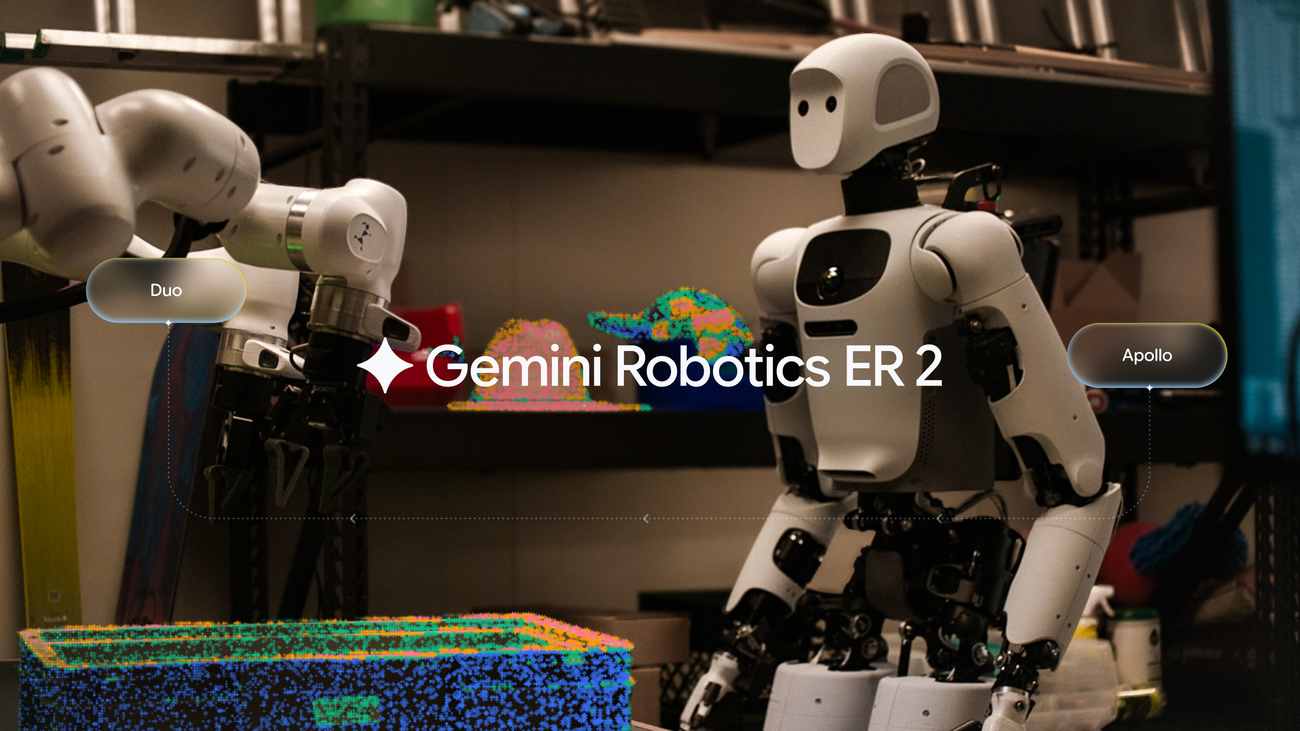
Gemini Robotics ER 2 helps robots reason, collaborate, and solve real-world tasks. It represents a step change in video understanding, tool orchestration, and multi-robot collaboration for robotic applications.
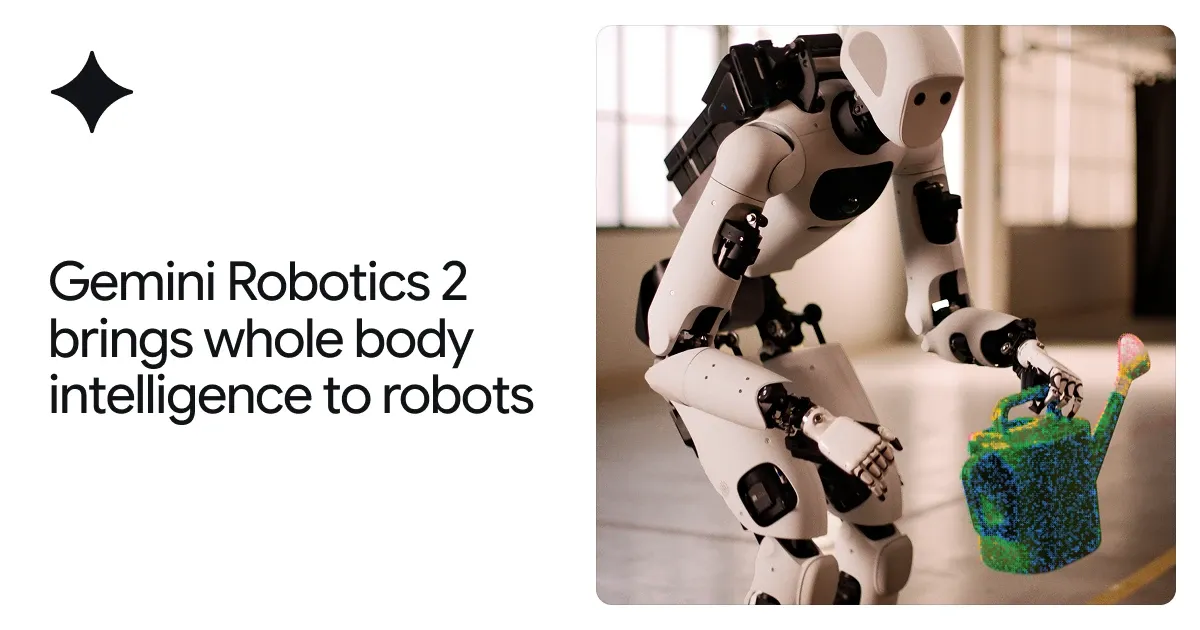
From feet to fingertips — we are teaching robots intelligent whole-body control, fine dexterity, and teamwork to complete a broad range of complex tasks.