
How MIT students are helping to prevent cyberattacks
Students from the MIT Cybersecurity Clinic help local governments and other vulnerable organizations defend against digital threats.
More from the blog
Giving AI a “crystal clear” view of the materials world
New research can help AI models understand crystalline materials in 3D and reason about their properties.

State of Supply Chain Sustainability Report finds corporate commitment at record high, but governance lags behind
MIT's Center for Transportation and Logistics finds sustainability commitments are strong, but governance gaps and external disruptions prevent execution.
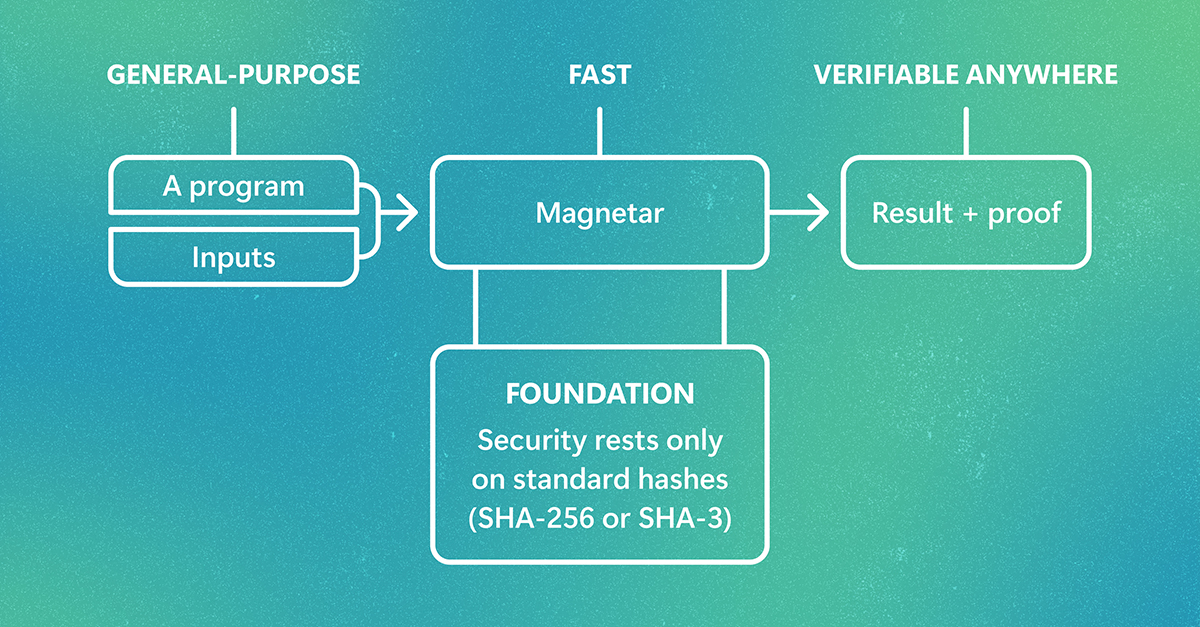
Proof-based general-purpose computing with Magnetar
Zero-knowledge proofs can verify computing results without rerunning workloads or exposing sensitive data. Magnetar helps bring them into the mainstream with support for standard programming languages, major speed gains, and quantum-resistant security. The post Proof-based general-purpose computing with Magnetar appeared first on Microsoft Research.
MIT Lincoln Laboratory hosts National Security Commission on Emerging Biotechnology
Roadshow event highlights Massachusetts' defense-biotechnology ecosystem.
Related papers
SemanticAdv: Generating Adversarial Examples via Attribute-conditional Image Editing
An algorithm is proposed which leverages disentangled semantic factors to generate adversarial perturbation by altering controlled semantic attributes to fool the learner towards various "adversarial" targets.
BadRAG: Identifying Vulnerabilities in Retrieval Augmented Generation of Large Language Models
A novel threat is unveiled in which attackers steer the RAG system's response by injecting malicious passages into its knowledge base, enabling the attacker to steer the response without altering the user input or modifying the RAG weights.
OverThink: Slowdown Attacks on Reasoning LLMs
This work evaluates Overthink on proprietary and open-source reasoning models across the FreshQA, SQuAD, and MuSR datasets, and shows that newer generations of RLMs, while showing a drastic increase in per-token cost, also exhibit up to a 2.3x increase in reasoning tokens, leaving them more vulnerable to Overthink atta...
Learning diverse attacks on large language models for robust red-teaming and safety tuning
This work proposes to use GFlowNet fine-tuning followed by a secondary smoothing phase, to train the attacker model to generate diverse and effective attack prompts, and finds that the attacks generated by the method are effective against a wide range of target LLMs, both with and without safety tuning, and transfer we...