
LeRobot v0.5.0: Scaling Every Dimension
More from the blog
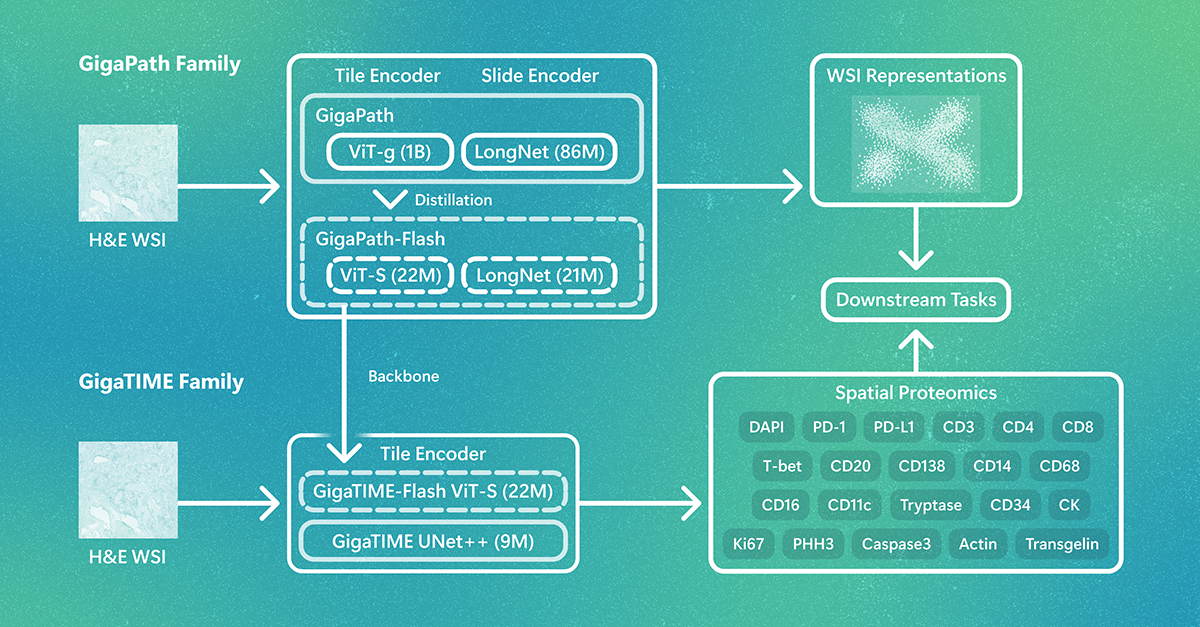
GigaPath-Flash and GigaTIME-Flash: Toward population-scale discovery with efficient pathology foundation models
What if pathology foundation models could do more with less? GigaPath-Flash and GigaTIME-Flash cut computational demands while maintaining strong performance, opening the door to larger studies and broader exploration. The post GigaPath-Flash and GigaTIME-Flash: Toward population-scale discovery with efficient pathology foundation models appeared first on Microsoft Research.
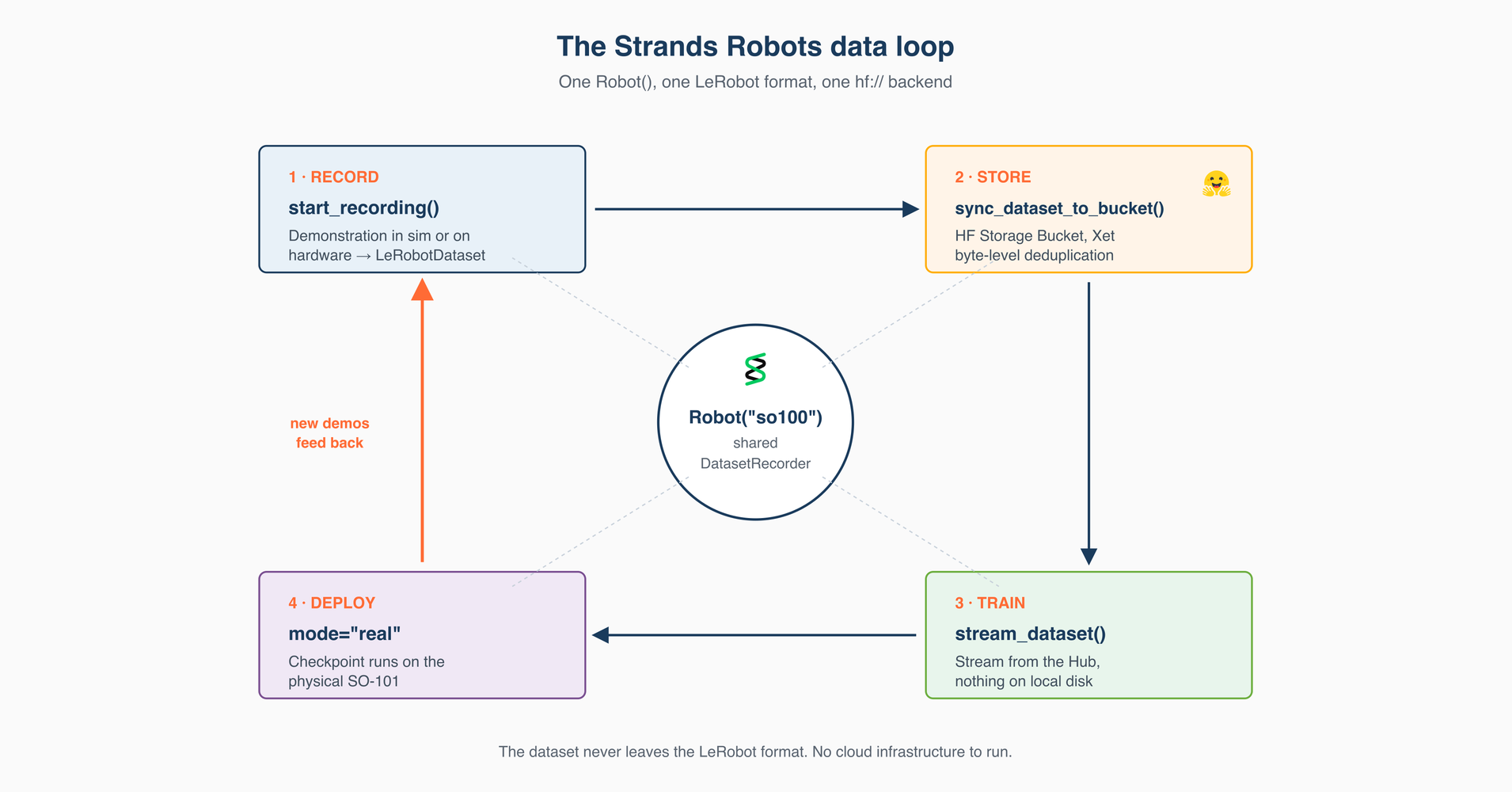
Record, train, and deploy from one place with Strands Agents, LeRobot, and Hugging Face Storage Buckets
A Blog post by Amazon on Hugging Face
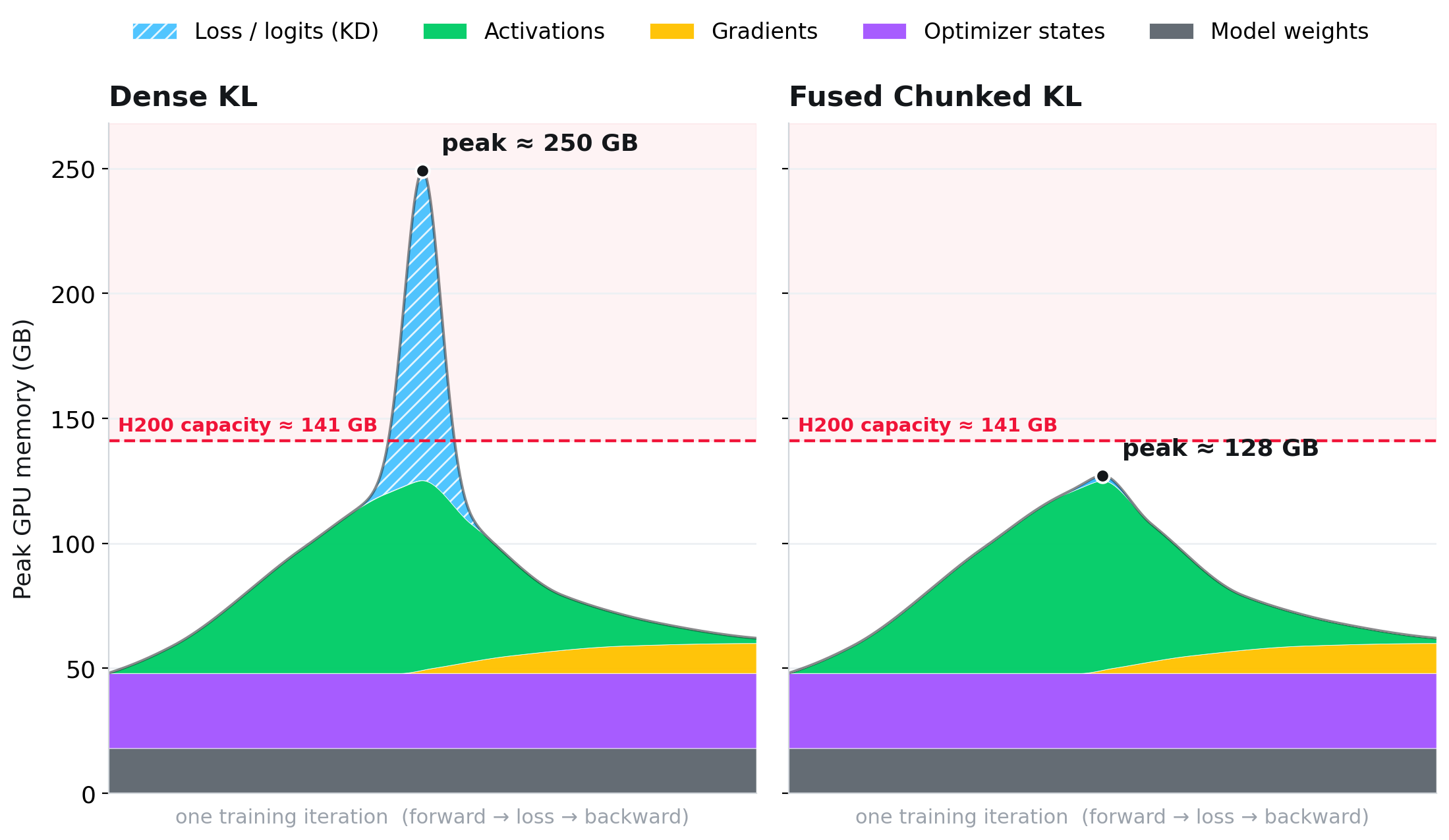
Making Knowledge Distillation Cheap Enough to Run at Scale
A Blog post by Multiverse Computing on Hugging Face

SymptomAI: Towards a conversational AI agent for everyday symptom assessment
General Science
Related papers
Transformer-Based Autonomous Driving Models and Deployment-Oriented Compression: A Survey
This survey reviews representative Transformer-based autonomous driving models and organizes them by task role, sensing configuration, and architectural design and analyzes how efficiency constraints reshaping model design choices in practice affects deployability, robustness, and safety.
FlowCorrect: Efficient Interactive Correction of Generative Flow Policies for Robotic Manipulation
The results clearly demonstrate that FlowCorrect learns from very few demonstrations and enables fast, sample-efficient, incremental, human-in-the-loop corrections of generative visuomotor policies at deployment time in real-world robotics.
Spatial-Semantic Reasoning using Large Language Models for Efficient UAV Search Operations
A real-time semantic navigation framework for Unmanned Aerial Vehicles (UAVs) focused on improving time efficiency in the Object Goal Navigation (ObjectNav) task, using a Large Language Model that interprets user-provided natural language instructions and performs semantic reasoning over detected objects and spatial context to prioritize high-probability search regions.
SCALE: Self-uncertainty Conditioned Adaptive Looking and Execution for Vision-Language-Action Models
Experiments on simulated and real-world benchmarks demonstrate that SCALE improves state-of-the-art VLAs and outperforms existing TTS methods while maintaining single-pass efficiency.