
Powering the future of robotics in Europe
More from the blog
How Hugging Face Inference Endpoints, Jobs, and Buckets Power Search on Papers with Code

Putting sign language AI into users’ hands
Introducing sign-language-to-text (SL2T), our breakthrough model powering new sign language features for Deaf and hard of hearing users.

Daniela Rus receives Bavarian Minister-President's High-Tech Prize
Director of CSAIL and MIT professor honored for her contributions to robotics, artificial intelligence, and autonomous systems.
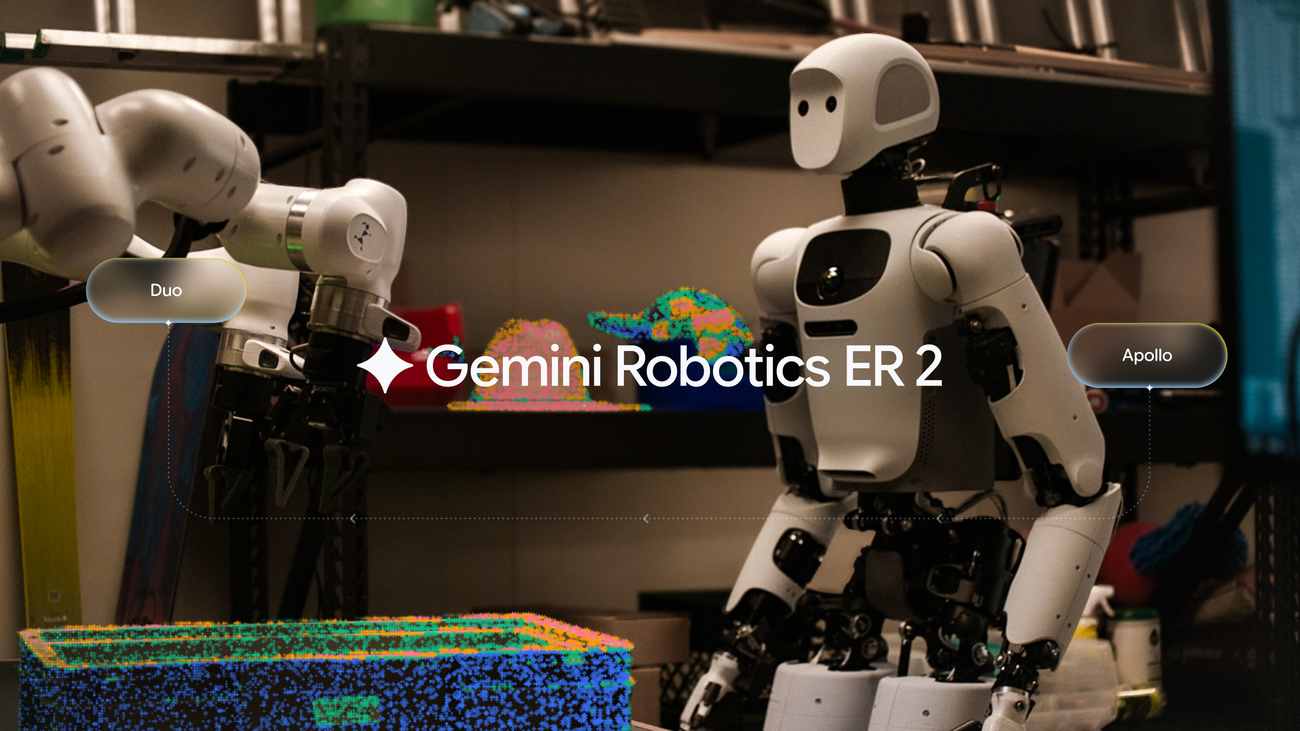
Gemini Robotics ER 2: powering robotics with video understanding, task orchestration, and multi-robot collaboration
Gemini Robotics ER 2 helps robots reason, collaborate, and solve real-world tasks. It represents a step change in video understanding, tool orchestration, and multi-robot collaboration for robotic applications.
Related papers
Transformer-Based Autonomous Driving Models and Deployment-Oriented Compression: A Survey
This survey reviews representative Transformer-based autonomous driving models and organizes them by task role, sensing configuration, and architectural design and analyzes how efficiency constraints reshaping model design choices in practice affects deployability, robustness, and safety.
FlowCorrect: Efficient Interactive Correction of Generative Flow Policies for Robotic Manipulation
The results clearly demonstrate that FlowCorrect learns from very few demonstrations and enables fast, sample-efficient, incremental, human-in-the-loop corrections of generative visuomotor policies at deployment time in real-world robotics.
Spatial-Semantic Reasoning using Large Language Models for Efficient UAV Search Operations
A real-time semantic navigation framework for Unmanned Aerial Vehicles (UAVs) focused on improving time efficiency in the Object Goal Navigation (ObjectNav) task, using a Large Language Model that interprets user-provided natural language instructions and performs semantic reasoning over detected objects and spatial context to prioritize high-probability search regions.
SCALE: Self-uncertainty Conditioned Adaptive Looking and Execution for Vision-Language-Action Models
Experiments on simulated and real-world benchmarks demonstrate that SCALE improves state-of-the-art VLAs and outperforms existing TTS methods while maintaining single-pass efficiency.