Solving virtual machine puzzles: How AI is optimizing cloud computing
Algorithms & Theory
More from the blog
From MIT to IBM, expediting AI and quantum deployment
MIT affiliates engage with the MIT-IBM Computing Research Lab to bring rigorous theory to production systems.
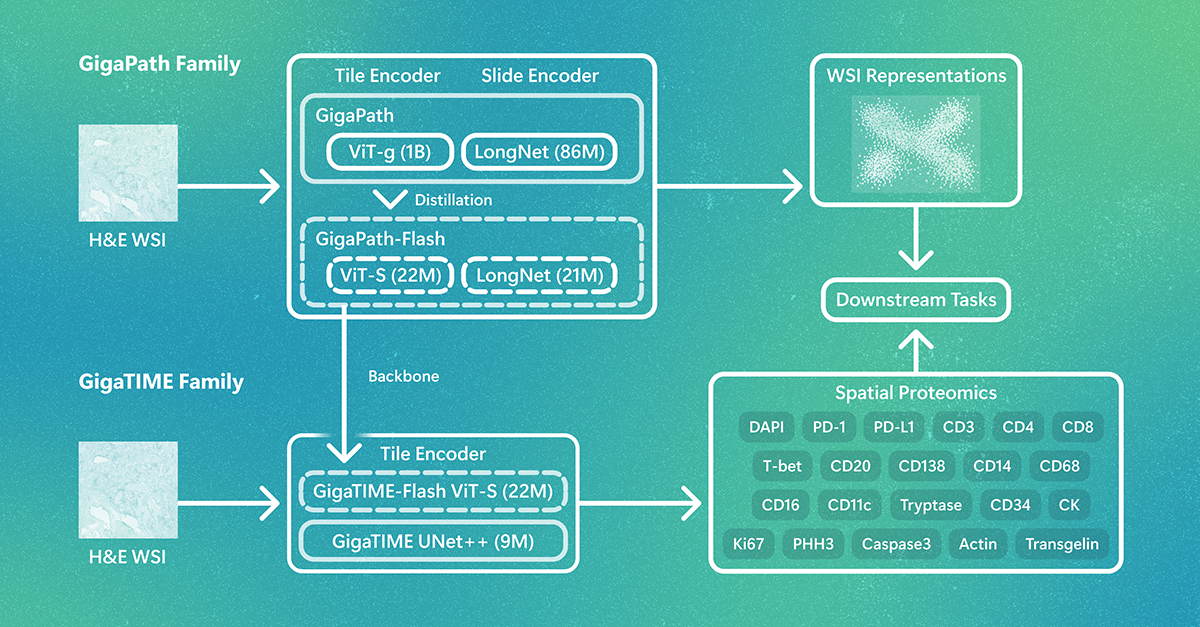
GigaPath-Flash and GigaTIME-Flash: Toward population-scale discovery with efficient pathology foundation models
What if pathology foundation models could do more with less? GigaPath-Flash and GigaTIME-Flash cut computational demands while maintaining strong performance, opening the door to larger studies and broader exploration. The post GigaPath-Flash and GigaTIME-Flash: Toward population-scale discovery with efficient pathology foundation models appeared first on Microsoft Research.

Looking beyond natural sequences
A new machine-learning framework aims to improve the success rate of computational protein design while moving away from results that reproduce sequences found in nature.

AgentHands: Generating interactive hand gestures for spatially grounded agent conversations in XR
Human-Computer Interaction and Visualization
Related papers
Time for AI (Ethics) Maturity Model Is Now
There appears to be a common agreement that ethical concerns are of high importance when it comes to systems equipped with some sort of Artificial Intelligence (AI). Demands for ethical AI are declared from all directions. As a response, in recent years, public bodies, governments, and universities have rushed in to provide a set of principles to be considered when AI based systems are designed and used. We have learned, however, that high-level principles do not turn easily into actionable advice for practitioners. Hence, also companies are publishing their own ethical guidelines to guide their AI development. This paper argues that AI software is still software and needs to be approached from the software development perspective. The software engineering paradigm has introduced maturity model thinking, which provides a roadmap for companies to improve their performance from the selected viewpoints known as the key capabilities. We want to voice out a call for action for the development of a maturity model for AI software. We wish to discuss whether the focus should be on AI ethics or, more broadly, the quality of an AI system, called a maturity model for the development of AI systems.
Computational and AI-Driven Ecosystem for Structure-Based Covalent Drug Discovery.
ConspectusThe field of covalent drug discovery has witnessed a remarkable resurgence in recent years, a trend underscored by the approval of more than 125 covalent drugs by the US FDA as of 2025, which demonstrates their immense therapeutic potential. Driven by ever-increasing computational power and vast amounts of data, deep learning (DL) is profoundly transforming numerous fields, from natural language processing to drug discovery. In the development of covalent drugs, in particular, advanced computational methods centered on data-driven approaches and artificial intelligence (AI) exhibit immense potential. The realization of this potential depends on the construction of a synergistic ecosystem. Here, we define this "ecosystem" as an integrated set of components─including (i) curated covalent-relevant databases, (ii) AI/physics-based predictive and scoring models, (iii) interoperable computational workflows spanning site identification, docking/virtual screening, and lead optimization, and (iv) closed-loop feedback that systematically incorporates experimental outcomes to update data resources and refine/validate models. This begins with the systematic collection of past experimental results to build high-quality databases. These databases, in turn, provide the foundation for developing AI-driven computational tools capable of precisely interfacing with and accelerating downstream tasks, such as molecular docking (for generating physically plausible conformations and conducting large-scale virtual screening) and lead optimization. The application of these AI tools not only guides experimental design, but the resulting key data also feed back into and enrich the databases. Furthermore, in the cutting-edge field of covalent drugs, the precise identification of "druggable" covalent sites on target proteins has emerged as another critically important downstream task.In this Account, we describe a computational and AI-driven ecosystem for structure-based covalent drug discovery and highlight our contributions to this field. By explicitly linking databases, models, workflows, and experimental feedback into a single framework, this Account moves beyond a simple inventory of individual tools to instead offer a systematic and panoramic perspective on an integrated ecosystem for covalent drug discovery, driven by data and computational engines including AI. We focus on how this ecosystem systematically addresses the challenges from covalent binding site identification to lead discovery, thereby fundamentally accelerating the development of next-generation covalent therapies. We first articulate the philosophy behind the construction and updating of covalent databases, emphasizing the necessity of high-quality data. Subsequently, we delve into a suite of cutting-edge, AI-driven computational methods, exploring the potential of deep learning in tasks such as molecular docking, covalent binding site prediction, and lead optimization. To bridge the gap between computational theory and experimental validation, we will use the discovery of potent covalent CRM1 inhibitors as a specific case study, detailing how our customized, structure-based virtual screening pipeline was utilized to achieve a seamless workflow from computational prediction to biological validation. This section is intended to offer actionable guidance for experimental researchers seeking to leverage these powerful computational tools. Finally, we highlight the limitations and potential pitfalls of this AI engine─concerns that are equally relevant when developing AI-driven covalent docking algorithms. Building on our group's recent benchmarking of AI docking methods, we objectively evaluate current performance and discuss how transformative advances such as AlphaFold3 may reshape the field.
Implementing AI Ethics in a Software Engineering Project-Based Learning Environment - The Case of WIMMA Lab
Anomaly detection in smart power grids with graph-regularized MS-SVDD: a multimodal subspace learning approach
Anomaly detection in smart power grids is a critical challenge due to the complexity, heterogeneity, and dynamic nature of sensor data streams. Existing one-class classification methods, particularly Subspace Support Vector Data Description (SVDD), have been extended to multimodal scenarios but often fail to fully exploit the structural dependencies across modalities, limiting their robustness in real-world applications. In this paper, we address this gap by proposing a generalized Multimodal Subspace Support Vector Data Description (MS-SVDD) model with graph-embedded regularization. The method projects data from multiple modalities into a shared low-dimensional subspace while preserving modality-specific structure through Laplacian regularizers. Our approach is evaluated on a three-modality dataset derived from smart grid event time series, using a dedicated preprocessing pipeline for constructing one-class classification training samples. The results demonstrate that our graph-embedded MS-SVDD improves robustness of event detection compared to conventional approaches, highlighting the potential of integrating graph priors with multimodal subspace learning for advancing anomaly detection in critical infrastructure. More broadly, this work contributes to the wider field of AI by illustrating how relational and structural information can be systematically embedded into one-class models, enabling robust learning under complex, high-dimensional, and multimodal conditions.