Skip to content
← All posts When AI art has no author: Study finds generated images often can’t be traced to training data

When AI art has no author: Study finds generated images often can’t be traced to training data

MIT News · Artificial Intelligence · news.mit.edu · By Rachel Gordon | MIT CSAIL · August 18, 2026

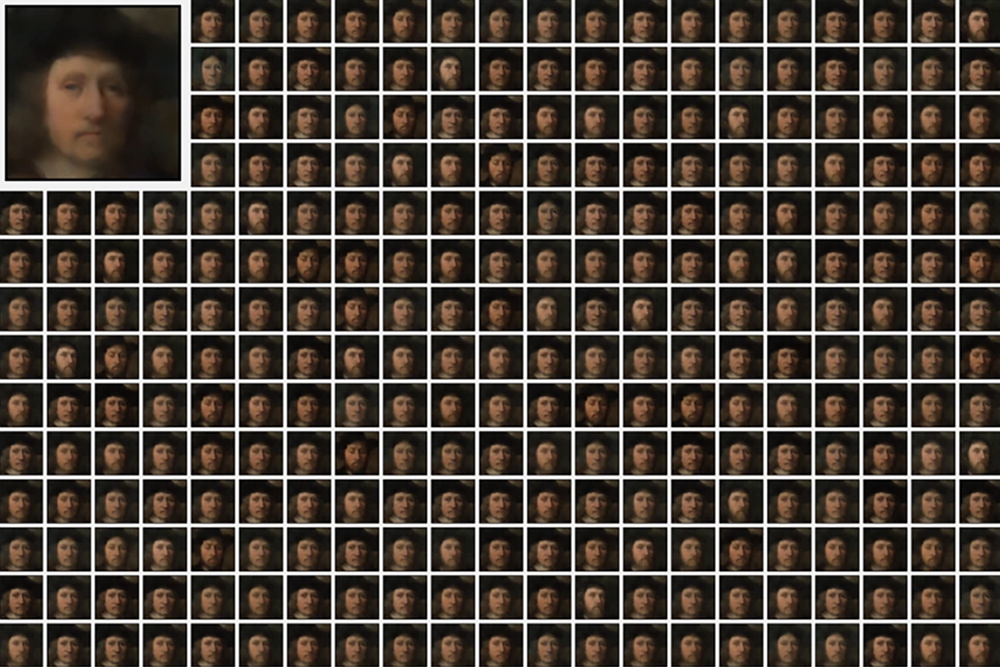
A new method for surgically removing training examples from a model reveals that as datasets grow, the link between what a model learns and what it produces dissolves.

Read on MIT News · Artificial Intelligence → Opens the original article in a new tab.

More from the blog

MIT News · Artificial Intelligence Sep 1, 2026

Ila Kumar: Innovating with communities

The PhD student works to give young people an active role in shaping digital technologies that can support their own well-being.

Related papers

#machine learning Open access May 2025

Token-Mol 1.0: tokenized drug design with large language models

The integration of large language models (LLMs) into drug design is gaining momentum; however, existing approaches often struggle to effectively incorporate three-dimensional molecular structures. Here, we present Token-Mol, a token-only 3D drug design model that encodes both 2D and 3D structural information, along with molecular properties, into discrete tokens. Built on a transformer decoder and trained with causal masking, Token-Mol introduces a Gaussian cross-entropy loss function tailored for regression tasks, enabling superior performance across multiple downstream applications. The model surpasses existing methods, improving molecular conformation generation by over 10% and 20% across two datasets, while outperforming token-only models by 30% in property prediction. In pocket-based molecular generation, it enhances drug-likeness and synthetic accessibility by approximately 11% and 14%, respectively. Notably, Token-Mol operates 35 times faster than expert diffusion models. In real-world validation, it improves success rates and, when combined with reinforcement learning, further optimizes affinity and drug-likeness, advancing AI-driven drug discovery. In this work the authors present Token-Mol, a token-only 3D drug design model, which deploys the Gaussian cross-entropy (GCE) loss function for regression tasks. It exhibits superior performance in molecular conformation generation, property prediction, and pocket-based generation, thus opening up new avenues for drug design.

Jike Wang, Rui Qin, Mingyang Wang et al. · 30 citations · ⚡1

Computational and AI-Driven Ecosystem for Structure-Based Covalent Drug Discovery.

ConspectusThe field of covalent drug discovery has witnessed a remarkable resurgence in recent years, a trend underscored by the approval of more than 125 covalent drugs by the US FDA as of 2025, which demonstrates their immense therapeutic potential. Driven by ever-increasing computational power and vast amounts of data, deep learning (DL) is profoundly transforming numerous fields, from natural language processing to drug discovery. In the development of covalent drugs, in particular, advanced computational methods centered on data-driven approaches and artificial intelligence (AI) exhibit immense potential. The realization of this potential depends on the construction of a synergistic ecosystem. Here, we define this "ecosystem" as an integrated set of components─including (i) curated covalent-relevant databases, (ii) AI/physics-based predictive and scoring models, (iii) interoperable computational workflows spanning site identification, docking/virtual screening, and lead optimization, and (iv) closed-loop feedback that systematically incorporates experimental outcomes to update data resources and refine/validate models. This begins with the systematic collection of past experimental results to build high-quality databases. These databases, in turn, provide the foundation for developing AI-driven computational tools capable of precisely interfacing with and accelerating downstream tasks, such as molecular docking (for generating physically plausible conformations and conducting large-scale virtual screening) and lead optimization. The application of these AI tools not only guides experimental design, but the resulting key data also feed back into and enrich the databases. Furthermore, in the cutting-edge field of covalent drugs, the precise identification of "druggable" covalent sites on target proteins has emerged as another critically important downstream task.In this Account, we describe a computational and AI-driven ecosystem for structure-based covalent drug discovery and highlight our contributions to this field. By explicitly linking databases, models, workflows, and experimental feedback into a single framework, this Account moves beyond a simple inventory of individual tools to instead offer a systematic and panoramic perspective on an integrated ecosystem for covalent drug discovery, driven by data and computational engines including AI. We focus on how this ecosystem systematically addresses the challenges from covalent binding site identification to lead discovery, thereby fundamentally accelerating the development of next-generation covalent therapies. We first articulate the philosophy behind the construction and updating of covalent databases, emphasizing the necessity of high-quality data. Subsequently, we delve into a suite of cutting-edge, AI-driven computational methods, exploring the potential of deep learning in tasks such as molecular docking, covalent binding site prediction, and lead optimization. To bridge the gap between computational theory and experimental validation, we will use the discovery of potent covalent CRM1 inhibitors as a specific case study, detailing how our customized, structure-based virtual screening pipeline was utilized to achieve a seamless workflow from computational prediction to biological validation. This section is intended to offer actionable guidance for experimental researchers seeking to leverage these powerful computational tools. Finally, we highlight the limitations and potential pitfalls of this AI engine─concerns that are equally relevant when developing AI-driven covalent docking algorithms. Building on our group's recent benchmarking of AI docking methods, we objectively evaluate current performance and discuss how transformative advances such as AlphaFold3 may reshape the field.

Shi Li, Hongyan Du, Xujun Zhang et al. · 4 citations
#machine learning Open access Feb 2025

Anomaly detection in smart power grids with graph-regularized MS-SVDD: a multimodal subspace learning approach

Anomaly detection in smart power grids is a critical challenge due to the complexity, heterogeneity, and dynamic nature of sensor data streams. Existing one-class classification methods, particularly Subspace Support Vector Data Description (SVDD), have been extended to multimodal scenarios but often fail to fully exploit the structural dependencies across modalities, limiting their robustness in real-world applications. In this paper, we address this gap by proposing a generalized Multimodal Subspace Support Vector Data Description (MS-SVDD) model with graph-embedded regularization. The method projects data from multiple modalities into a shared low-dimensional subspace while preserving modality-specific structure through Laplacian regularizers. Our approach is evaluated on a three-modality dataset derived from smart grid event time series, using a dedicated preprocessing pipeline for constructing one-class classification training samples. The results demonstrate that our graph-embedded MS-SVDD improves robustness of event detection compared to conventional approaches, highlighting the potential of integrating graph priors with multimodal subspace learning for advancing anomaly detection in critical infrastructure. More broadly, this work contributes to the wider field of AI by illustrating how relational and structural information can be systematically embedded into one-class models, enabling robust learning under complex, high-dimensional, and multimodal conditions.

Thomas Debelle, F. Sohrab, Pekka Abrahamsson et al. · 1 citation

ProphDR: An Interpretable Deep Learning Model for Predicting Cancer Drug Response via Multi-Omics and Cross-Attention Mechanisms.

ProphDR is an interpretable deep learning framework that integrates multiomics data and drug structural information using a hierarchical attention mechanism, and generates biologically interpretable attention maps that highlight key pharmacophores and resistance-related genes consistent with established mechanisms in NSCLC and BRCA.

Yundian Zeng, Qing Ye, Jike Wang et al. · 0 citations