Background/Objectives: Dermoscopic skin-lesion classifiers lose accuracy when images arrive from a new clinic or a new device. We asked which data augmentations reduce that loss, and measured the effect under a protocol that keeps policy selection separate from policy evaluation. Methods: A ConvNeXt-Large binary malignant-versus-non-malignant classifier was trained on six dermoscopic sources (25,903 images); HAM10000 and ISIC 2016-2020 were held out of training entirely. Single augmentations, photometric combinations and eleven composite policies were ranked on a development split of 1511 held-out images. The winning policy was then evaluated on a confirmation set of 8073 held-out images that took no part in that ranking and from which we removed every image sharing a lesion identifier with the training data and every image contributed by an institution represented in training. Both policies were retrained with four random seeds each and compared with an exact permutation test. Results: The mix policy raised confirmation-set ROC-AUC from 0.787 to 0.826 (+0.039; per-seed ranges 0.772-0.797 and 0.815-0.840, non-overlapping; exact permutation p=0.029), with the same direction on each contributing source. At matched sensitivity the gain is larger in clinical terms: specificity rose from 0.612 to 0.713 at a sensitivity of 0.80, and from 0.284 to 0.397 at a sensitivity of 0.95. In-domain ROC-AUC was preserved (0.938 to 0.941). On an independent clinical cohort acquired with a different device at a different institution (472 images, 22 malignant), performance was maintained (0.934 versus 0.930). Conclusions: Augmentations that model the physical causes of domain shift improve cross-source transfer at no cost to in-domain accuracy, and the improvement survives a selection-disjoint, contamination-free evaluation.
Alexander Kozachok, Ilya Latyshev, Evgeny Karpulevich et al.· 0 citations
Vision-language models can perform new tasks without parameter updates through in-context learning (ICL), whose core mechanism is utilizing the support set for task induction. In the standard ICL setting, once the task is induced, its decision criterion remains fixed. However, in real-world applications, many tasks exhibit a stable high-level intent, while their decision criteria shift according to specific requirements. Thus, we introduce a new setting, denoted as Criterion-Conditional In-Context Learning (CC-ICL), where models must infer the latent criterion from context and adjust predictions accordingly under fixed task semantics. To evaluate this capability, we propose two complementary metrics, Criterion Invariance and Criterion Sensitivity, capturing the model's robustness and adaptability under criterion shifts. We further construct CC-Bench, a multi-domain benchmark that supports evaluation under the CC-ICL setting. By employing a dual-level data hierarchy, CC-Bench enables legitimate ground-truth variation conditioned on the active criterion even when the task remains fixed. Experiments on CC-Bench reveal that most models exhibit a rigid boundary bias, struggling to align their decisions with the latent criterion. We also find that even a simple multi-criterion training strategy can significantly reduce this bias, improving Criterion Sensitivity and enabling 7B-scale models to surpass proprietary models without degrading general multimodal performance.
Kaiyun Yang, Ruilin Yang, Zhimin Yao et al.· 0 citations
Predicting distant metastasis from the digital H & E slides of the primary tumor is a critical yet challenging task in computational pathology. Multiple Instance Learning (MIL) approaches can attend to subdomains in whole slide images (WSIs) that harbor features of pre-metastatic cancer regions. However, conventional MIL models largely treat tissue patches as unordered bags, discarding the spatial layout that defines how these regions are arranged and interact across the tissue. We propose that metastatic risk is shaped not only by local patch appearance, but also by the geometric organization of patches in the WSI and the interaction between the tissue compartments. To this end, we introduce Distance-aware Tissue Modeling for Multiple Instance Learning (DTMF-MIL), a spatial MIL framework that reinforces feature embeddings with explicit distance priors. By computing signed distance functions (SDFs) to capture regions with similar features, and representing each patch with radial-basis distance responses and local SDF statistics, DTMF-MIL learns positions of patches with respect to regional interiors and boundaries. The interactions between similar patches are contextualized across local tissue neighborhoods and used to guide slide-level attention while pooling patch feature evidence for metastasis prediction. We evaluate DTMF-MIL for prediction of distant prostate cancer metastasis in an internal prostate needle-biopsy cohort (IPC) from a large hospital system and on public TCGA-COAD and TCGA-KIRC datasets across multiple pathology foundation-model backbones. Across most dataset, backbone, and metric combinations, DTMF-MIL achieves the strongest results consistently.
Sandesh Pokhrel, Hamid Manoochehri, Beatrice S Knudsen et al.· 0 citations
Physical events are not understood by their names alone, but by the causal state changes that compose them. A clip-level label such as "bounce" can be correct while hiding the process that makes the event physically valid, from support loss and contact onset to rebound and settling. To make this hidden process explicit, we introduce Atomic Physical Transitions (APTs): minimal, temporally localized state changes that bind a visible cue to an active physical mechanism and before/after dynamical regimes. An APT chain represents a video as an ordered causal transition sequence rather than a single aggregate event label: event labels tell what happened; APT chains explain why it happened. To make APTs learnable by VLMs, we construct mixed-source APT data from human annotations and simulator ground truth, covering 14 transition types across contact, gravity, friction, and rotation/stability, with 27,303 timed instances over 1,246 trials. Using this data, we find that current VLMs miss transition-level physics, with zero-shot recall at most 14% and errors dominated by missed transitions. Direct fine-tuning on APT chains improves transition detection but causes event-level forgetting, indicating that the model learns a specialized answer format rather than a reusable physical representation. We therefore propose APT-Tune, a parameter-efficient recipe that teaches VLMs to use causal transitions without forgetting how to answer video questions. It combines image-pad-aware supervision, format-conditional co-training, and mechanism-conditioned domain-to-type decoding to make APT learning format-robust and physically grounded. With only 11 M LoRA parameters on Qwen3-VL-2B, APT-Tune substantially improves APT recall while also improving event-level video transfer. These results show that APTs are not a new answer format, but a human-aligned causal supervision signal for physical video understanding.
Shang Wu, Haoran Lu, Songling Liu et al.· 0 citations
Reach audiences
Advertise in front of researchers, engineers, and readers.
Robot learning and embodied agents now require simulation to serve as a shared execution substrate linking control, skills, and planning, not only as a renderer, controller testbed, or fixed task environment. Existing pipelines split these layers with "magic" actions, disconnected training environments, or forward-only renders that cannot reproduce, evaluate, and annotate the same episode. We present MagicSim, an embodied interaction infrastructure built around one deterministic batched runtime and a shared Markov decision process (MDP). From YAML-first specifications that decouple contents, placement, behavior, and agent exposure, MagicSim constructs diverse executable worlds spanning task families, interaction regimes, physics, layouts, sensors, avatars, and robot embodiments in one reset-and-step loop. A common execution interface grounds high-level commands through controllers, atomicskills, planner primitives, and asynchronous planning, realizing them as robot actions rather than simulator-side state edits. One task definition supports three capabilities: benchmark and RL evaluation, an autocollect interface that automatically turns commands into grounded trajectories, and agent/VLM-facing interaction. For automatic execution, commands flow through a Command->Skill->Planner->Robot->Record pipeline, while per-environment command, skill, planning, retry, annotation, and episode states advance independently above the shared physics tick. Successful rollouts are saved as structured multimodal trajectories aligning language supervision, action representations, visual/geometric representations, and task-level status with the executed episode. MagicSim thus unifies diverse world construction, embodied execution, task evaluation, automatic rollout generation, and interactive agent interfaces in one planner-in-the-loop runtime.
Haoran Lu, Songling Liu, Yue Chen et al.· 0 citations
Recent advancements have significantly expanded the theoretical context windows of Multimodal Embedding Models (MEMs). However, larger context windows do not necessarily translate into effective comprehension and representation of long-context multimodal inputs, which remains a critical bottleneck for real-world deployment. To address the lack of systematic evaluation in this setting, we introduce MMLongEmbed, the first comprehensive benchmark for evaluating MEMs in long-context scenarios. MMLongEmbed comprises four retrieval tasks spanning multiple context-length ranges, covering text, document, and video modalities. Through extensive evaluation of state-of-the-art models, we find that current architectures rely heavily on superficial feature matching and struggle to capture deep semantic and structural dependencies. We further observe that performance degradation varies systematically with context length and key information placement. Moreover, models exhibit substantially different robustness to redundant contextual information across modalities. For reproducibility, the benchmark and code are publicly available.
Haitian Wang, Ruoxi Sun, Quantong Qiu et al.· 0 citations
Block Diffusion Models (BDMs) support parallel generation, flexible-length output, and KV caching, making them promising for efficient document parsing. However, existing BDMs bind denoising and cache commitment to fixed block boundaries: parallelism shrinks during intra-block denoising, while generated tokens cannot be cached until the whole block is completed. Moreover, intra-block bidirectional denoising conflicts with inter-block autoregression, creating inconsistent information flow that can challenge structure-sensitive recognition. We propose the Prefix-Adaptive Block Diffusion Model (PA-BDM), which replaces intra-block bidirectional denoising with causal denoising from prefix to suffix and treats the block size as a maximum candidate range rather than a fixed commitment unit. PA-BDM uses Confidence-gated Structural Loss (CSL) to build low-entropy prefixes before extending training to longer continuations. During inference, Progressive Prefix Commitment (PPC) then dynamically commits the longest reliable prefix into the KV cache and resets the next candidate range from the updated prefix, restoring a large parallel decoding space at each step. Experiments show that the 3B PA-BDM achieves higher recognition scores on several benchmarks and improves inference throughput by 71.6\% over the 2.5B MinerU-Diffusion.
Mingxu Chai, Ziyu Shen, Chenyu Liu et al.· 0 citations
Reliable celestial attitude determination is a critical requirement for autonomous spacecraft navigation, yet traditional "Lost-in-Space" (LIS) algorithms often suffer from high computational overhead and sensitivity to sensor-induced noise. While deep learning has emerged as a promising alternative, standard regression models are often confounded by the non-Euclidean topology of the celestial sphere and by the periodic boundary conditions of Right Ascension (RA) and Declination (Dec). In this paper, we present Star-Fusion, a multi-modal architecture that reformulates orientation estimation as a discrete topological classification task. Our approach leverages spherical K-Means clustering to partition the celestial sphere into K topologically consistent regions, effectively mitigating coordinate wrapping artifacts. The proposed architecture employs a tripartite fusion strategy: a SwinV2-Tiny transformer backbone for photometric feature extraction, a convolutional heatmap branch for spatial grounding, and a coordinate-based MLP for geometric anchoring. Experimental evaluations on a synthetic Hipparcos-derived dataset demonstrate that Star-Fusion achieves a Top-1 accuracy of 93.4% and a Top-3 accuracy of 97.8%. Furthermore, the model exhibits high computational efficiency, maintaining an inference latency of 18.4 ms on resource-constrained COTS hardware, making it a viable candidate for real-time onboard deployment in next-generation satellite constellations.
Flow-based vision-language-action (VLA) policies offer strong expressivity for action generation, but suffer from a fundamental inefficiency: multi-step inference is required to recover action structure from uninformative Gaussian noise, leading to a poor efficiency-quality trade-off under real-time constraints. We address this issue by rethinking the role of the starting point in generative action modeling. Instead of shortening the sampling trajectory, we propose CF-VLA, a coarse-to-fine two-stage formulation that restructures action generation into a coarse initialization step that constructs an action-aware starting point, followed by a single-step local refinement that corrects residual errors. Concretely, the coarse stage learns a conditional posterior over endpoint velocity to transform Gaussian noise into a structured initialization, while the fine stage performs a fixed-time refinement from this initialization. To stabilize training, we introduce a stepwise strategy that first learns a controlled coarse predictor and then performs joint optimization. Experiments on CALVIN and LIBERO show that our method establishes a strong efficiency-performance frontier under low-NFE (Number of Function Evaluations) regimes: it consistently outperforms existing NFE=2 methods, matches or surpasses the NFE=10 $\pi_{0.5}$ baseline on several metrics, reduces action sampling latency by 75.4%, and achieves the best average real-robot success rate of 83.0%, outperforming MIP by 19.5 points and $\pi_{0.5}$ by 4.0 points. These results suggest that structured, coarse-to-fine generation enables both strong performance and efficient inference. Our code is available at https://github.com/EmbodiedAI-RoboTron/CF-VLA.
Fan Du, Feng Yan, Jianxiong Wu et al.· 0 citations
When answering questions about images, humans naturally point, label, and draw to explain their reasoning. In contrast, modern vision-language models (VLMs) such as Gemini-3-Pro and GPT-5 only respond with text, which can be difficult for users to verify. We present SketchVLM, a training-free, model-agnostic framework that enables VLMs to produce non-destructive, editable SVG overlays on the input image to visually explain their answers. Across seven benchmarks spanning visual reasoning (maze navigation, ball-drop trajectory prediction, and object counting) and drawing (part labeling, connecting-the-dots, and drawing shapes around objects), SketchVLM improves visual reasoning task accuracy by up to +28.5 percentage points and annotation quality by up to 1.48x relative to image-editing and fine-tuned sketching baselines, while also producing annotations that are more faithful to the model's stated answer. We find that single-turn generation already achieves strong accuracy and annotation quality, and multi-turn generation opens up further opportunities for human-AI collaboration. An interactive demo and code are at https://sketchvlm.github.io/.
Diffusion models can be challenged in the low signal-to-noise regime, where they have to make pixel-level predictions despite the presence of high noise. The geometric intuition is akin to using the finest stroke for oil painting throughout, which may be ineffective. We therefore study \emph{stroke-size control} as a controlled intervention that changes the roughness of the supervised target, predictions and perturbations across timesteps, in an attempt to ease the low signal-to-noise challenge via prediction target simplification.
Yunwei Bai, Ying Kiat Tan, Yao Shu et al.· 0 citations
Current multimodal LLMs encode images as static visual prefixes and rely on text-based reasoning, lacking goal-driven and adaptive visual access. Inspired by human visual perception-where attention is selectively and sequentially shifted from the most informative regions to secondary cues-we propose Structural Sequential Visual CoT SSV-CoT. First, a question-relevant saliency map identifies and organizes key visual regions, explicitly modeling the spatial distribution of visual importance. Second, reasoning is performed following this discriminative order, inducing a curriculum-like semantic progression from primary to secondary cues. This method is trained end-to-end, using text cot and answer supervision, without relying on region-level annotations or specialized external tools. Experiments on diverse visual reasoning benchmarks show gains, validating structured and sequential visual cognition.
Guangfu Guo, Xiaoqian Lu, Yue Feng et al.· 0 citations
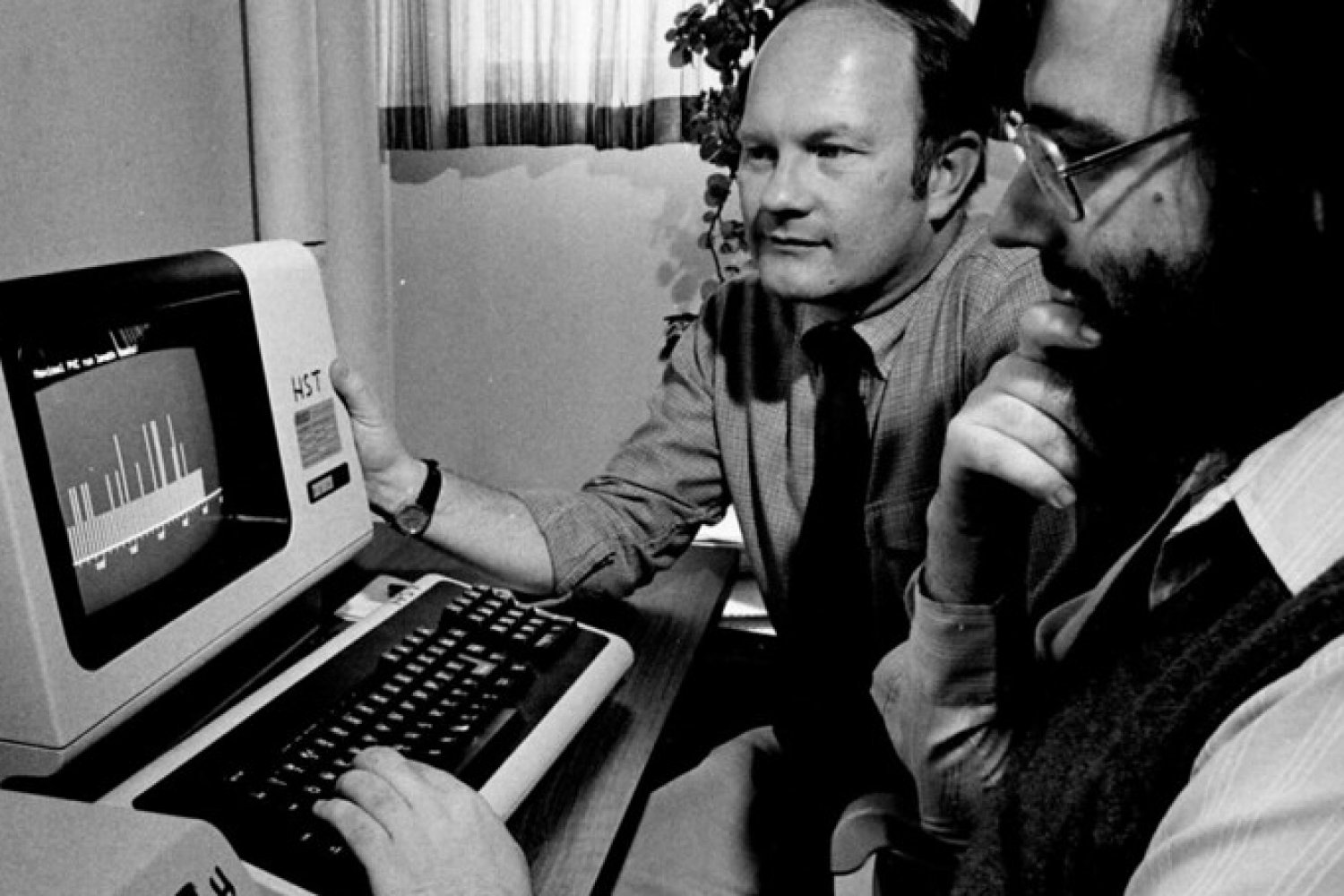
The visionary PhysioNet platform launched 25 years ago, based on a system developed at MIT in the 1970s. It has become one of the most comprehensive biomedical and clinical data repositories in existence.
Known for his clear and elegant writing style, Bertsekas shaped fields from control and optimization to large-scale computation and artificial intelligence.
MIT News · Artificial Intelligence· news.mit.eduJul 6, 2026
PhD student Rachel Sava, winner of the Envisioning the Future of Computing Prize, explores transformative improvements and dystopian risks of neural technology.
MIT News · Artificial Intelligence· news.mit.eduJun 30, 2026
Computer scientist Phillip Isola cuts through the hype to explain how AI agents work and what the future might hold for this rapidly advancing technology.