Document Visual Question Answering (DocVQA) often leverages Retrieval-Augmented Generation (RAG), where late-interaction encoders are commonly used to identify document pages relevant to a user query, before answer generation by a Large Vision-Language Model (LVLM). Existing approaches typically retrieve a fixed top-$k$ number of pages regardless of query complexity, which increases LVLM latency and may degrade answer accuracy. We introduce ViSAR (Visual Semantic Activation Retrieval), a training-free adaptive-$k$ retrieval method for late-interaction visual document retrieval. ViSAR operates directly in the embedding space to construct a query-conditioned page-level similarity matrix that highlights query-relevant semantics and dynamically determines the number of pages to retrieve. Across multiple encoders and LVLMs, ViSAR retrieves compact, query-adapted page sets that reduce RAG latency by up to 58.7\%, while maintaining or improving answer accuracy compared with fixed top-$k$ and adaptive retrieval heuristics. Furthermore, we show that the similarity matrix structure correlates with answer accuracy, suggesting future directions for retrieval quality-aware document understanding.
Adrien Mialland, Marc Plantevit, Julien Gallois et al.· 0 citations
Brain cancer remains one of the most significant challenges in modern medicine, where the accuracy of early stage diagnosis is a decisive factor in patient survival and treatment efficacy. Although Magnetic Resonance Imaging (MRI) is the established gold standard for visualizing neurological structures, the interpretation of these high dimensional scans is often complicated by subjective variability among practitioners and the inherent noise present in complex medical images. While contemporary approaches frequently rely on high parameter deep learning architectures, such models often involve significant computational costs and require extensive data for effective training. This study introduces a hybrid framework that utilizes the Oriented FAST and Rotated BRIEF (ORB) algorithm for precise feature extraction and a Support Vector Machine (SVM) for classification [1], [2]. The proposed approach achieves a sub- stantial data reduction of approximately 99.5%, which effectively minimizes the influence of non informative background data while preserving critical diagnostic patterns essential for tumor identification. By balancing feature sparsity with a robust kernel based classifier, this methodology addresses the limitations of over parameterized systems while maintaining high diagnostic integrity. Experimental evaluations conducted on the Br35H dataset demonstrate that the framework attains a classification accuracy of 97.5%. The findings suggest that the integration of localized feature representation and optimized classification provides a reliable and resource efficient alternative for medical image analysis, offering a structured solution that maintains per- formance without the need for extensive computational overhead.
Ultra-low bitrate video compression still faces critical challenges: traditional neural video compression inevitably introduces blurring artifacts, while diffusion-based generative video compression suffers from excessive decoding latency and poor temporal consistency. To address these issues, we propose $\mathtt{VoRTeC}$, a Video Compression framework built upon a foundational flow model (Wan2.1). By compactly encoding latent video representations, predicting the positions of compressed representations along flow trajectories, and integrating multi-scale priors, $\mathtt{VoRTeC}$ enables the compressor to harness generative video flow priors effectively. Without accessing the parameters or gradients of flow matching networks, our framework achieves one-step decoding and reconstructions with high perceptual fidelity. Meanwhile, we maintain consistency across frame groups via tail-frame reuse and prior caching. Extensive experiments demonstrate that our method reduces bit consumption by 58\% compared to prior diffusion-based approaches, with decoding speed boosted by 3 to 197 times: $\mathtt{VoRTeC}$ achieves a decoding speed of 13 FPS at 720p and 32 FPS at 480p.
Yichong Xia, Qinhong Wu, Qinhong Wu et al.· 0 citations
Mineral image classification is important for geological exploration and resource development, but it remains challenging due to substantial intra-class variations in appearance and high inter-class visual similarity. Multi-cognitive Visual Adapter (Mona) is a vision-oriented parameter-efficient adapter that adapts pre-trained visual models by tuning only a few parameters. However, Mona statically aggregates responses from multiple scales, limiting its ability to accommodate sample-specific scale preferences and model confusion among visually similar mineral categories. To address this issue, we propose \textbf{RouteGraph-Mona}, a lightweight route-space regularization method built on Mona. Specifically, we replace Mona's static multi-scale aggregation with sample-adaptive routing. The resulting branch-selection behavior defines a compact routing space that captures each image's scale preferences. We then regularize the resulting routing signatures with class-wise route anchors and confusion-weighted margins. The route anchors encourage class-consistent routing patterns, while the margins promote greater separation between visually similar categories in the routing space. Experiments on three public mineral image datasets with two visual backbones show that RouteGraph-Mona consistently outperforms Mona in mean accuracy and remains competitive with representative fine-tuning methods and mineral image classification baselines.
Jierui Li, Zhiyuan Qi, Hao Zhu et al.· 0 citations
Reach audiences
Advertise in front of researchers, engineers, and readers.
With the rapid proliferation of generative models on Machine Learning as a Service (MLaaS) platforms, reliably tracing the provenance of synthetic media without modifying generator architectures or parameters remains a major challenge. In this work, we propose a self-referential retrosynthesis framework for explainable AI provenance forensics under a fixed-generator setting. The framework leverages a jointly optimized encoder-decoder pair to implement a self-embedding mechanism that enables round-trip consistency verification. During inference, client inputs are first encoded and then processed by the generator to produce outputs with high visual fidelity. For forensic verification, the consistency between the resynthesized image and the query image is analyzed to determine whether the image originates from the target generative model. Our approach eliminates the need for watermark embedding or modifications to the generation process. Experimental results show that images generated from encoded inputs maintain visual quality comparable to original generator outputs, while decoded images reliably trace back to their corresponding source inputs. Furthermore, the framework provides interpretable evidence for generative content provenance, establishing a practical tool for explainable generative AI forensics.
Yijie Lin, Ching-Chun Chang, Isao Echizen et al.· 0 citations
Semi-supervised learning has shown great potential for reducing annotation costs in medical image segmentation. However, most existing methods mainly exploit unlabeled data through prediction-level consistency, while the reliability of internal feature representations is often overlooked. In medical images, target-related structural cues are easily entangled with unstable appearance variations, which may lead to unreliable pseudo labels and error accumulation during training. To address these issues, we propose SAUF-Net, a Structure--Appearance Representation Learning with Uncertainty Feedback Network for semi-supervised medical image segmentation. SAUF-Net uses the Structure--Appearance Decomposition Module (SADM) to separate bottleneck features into structural and appearance representations. The Disentangled Guidance Module (DGM) injects these representations into the decoding process to enhance structure-aware segmentation. Meanwhile, the Auxiliary Decoder produces branch-specific predictions for reliability estimation and a fused prediction for appearance-swapped consistency. Furthermore, we introduce an Appearance-Swapped Consistency branch to encourage structural representations to remain stable under appearance variations. We also introduce a reliability-map-guided dual-head discriminator with a Validity Head and an Uncertainty Head to provide feature-level uncertainty feedback. Extensive experiments on ISIC-2016 and Kvasir-SEG demonstrate that SAUF-Net outperforms state-of-the-art semi-supervised methods, especially under low-label settings.
Qin Lu, Zheyang Jing, Yujie Yang et al.· 0 citations
Infrared vision-language models (IR-VLMs) have emerged as a promising paradigm for multimodal perception under low-visibility conditions, yet their robustness to targeted adversarial attacks remains poorly understood. Existing adversarial patch methods mainly study RGB-based models or a single downstream task and do not characterize whether localized perturbations can induce an intended semantic target in IR-VLMs. We propose InfraPatch, a white-box, per-instance framework for targeted digital grayscale patch attacks against IR-VLMs. InfraPatch optimizes a compact single-channel patch within an approximately 5% local-area budget, combines proxy-guided placement with task-adaptive semantic objectives, and induces target behaviors in image classification, image captioning, and binary visual question answering. We evaluate ten infrared-adapted model variants on 300 synthetic infrared-style images generated by applying DiffV2IR to a fixed 30-category COCO subset, using clean-conditioned targeted success criteria. InfraPatch achieves targeted attack success rates from 86.00% to 100% across the ten variants. On CLIP and BLIP-2, proxy location search improves success by 6.67 and 10.33 percentage points over optimized random placement, respectively; LLaVA-1.5 remains saturated near 100% under both settings. Patch-area and objective ablations further expose substantial differences in vulnerability across architectures and task formats. These results show that small grayscale patches can inject chosen target semantics across IR-VLM families under a controlled digital threat model, motivating stronger robustness evaluation for infrared multimodal systems.
Chengyin Hu, Dingyi Lu, Jiaju Han et al.· 0 citations
Post-hoc saliency maps such as Grad-CAM are increasingly used to audit why a deployed vision model made a decision, yet the heatmap drifts when the input is rotated, even when the prediction is unchanged. In domains with no canonical orientation, such as histopathology and aerial imagery, this undermines using saliency as evidence. We ask whether that drift is faithful signal or noise introduced by the CAM operator, and answer it by measuring equivariance at every stage of the operator rather than inferring it from the network's output. The instability is not where one would guess: the channel weights are the most rotation-stable stage, and on ResNet-50 exactly stable, because a GAP+linear head makes the class gradient field spatially constant. What moves is the spatial activation tensor, and the classifier's own pooling discards that movement. A causal test confirms the consequence: occluding the pixels whose saliency drifts costs the model less than occluding random pixels, at either orientation. The drift is carried by degrees of freedom the classifier throws away, which is what makes removing it faithful rather than destructive. EquiGrad-CAM is a training-free wrapper that takes T rotated views, inverse-rotates each view's saliency into a common canonical frame, and averages. On the full ImageNet-1K validation set it raises equivariance over single-view Grad-CAM by +36.0% (ResNet-50), +87.5% (VGG-16) and +247% (ViT-B/16); a scale-matched ablation isolates alignment before averaging, not the locus of aggregation, as the driver. It beats rotation-augmented training without retraining, lifts zero-shot CLIP by +145%, and yields rotation-consistent explanations on PatchCamelyon and RESISC45. Its by-product PEUM ranks explanations by how reproducible they are, at no cost beyond the views already taken. Code: https://github.com/Khawaja-Murad/EquiGrad-CAM
Khawaja Murad ul Hassan, Mehran Ebrahimi· 0 citations
Dermatology artificial intelligence (AI) models are predominantly trained on light-skinned, cancer-focused image collections, yet they are increasingly proposed for deployment in resource-constrained settings where patients differ from training populations along two confounded axes: skin tone and disease distribution. We investigate whether poor generalization is primarily caused by skin-tone underrepresentation or disease-distribution shift. We evaluate a cancer-trained baseline (ResNet-50 fine-tuned on HAM10000 and ISIC 2019), two dermatology foundation models (DermLIP and MONET), and a general-purpose vision model (DINOv3) as frozen feature extractors. Models are evaluated on a tone-stratified disease-matched dataset (Diverse Dermatology Images, DDI) and a disease-shifted tone-diverse dataset (Skin Condition Image Network, SCIN). Our results show that disease-distribution shift contributes more than skin tone in the evaluated settings. The cancer baseline decreases from 0.62 to 0.21 balanced accuracy when transferred to unfamiliar clinical conditions, while the within-disease skin-tone gap is smaller (0.10-0.18) and inconsistent. Label-free representation analysis shows that this failure reflects a representational limitation rather than only missing output labels: cancer-specialized features poorly cluster unfamiliar conditions (kNN purity lift +0.06 over chance), whereas dermatology-pretrained features retain stronger transferable structure (+0.23). Finally, we show that representation quality predicts recoverable performance under lightweight adaptation. Starting from dermatology foundation models, approximately ten labeled examples per clinical category recover most attainable performance. We release the evaluation protocol and code to support reproducible auditing of dermatology AI generalization.
Nirajan Kunwor, Sanjaya Poudel, Quoc-Huy Trinh et al.· 0 citations
Federated learning (FL) lets institutions train a shared model without exchanging data, and Low-Rank Adaptation (LoRA) makes this practical at scale by communicating only compact low-rank updates. Biomedical imaging is a compelling setting for this combination: patient data are archived behind privacy regulations, and institutions differ widely in scanners, protocols, and compute. Such heterogeneity raises the question of how federated LoRA updates should be aggregated, increasingly pressing as multimodal vision-language models become central to medical image analysis. We benchmark federated Parameter-efficient fine-tuning (PEFT) of BiomedCLIP for chest radiograph classification across four public cohorts on three continents (USA, Vietnam, Spain). Federated LoRA adaptation improves shared-class AUC on all four cohorts over the unadapted BiomedCLIP backbone (mean 0.687 to 0.802), showing that the gains come from federated adaptation rather than from the pretrained model's zero-shot ability. Relative to isolated single-cohort training, federation improves the weaker cohorts while largely preserving the strongest and approaches a centralized reference (0.812) that pools all data. The singular value decomposition (SVD)-based product-space aggregation introduced by FlexLoRA is essential to this gain (naive factor averaging drops mean AUC by 0.097), whereas a drift-correcting optimizer (FedProx) shows no benefit over FedAvg in our single-seed runs, consistent with LoRA's low-rank updates already limiting client drift. Biomedical vision-language models can thus be adapted collaboratively across heterogeneous, geographically distributed institutions without centralizing data.
Sanjaya Poudel, Nirajan Kunwor, Manish Dhakal et al.· 0 citations
Accurate segmentation of polyps and skin lesions is pivotal for clinical diagnosis, yet existing methods struggle with low contrast, ambiguous boundaries, and cross-domain distribution discrepancies. Discriminative networks and most diffusion-based segmentation approaches predict standalone binary masks, leaving the visual priors of large-scale pretrained generative models largely unexploited. We propose InstEditSeg, a unified generative framework that reformulates medical segmentation as an instruction-driven image editing problem. Instead of emitting a mask, the model renders a color-coded overlay on the original image, conditioned on a textual instruction, so that the edited output aligns with the natural image distribution learned by latent diffusion models and mitigates the domain gap between natural and medical imagery. To recover fine anatomical structures, we introduce DINOv3 as an auxiliary visual encoder and a DINO Feature Guidance Block that builds a multi-scale feature pyramid. The pyramid is fused into the diffusion U-Net by channel concatenation and zero-initialized convolution so that hierarchical discriminative priors can be injected without perturbing the pretrained weights. A dual-branch classifier-free guidance strategy requiring only two forward passes per denoising step reduces inference cost. On polyp and skin lesion benchmarks the framework achieves accuracy competitive with strong discriminative baselines, and it further demonstrates concrete advantages of the generative formulation: notably better cross-domain generalization on unseen data, more complete multi-lesion segmentation, instruction-conditioned task control, and sampling flexibility. We also analyze the strengths and limitations of the paradigm, including its color sensitivity and unsupported attribute-conditioned selection. Code is available at: https://github.com/wincharm001/InstEditSeg.
Guideline-consistent semantic segmentation requires more than category recognition, as real-world labeling policies demand fine-grained, task-specific decisions. Recent multi-agent refinement systems improve compliance with such textual guidelines by detecting and correcting errors. However, they are stateless: feedback from the critiquing agent is discarded, causing the same guideline-specific mistakes to be repeatedly rediscovered and corrected across the dataset at the cost of additional refinement. We introduce InsightSeg, an episodic memory mechanism that converts successful correction episodes into reusable, visually grounded insights. A meta-analyzer distills each qualifying episode into directive natural-language insights and anchors them to the local image regions that caused the error using patch-level visual concept vectors. On subsequent images, these concepts are matched against dense patch embeddings to retrieve relevant insights, which condition the segmenting agent before making its first prediction. This shifts the system from correcting recurring errors to preventing them, improving segmentation quality before any refinement occurs. Across Waymo and Cityscapes, InsightSeg improves both first-pass and final guideline-consistent segmentation performance while requiring fewer refinement steps, demonstrating that multi-agent refinement can become more accurate and efficient by drawing on past correction experience.
Vanshika Vats, Ashwani Rathee, James Davis· 0 citations
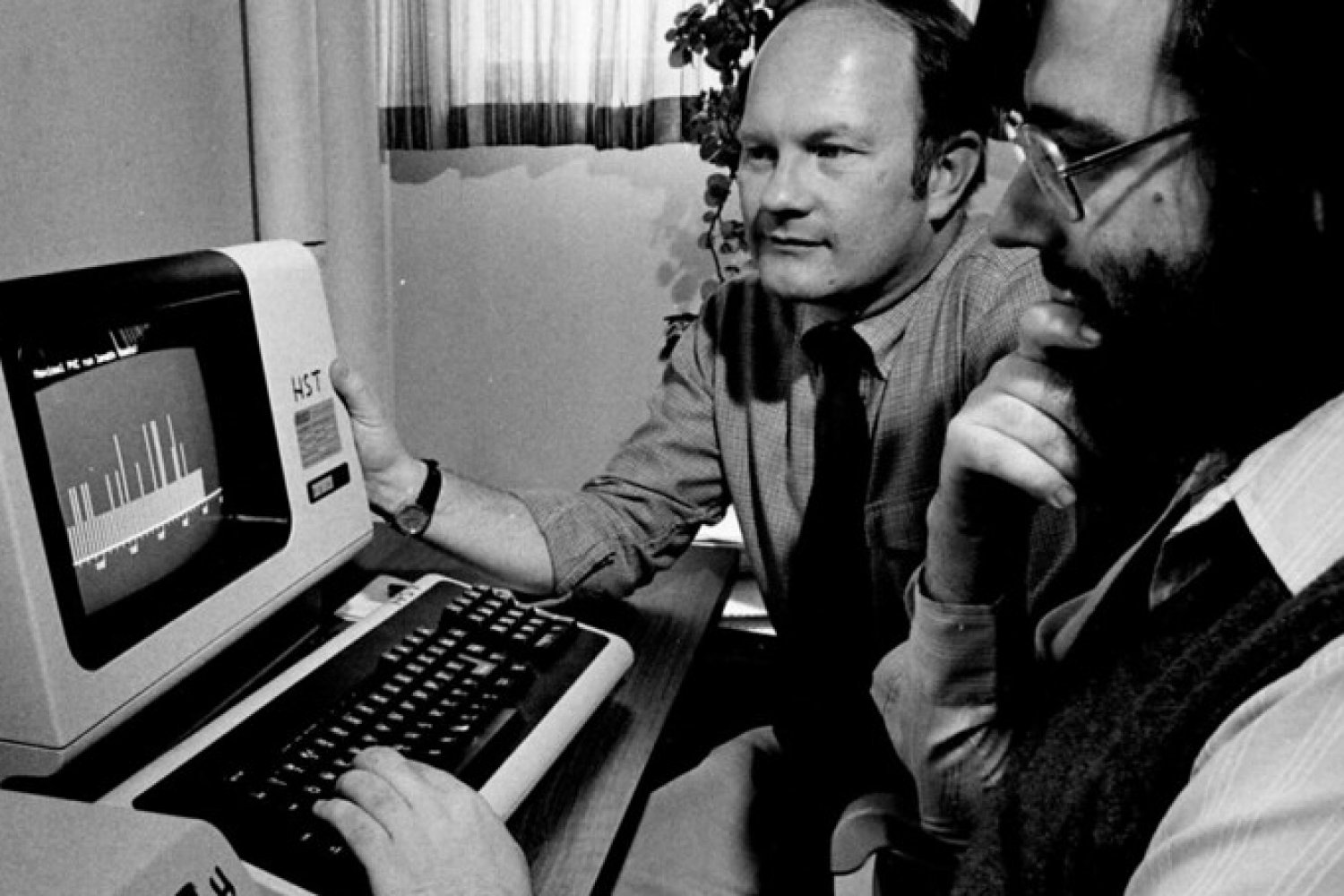
The visionary PhysioNet platform launched 25 years ago, based on a system developed at MIT in the 1970s. It has become one of the most comprehensive biomedical and clinical data repositories in existence.
Known for his clear and elegant writing style, Bertsekas shaped fields from control and optimization to large-scale computation and artificial intelligence.
MIT News · Artificial Intelligence· news.mit.eduJul 6, 2026
PhD student Rachel Sava, winner of the Envisioning the Future of Computing Prize, explores transformative improvements and dystopian risks of neural technology.
MIT News · Artificial Intelligence· news.mit.eduJun 30, 2026
Computer scientist Phillip Isola cuts through the hype to explain how AI agents work and what the future might hold for this rapidly advancing technology.