This study evaluated the antimicrobial, antioxidant, and total phenolic profiles of nine chestnut honey samples from Yalova, Türkiye, and the bioaccessibility of these compounds using a simulated in vitro gastrointestinal digestion model. Agar well diffusion and broth microdilution methods were used to evaluate antimicrobial activity against Staphylococcus aureus, Escherichia coli, Salmonella Enteritidis, Staphylococcus epidermidis, Listeria monocytogenes, Salmonella Typhi, Bacillus cereus, Enterococcus faecalis, and Candida albicans. Honey samples (100% and 50% v/v) were effective against all microorganisms except C. albicans. The most sensitive strains were S. aureus and S. epidermidis while E. coli and E. faecalis were less susceptible, respectively. The total phenolic content of honey samples was between 59.9 and 77.5 mg GAE/100 g honey. The DPPH radical scavenging activity ranged from 8.46 to 13.27 μmol TE/g, while the ABTS radical scavenging activity was determined to be between 15.40 and 30.47 μmol TE/g. The CUPRAC reduced capacity ranged from 17.68 to 26.79 μmol TE/g. The antioxidant capacity of honey samples underwent significant fluctuations during in vitro gastrointestinal digestion (p < 0.05). While certain parameters declined during the gastric phase, samples H4 and H6 demonstrated remarkable resilience, achieving the highest post-digestive recovery with superior TPC stability and antioxidant retention.
Artificial intelligence (AI) has revolutionized medical imaging with automated disease detection, image segmentation, diagnosis, prognosis prediction, and clinical decision support across various imaging modalities, such as X-ray, computed tomography (CT), magnetic resonance imaging (MRI), ultrasound, positron emission tomography (PET), retinal imaging, and digital pathology. Recent advances in deep learning, transformer architectures, multimodal learning and foundation models have significantly improved the diagnostic accuracy and reduced the reliance on handcrafted feature engineering. However, challenges like data heterogeneity, model interpretability, external validation, privacy preservation, computational efficiency, and regulatory compliance still hinder the widespread clinical implementation.In this paper, this review presents a comprehensive study on the evolution of modern AI frameworks in medical imaging by integrating recent methodological advances with perspectives on clinical translation. The review covers the latest deep learning architectures, such as convolutional neural networks, Vision Transformers, hybrid CNN–Transformer models, multimodal learning frameworks, generative artificial intelligence, diffusion models, federated learning, privacy-preserving learning, and medical foundation models. In addition, the review covers the cutting-edge explainable AI techniques, including Grad-CAM, SHAP, LIME, and attention visualization, for boosting transparency and clinician confidence. The review also discusses the state-of-the-art performance optimization strategies, including transfer learning, active learning, domain adaptation, neural architecture search, hyperparameter optimization, model compression, and computational resource optimization. Equally important, the latest developments in clinical validation, external evaluation, robustness assessment, fairness, uncertainty estimation, regulatory considerations, and deployment frameworks are critically analyzed to underscore their role in facilitating safe clinical implementation.The review analysis concludes with the identification of key research challenges and directions for the future including multimodal foundation models, vision-language systems, retrieval-augmented generation,
S Sur, Mandal Rakesh Kumar, Chanda Debanil· Zenodo (CERN European Organi...· 0 citations
This volume develops a dynamical form of KM space theory based on admissible presentations. A dynamic presentation consists of a source evolution, a host evolution, an admissible presentation map, and the boundedness, topological, or measurable structures required to compare them. The theory also records admissible compressions, host costs, realization spectra, reflective cores, and the dynamic axioms DK1–DK12. Classical dynamical results and general comparison theorems are retained with their original hypotheses; a theorem is specifically KM only when its proof depends on the presentation structure. For metric phase spaces \(X\) and \(K\), semiflows \(S\) and \(T\), and a continuous map \(\kappa:X\to K\), the orbit comparison is between \(\kappa S(t)x\) and \(T(t)\kappa x\). At this stage, \(\kappa\) is a typed comparison map. It becomes a KM dynamic screen only when induced by an admissible compression, a core morphism, or the unit of a specified dynamic reflector. Vanishing orbit defect gives a semiconjugacy, but does not by itself provide an inverse, a section, or reconstruction of the dynamics hidden in the fibers. The analytic input comes from *KM Space Theory, Volume IV*. Closed generators, semigroup realizations, spectral and Fredholm data, energy forms, and solution spaces are used together with their domains and realization choices. Attractors, invariant measures, entropy, nonlinear stability, asymptotic compactness, statistical stability, and scattering require additional dynamical hypotheses. The theory distinguishes exact semiconjugacy, finite-time approximation, orbit shadowing, asymptotic and statistical comparison, measurable factor maps, conjugacy, extensions, and reverse trajectory lifting. Long-time invariants are organized into typed dynamic profiles that retain presentation costs, structural and presentation redundancy, orbit and attractor defects, invariant-measure and entropy loss, scattering data, and reconstruction groupoids. Reverse problems are formulated through lift spaces, kernel actions, core groupoids, convex fibers of invariant probabilities, conditional measures, relative entropy, and asymptotic-state fibers. Existence, uniqueness, naturality, categorical canonicality, and strict canonical selection are treated as distinct properties. In particular, an attained minimal presentation need not be canonical, a screened attractor need not reconstruct a source attractor, and zero orbit defect need not imply KM equivalence. Finite-state, linear, symbolic, gradient, reaction–diffusion, Markov, skew-product, bifurcation, and scattering models illustrate the framework. The resulting theory provides a dependency-controlled interface for studying long-time dynamics before and after KM screening while sharply separating classical dynamics, typed comparison, and genuinely KM-axiomatic conclusions. Keywords KM space theory; dynamical screening; admissible presentation; dynamic compression; screening reflector; rigid core; dynamic realization spectrum; redundancy profile; semiflow; attractor; invariant measure; entropy; transfer operator; random dynamical system; scattering; kernel dynamics; core groupoid; asymptotic reconstruction.
Kianming(Jianming) Wang· Zenodo (CERN European Organi...· 0 citations
The Langmuir adsorption isotherm of surface chemistry theta=Kp/(1+Kp), the Fermi distribution of solid-state physics f=1/1+e^(E-mu)/kT, and the Michaelis--Menten expression of enzyme kinetics v/V_max=[S]/(K_m+[S])──these three share a form. This paper asks whether that is an accidental likeness (a rhyme) or the same root──the answer is the same root. No new mathematical theorem and no new law is claimed. Scope of this paper (scope note): No new mathematical theorem and no new law is claimed──the Langmuir, Fermi--Dirac, Michaelis--Menten, Freundlich and BET expressions are all standard. We do not build statistical mechanics──all we use is one change of variable and one division. We do not derive the Fermi distribution──we do not enter the derivation from the grand canonical ensemble. We do not discuss the mechanism of adsorption──heat of adsorption, surface diffusion, and the distinction between chemisorption and physisorption are not treated at all. We do not discuss enzyme mechanism──the Michaelis--Menten expression follows from a steady-state approximation, and the validity of that approximation is not treated. Only the agreement of form is treated. We do not say the three are “the same phenomenon”──what agrees is the form of the distribution function, not the phenomena. The Fermi distribution comes from quantum statistics, Langmuir from an equilibrium constant, Michaelis from reaction rates: the routes of derivation differ. The Michaelis root is weaker──the agreement of Langmuir and Fermi rests on the same root, exclusion, whereas the Michaelis “site” is the separate circumstance that one enzyme molecule binds one substrate. This paper does not claim it as a third case of the same root, and keeps it to the agreement of form. Relation to earlier papers: Paper 112 counted “six distinct roots sharing one rhyme”──this paper is the converse case, an example where not only the rhyme but the root is the same. It is set as the counterpart to 112. Paper 265 showed that what separated the low-temperature models is the density of states──this paper is on the distribution-function side and does not treat the density of states. Paper 274 showed that Drude was right through the cancellation of two errors──the agreement here is not a cancellation but an identity. Paper 220 counted four things called “independence”──the “exclusion” there is the mutual exclusivity of probabilistic events, a different thing from the exclusion of sites here. What is added is confirming at five points that a change of variable makes the difference between the two expressions 0, naming the root as exclusion, confirming that 0.1->0.5 and 0.5->0.9 both take 9 times, and separating the three expressions by the presence or absence of saturation. First, changing the variable makes the difference 0. Setting Kp=e^(mu-E)/kT, the difference at five points is 0 or below 10^-16 (Section 2). Second, this is the core of the paper. The root is that one site takes only 0 or 1, and if the exclusion is the same, the distribution is the same (Section 3). Third, the fuller the sites, the less it acts. Raising theta from 0.9 to 0.99 takes 11 times the pressure; from 0.5 to 0.999 it takes 999 times (Section 4). Fourth, the first half is symmetric. Both 0.1->0.5 and 0.5->0.9 take exactly 9 times (Section 4). Fifth, the same 11 appears on the Michaelis side. Raising v/V_max from 0.9 to 0.99 takes 11 times the substrate concentration (Section 5). Sixth, the separator is whether the number of sites is finite. The Freundlich expression does not saturate, and the BET expression diverges as theta->infinity (Section 6). The Langmuir isotherm and the Fermi distribution are not alike; they are one and the same expression. Merely setting Kp=e^(mu-E)/kT makes the difference at all five points 0 or the size of rounding. The root is one line──a single site takes only 0 or 1. So the grand partition function stops at two terms, and if the exclusion is the same the distribution is the same. Numerical intuition transfers unchanged──the 11 times the pressure needed to raise theta from 0.9 to 0.99 is the same number as the 11 times the substrate needed to raise v/V_max from 0.9 to 0.99. And 0.1->0.5 and 0.5->0.9 both take exactly 9──symmetric about a half. One thing separates them──whether the number of sites is finite. If it is, this form follows; if not, it diverges as Freundlich and BET do. Not the field. Where Paper 112 counted six distinct roots under one rhyme, here the root is the same as well, and that is why the difference is 0. On the making of this work: The ideas and content of this work stem from the author's own considerations. Assistance from an AI (a large language model) was used for structuring, English translation, and checking the algebra. Any remaining errors or misinterpretations are solely the author's. Feedback and corrections are sincerely appreciated. ----- 表面化学のラングミュア吸着等温式 theta=Kp/(1+Kp)、固体物理のフェルミ分布 f=1/1+e^(E-mu)/kT、酵素反応のミカエリス=メンテン式 v/V_max=[S]/(K_m+[S])──この三つは同じ形をしている。本稿が問うのは、これが偶然の似姿(韻)か、同じ根かである──答は、同じ根である。新しい数学定理も新しい法則も主張しない。 本稿の射程(射程注記):新しい数学定理も新しい法則も主張しない──ラングミュア式、フェルミ=ディラック分布、ミカエリス=メンテン式、フロインドリヒ式、BET 式は、いずれも標準的である。統計力学を作らない──使うのは一つの変数変換と、一つの割り算だけである。フェルミ分布を導出しない──大正準集団からの導出には立ち入らない。吸着の機構を論じない──吸着熱も、表面拡散も、化学吸着と物理吸着の区別も一切扱わない。酵素反応機構を論じない──ミカエリス=メンテン式は定常状態近似の帰結であり、その近似の妥当性は扱わない。形の一致だけを扱う。三つが「同じ現象」だと言わない──一致するのは分布関数の形であって、現象そのものではない。フェルミ分布は量子統計から、ラングミュアは平衡定数から、ミカエリスは反応速度から出ており、導出の道筋は違う。ミカエリスの根は弱い──ラングミュアとフェルミの一致は排他という同じ根を持つが、ミカエリスの「席」は酵素分子一つが基質一つを結合するという別の事情である。本稿はこれを「同じ根の第三例」とは主張せず、形の一致にとどめる。既刊との関係:論文112 は「同じ韻を踏む六つの別根」を数えた──本稿は逆の場合であり、韻だけでなく根まで同じ例である。112 の対照として置く。論文265 は低温比熱を分けたのが状態密度だと示した──本稿は分布関数の側であり、状態密度は扱わない。論文274 はドルーデが二つの間違いの打ち消しで当たったと示した──本稿の一致は打ち消しではなく、同一性である。論文220 は「独立」が四つあると数えた──そこでの「排他」は確率事象の排反であり、本稿の「席の排他」とは別物である。加えたのは変数変換によって二式の差が 0 になることを五点で確かめたこと、根が排他であると名指したこと、0.1->0.5 と 0.5->0.9 がどちらも 9 倍だと確かめたこと、飽和の有無を分離子として三式を分けたことである。 第一に、変数を置き換えると差が 0 になる。 Kp=e^(mu-E)/kT と置くと、五点で差が 0 または 10^-16 以下である(第2節)。 第二に、これが本稿の芯である。根は「一つの席は 0 か 1 しか取れない」ことであり、排他が同じなら分布も同じである(第3節)。 第三に、席が埋まるほど効かなくなる。 theta を 0.9->0.99 にするのに圧力は 11 倍、0.5->0.999 には 999 倍要る(第4節)。 第四に、前半は対称である。0.1->0.5 も 0.5->0.9 もどちらもちょうど 9 倍である(第4節)。 第五に、ミカエリス側で同じ 11 倍が出る。 v/V_max を 0.9->0.99 にするのに基質濃度は 11 倍(第5節)。 第六に、分離子は「席の数が有限か」である。フロインドリヒ式は飽和せず、BET 式は theta->infinity に発散する(第6節)。 ラングミュア吸着等温式とフェルミ分布は、似ているのではなく同じ一つの式である。 Kp=e^(mu-E)/kT と置くだけで、五点すべてで差が 0 または丸め誤差の大きさになる。根は一行しかない──一つの席が 0 か 1 しか取れないこと。だから大分配関数が二項で止まり、排他が同じなら分布も同じになる。数値の直観もそのまま移る──theta を 0.9->0.99 にするのに要る圧力 11 倍は、酵素で v/V_max を 0.9->0.99 にするのに要る基質濃度 11 倍と同じ数である。そして 0.1->0.5 と 0.5->0.9 がどちらもちょうど 9 倍──半分のまわりで対称である。分けるものは一つ──席の数が有限かどうか。有限ならこの形になり、有限でなければフロインドリヒや BET のように発散する。分野ではない。論文112 が「同じ韻の別根」を六つ数えたのに対し、ここでは根まで同じであり、だから差が 0 になる。 作成にあたって:本稿の着想と内容は、著者自身の考察に基づくものです。文章の構成整理や英訳、数式の確認には AI(大規模言語モデル)の助力を得ました。最終的な内容の解釈や誤りがあれば、それらはすべて著者の責に帰します。お気づきの点があれば、ご教示いただければ幸いです。
Yuuki Yamagishi· Zenodo (CERN European Organi...· 0 citations
Reach audiences
Advertise in front of researchers, engineers, and readers.
A task-relative theory of what may be forgotten, what may be ignored in practice, and what need not be physically maintained Reduced representations can be sufficient in at least three inequivalent senses: they may close under a declared family of future continuations, support near-optimal decisions for a specified objective, or admit economical physical realization. We formalize these as structural, operational, and physical future sufficiency. For finite-horizon controlled Markov systems, exact quotient conditions yield Bellman factorization. In finite-dimensional linear systems, backward propagation of task observables gives the minimal robust future-relevance family, with a continuous-time moving-null criterion characterizing exact closure. For finite-horizon linear-quadratic regulation, we define a strong closure residual, construct a nearby exactly closed surrogate problem, and obtain a local quadratic policy-regret certificate. A controlled perturbation experiment reproduces the predicted first-order gain deviation and second-order regret scaling. Exact counterexamples and a diffusion-control comparison show that strong closure is nevertheless not necessary for near-optimal control: performance-oriented reductions can tolerate substantial structural nonclosure and attain much smaller operational order. We then distinguish reduced control dimension from physical realization burden. Effective-support and mobility bounds show that low operational rank need not imply localized or inexpensive implementation, while a Clifford-circuit construction exhibits rank-one observable relevance with extensive Pauli support. The resulting framework treats closure as a robustness guarantee rather than a universal compression optimum and identifies the additional assumptions required to convert informational reduction into physical resource advantage. Keywords: future sufficiency; controlled quotients; model reduction; optimal control; LQR; state aggregation; bisimulation; physical realization; quantum control; coheroputation Scope and claim discipline This paper does not claim that task-oriented model reduction, state aggregation, bisimulation, balanced truncation, reduced Riccati control, observable backpropagation, or a posteriori reduced-control certification are new. Those are mature areas with substantial prior art [3–13]. The contribution is narrower: the paper places robust structural closure, task-performance sufficiency, and hardware-relative physical sufficiency in one explicit hierarchy; develops a particular strong-closure residual and exactly closed surrogate for finite-horizon LQR; and proves no-go separations showing why reduced informational dimension alone cannot be promoted to a physical resource claim.
Philip Lilien· Zenodo (CERN European Organi...· 0 citations
This work presents an electrothermal optimization study of diamond‐based trench metal oxide semiconductor (MOS) barrier Schottky (TMBS) rectifiers using mixed‐mode drift‐diffusion technology computer aided design simulations under quasi‐static and dynamic reverse‐bias conditions. The influence of drift‐layer thickness, doping concentration, oxide thickness, and trench depth is systematically investigated through electric field and charge‐sharing analysis. Under quasi‐static operation, the breakdown voltage is limited either by the electric field beneath the Schottky contact or at the trench bottom, and optimal BV is achieved when these two peak fields are balanced. Dynamic simulations including incomplete dopant ionization reveal strong modifications of the transient electric field distribution under ultra‐fast voltage ramps. Avalanche initiation is delayed, leading to significant BV enhancement compared to quasi‐static conditions, especially for shallow trench and non‐punch‐through structures. In contrast, self‐heating effects remain negligible due to the high thermal conductivity of diamond. The results demonstrate that optimal TMBS design depends strongly on the operating regime, highlighting the importance of dynamic electrothermal modeling for high‐voltage and high‐frequency diamond power devices.
Martin Kah, Nazareno Donato, Ethan Gardner et al.· physica status solidi (a)· 0 citations
Sulfur hexafluoride (SF 6 ) is widely used as an insulating and arc-extinguishing medium in high-voltage electrical equipment due to its excellent dielectric properties and insulation performance. However, SF 6 is also a potent greenhouse gas, so mixing SF 6 with an inert gas such as N 2 is a promising way to reduce its usage. The diffusion properties of SF 6 /N 2 mixtures play a crucial role in gas-mixture separation or replenishment, because they determine the proportion and uniformity of the mixtures. By combining ab initio molecular dynamics (AIMD) and machine-learning molecular dynamics (MLMD) simulations of SF 6 and N 2 in SF 6 /N 2 mixtures, we systematically characterize their multiscale diffusion dynamics. At short times, both SF 6 and N 2 exhibit the expected ballistic regime with super-diffusive scaling. At intermediate times, SF 6 shows a more pronounced plateau-like crossover than N 2 , which is consistent with the molecular flexibility of SF6 and the associated rotational and vibrational dynamics. At longer times, both SF 6 and N 2 gradually approach normal diffusion. A theoretical model is also proposed to quantitatively describe the non-Fickian features of the MSD curves. This work provides a more complete physical picture of SF 6 and N 2 dynamics in SF 6 /N 2 mixtures and offers a useful reference for gas replenishment in SF 6 /N 2 mixed electrical equipment.
Ke Zhao, Hanyan Xiao, Tianxin Zhuang et al.· Scientific Reports· 0 citations
A task-relative theory of what may be forgotten, what may be ignored in practice, and what need not be physically maintained Reduced representations can be sufficient in at least three inequivalent senses: they may close under a declared family of future continuations, support near-optimal decisions for a specified objective, or admit economical physical realization. We formalize these as structural, operational, and physical future sufficiency. For finite-horizon controlled Markov systems, exact quotient conditions yield Bellman factorization. In finite-dimensional linear systems, backward propagation of task observables gives the minimal robust future-relevance family, with a continuous-time moving-null criterion characterizing exact closure. For finite-horizon linear-quadratic regulation, we define a strong closure residual, construct a nearby exactly closed surrogate problem, and obtain a local quadratic policy-regret certificate. A controlled perturbation experiment reproduces the predicted first-order gain deviation and second-order regret scaling. Exact counterexamples and a diffusion-control comparison show that strong closure is nevertheless not necessary for near-optimal control: performance-oriented reductions can tolerate substantial structural nonclosure and attain much smaller operational order. We then distinguish reduced control dimension from physical realization burden. Effective-support and mobility bounds show that low operational rank need not imply localized or inexpensive implementation, while a Clifford-circuit construction exhibits rank-one observable relevance with extensive Pauli support. The resulting framework treats closure as a robustness guarantee rather than a universal compression optimum and identifies the additional assumptions required to convert informational reduction into physical resource advantage. Keywords: future sufficiency; controlled quotients; model reduction; optimal control; LQR; state aggregation; bisimulation; physical realization; quantum control; coheroputation Scope and claim discipline This paper does not claim that task-oriented model reduction, state aggregation, bisimulation, balanced truncation, reduced Riccati control, observable backpropagation, or a posteriori reduced-control certification are new. Those are mature areas with substantial prior art [3–13]. The contribution is narrower: the paper places robust structural closure, task-performance sufficiency, and hardware-relative physical sufficiency in one explicit hierarchy; develops a particular strong-closure residual and exactly closed surrogate for finite-horizon LQR; and proves no-go separations showing why reduced informational dimension alone cannot be promoted to a physical resource claim.
Philip Lilien· Zenodo (CERN European Organi...· 0 citations
The proliferation of algorithmically synthesized visual con-tent broadly labelled as deepfake poses a mounting threat to theintegrityofdigitalinformationecosystems. Despiterapid advancesingenerativemodelling, robustautomateddetection remains challenging, as synthesis quality now routinely ex-ceedsthethresholdofreliablehumaninspection.Thispaper fine-tunesaVisionTransformer(ViT)classifierfromthepub-licly released dima806/deepfake_vs_real_image_detection checkpoint via the Hugging Face Trainer API on a balanced corpus of 190,081 images drawn from Kaggle, comprising equalproportionsofauthenticphotographsandAI-generated samples spanning GAN-based and latent diffusion architec-tures.The fine-tuned model achieves an overall classifi-cation accuracy of 99.20% and a macro-averaged F1-score of 0.9920 on a held-out evaluation set of 38,081 images, withsymmetricper-classerrorrates(128falsepositives;175 false negatives).These results demonstrate that the Vision Transformer, whose globally unconstrained multi-head self-attentionmechanismenablesdetectionofthelong-rangespa-tial incoherence characteristic of synthetic imagery, consti-tutesacomputationallytractableandhigh-performingarchi-tectureforsynthetic-imageforensics,surpassingallsurveyed CNN and frequency-domain baselines on the same bench-mark.
Kanwerjit, Deep Gaurav, Kaur Sumandeep· Zenodo (CERN European Organi...· 0 citations
Artificial intelligence (AI) has revolutionized medical imaging with automated disease detection, image segmentation, diagnosis, prognosis prediction, and clinical decision support across various imaging modalities, such as X-ray, computed tomography (CT), magnetic resonance imaging (MRI), ultrasound, positron emission tomography (PET), retinal imaging, and digital pathology. Recent advances in deep learning, transformer architectures, multimodal learning and foundation models have significantly improved the diagnostic accuracy and reduced the reliance on handcrafted feature engineering. However, challenges like data heterogeneity, model interpretability, external validation, privacy preservation, computational efficiency, and regulatory compliance still hinder the widespread clinical implementation.In this paper, this review presents a comprehensive study on the evolution of modern AI frameworks in medical imaging by integrating recent methodological advances with perspectives on clinical translation. The review covers the latest deep learning architectures, such as convolutional neural networks, Vision Transformers, hybrid CNN–Transformer models, multimodal learning frameworks, generative artificial intelligence, diffusion models, federated learning, privacy-preserving learning, and medical foundation models. In addition, the review covers the cutting-edge explainable AI techniques, including Grad-CAM, SHAP, LIME, and attention visualization, for boosting transparency and clinician confidence. The review also discusses the state-of-the-art performance optimization strategies, including transfer learning, active learning, domain adaptation, neural architecture search, hyperparameter optimization, model compression, and computational resource optimization. Equally important, the latest developments in clinical validation, external evaluation, robustness assessment, fairness, uncertainty estimation, regulatory considerations, and deployment frameworks are critically analyzed to underscore their role in facilitating safe clinical implementation.The review analysis concludes with the identification of key research challenges and directions for the future including multimodal foundation models, vision-language systems, retrieval-augmented generation,
S Sur, Mandal Rakesh Kumar, Chanda Debanil· Zenodo (CERN European Organi...· 0 citations
We demonstrate that the algebraic polynomial family xd = x + 1 (for integer d ≥ 2), whose roots are known as generalized golden ratios, characterizes dual-channel boundary-bulk energy transport on d-dimensional simplicial lattices under a dominant characteristic-delay model. We formulate and prove the Face-Poset Delay Decomposition Theorem, establishing that the combinatorial face-poset topology of a regular d-simplex admits exactly two maximal transit channel classes: a boundary facet transit channel of characteristic delay d-1 hops, and a bulk interior transit channel of characteristic delay d hops. Under the dominant-delay approximation (in which sub-leading multi-hop path corrections are neglected), the unique positive real root cd > 1 of xd = x + 1 induces the growth-rate partition identity cd-(d-1) + cd-d = 1, balancing asymptotic energy transport between boundary and bulk. We explicitly distinguish three conceptual layers: (i) exact algebraic partition and topological channel exhaustion on the simplex face poset, (ii) dynamical mode transport governed by the discrete recurrence u(n) = u(n-(d-1)) + u(n-d) under the leading-order Hamiltonian delay model, and (iii) cross-lattice continuous heat-kernel validations showing that spatial decay rates across Ad (simplicial root), ℤd (hypercubic), and Dd (checkerboard) lattices cross 1/cd at matching timescales, with high-dimensional convergence governed by isotropic Gaussian diffusion. Related Work & Prior Art: The σ-Constant: A Universal Algebraic Invariant for Energy Propagation in d-Dimensional Simplicial Lattices (10.5281/zenodo.20350425) The xd = x + 1 Hierarchy: Cross-Dimensional Spectral Validation on Ad Root Lattices (10.5281/zenodo.20692936)
Casey Lee Race, Inc. Calera Computing· Zenodo (CERN European Organi...· 0 citations
Sustainable economic convergence in emerging markets now hinges on a structural break from the historical fossil‑fuel‑intensive development model. As the document states, “achieving sustainable economic convergence requires nothing less than a fundamental structural decoupling of economic growth from carbon intensity.” This monograph argues that clean technology diffusion—through FDI spillovers, global value chain integration, patent licensing, South‑South cooperation, and AI‑enabled grid modernization—has become the central engine of productivity growth and industrial upgrading across the Global South. Empirical evidence shows that clean capital inflows generate significant Total Factor Productivity (TFP) gains, with green FDI and capital‑goods imports producing elasticities of +0.32% to +0.38% per 10% increase, while domestic absorptive capacity yields the highest long‑run multiplier. The study identifies a persistent cost‑of‑capital divide—where emerging economies face WACCs 2–4× higher than advanced economies—as the largest barrier to clean diffusion, despite dramatic global cost declines in solar, wind, and battery storage. It also highlights systemic risks including transmission grid deficits, CBAM‑driven trade vulnerabilities, and critical mineral refining concentration. To overcome these constraints, the monograph proposes a three‑pillar policy architecture: (1) financial de‑risking via MDB guarantees and FX‑risk mitigation; (2) targeted green industrial policy to build domestic manufacturing and absorptive capacity; and (3) open technology transfer through patent pools, TRIPS flexibilities, and interconnected regional supergrids. Ultimately, the document outlines a phased roadmap (2026–2050) in which emerging economies can achieve full structural convergence—defined as high‑productivity, low‑carbon industrialization—by scaling clean energy, modernizing grids, deploying green hydrogen and advanced manufacturing, and establishing equitable global technology‑transfer systems.
Hunter Hughes, H Heuristics· Zenodo (CERN European Organi...· 0 citations
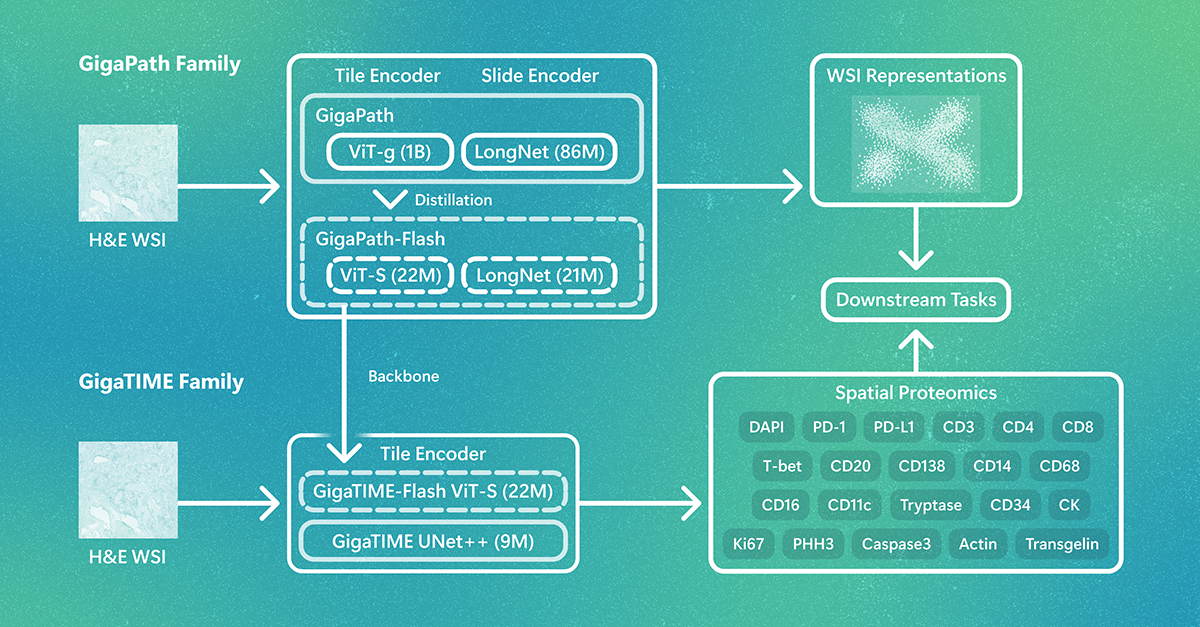
What if pathology foundation models could do more with less? GigaPath-Flash and GigaTIME-Flash cut computational demands while maintaining strong performance, opening the door to larger studies and broader exploration. The post GigaPath-Flash and GigaTIME-Flash: Toward population-scale discovery with efficient pathology foundation models appeared first on Microsoft Research.
We use cookies to run the site and, with your consent, for analytics and to show ads.
See our Cookie Policy.