Multi-access Edge Computing (MEC) can effectively process Internet of Things (IoT) data by transferring computing intensive tasks to edge servers, and has become an effective mechanism to meet the growing demand for computing. The flexible Uncrewed Aerial Vehicle (UAV) and High-Altitude Platform (HAP) with powerful resources working together can significantly improve the efficiency of edge computing system. This paper investigates the resource allocation and trajectory optimization problems in HAP-UAV-MEC system with a Non-Orthogonal Multiple Access (NOMA) communication scenario. By utilizing Wireless Power Transfer (WPT) technology to provide energy support for UAV, we jointly optimize UAV trajectories, resource allocation, and offloading decisions to minimize the energy cost of IoT devices and the energy cost of UAV. This problem is described as a multi-stage Mixed Integer Nonlinear Programming (MINLP) problem. A Deep Deterministic Policy Gradient (DDPG)-Attention-based Resource Allocation and Trajectory Optimization (DART) algorithm combining Deep Reinforcement Learning (DRL) and Lyapunov optimization techniques is proposed to address this issue. DART algorithm utilizes the Lyapunov technique to transform the multi-stage MINLP problem into a deterministic optimization problem, and decomposes the original problem into four parallel subproblems. Through DDPG-attention algorithm based on reinforcement learning and deep learning attention mechanisms, we solve the problems of trajectory optimization and offloading decision. Meanwhile, for remaining subproblems related to resource allocation, convex optimization is used to solve them. The experimental results verify that the DART algorithm can significantly reduce the total cost while ensuring system stability and performance.
Ying Chen, Zhihao Hu, Zhuoyue Chen et al.· IEEE Transactions on Mobile...· 1 citation
The drive for privacy-preserving and low-latency artificial intelligence necessitates executing Large Language Models (LLMs) directly on heterogeneous, resource-constrained edge devices. This paradigm presents a challenge: efficiently running large models across multiple end/edge devices under a strict energy budget. Especially, the problem becomes more complicated when it comes to orchestrating multiple complex tasks using large models at the same time. To address this, we introduce FlexiTensor, an offline planning and deployment system for LLM inference, scaling from a single task to multiple concurrent tasks. FlexiTensor first considers LLM inference for a single task under a strict energy budget. We design a heuristic optimization algorithm to minimize the latency under a strict energy budget. Specifically, we select an optimized subset of devices and tensor allocations. Based on the selection, latency can be reduced by using non-uniform tensor parallelism with quantization. FlexiTensor can be extended to multi-task cases. We model the execution structure of multi-agent workflows as pre-defined Directed Acyclic Graphs (DAGs) and reformulate the problem with energy consumption constraints. FlexiTensor introduces a novel hybrid evolutionary algorithm to address joint task scheduling and resource allocation in multi-task cases. This approach navigates the vast search space of task placement, tensor splitting, and thread assignment to minimize the overall workflow makespan. All optimization algorithms run offline before deployment, using pre-profiled device characteristics to compute a static execution plan. Extensive experiments on a physical testbed of heterogeneous edge devices demonstrate that FlexiTensor significantly outperforms baselines. We accelerate single-task inference by up to 50%. For multi-task workflows, we consistently find superior scheduling solutions, achieving speed improvements by an average of 50% against competitive baselines and by up to 100% in certain scenarios, showcasing its effectiveness and adaptability for real-world edge LLM-based applications.
This paper investigates a dynamic heterogeneous mobile edge computing network (HMECN), where mobile devices (MDs) could offload their full tasks to a small base station (SBS) directly or the macro base station (MBS) in direct or relay mode. As age of information (AoI) is a comprehensive and accurate metric to capture the freshness of computation results, we formulate a long-term weighted sum AoI (LWSA) minimization problem in the HMECN by jointly optimizing the offloading decisions of MDs as well as the bandwidth and computation resource allocation of all base stations, subject to energy, delay and peak AoI constraints. To address the formulated non-convex mixed integer nonlinear programming problem, we decompose it into the offloading decision optimization (ODO) top-problem and the resource allocation optimization (RAO) sub-problem. Based on the decomposition, we propose a federated learning (FL)-assisted hybrid DRL and convex approach that is comprised of a safe multi-agent DRL algorithm, convex optimization and FL. The ODO top-problem is solved by the safe multi-agent DRL algorithm, which strictly ensures that the actions of each agent do not exceed its energy constraint and then paves the way for using convex optimization to solve the RAO sub-problem. FL is used to alleviate the training instability problem aggravated by multi-agent settings via breaking the limitation of partial knowledge for each individual agent. Simulation results demonstrate the superiority of the proposed approach in terms of the LWSA, convergence, scalability and robustness in dynamic environments.
Xiaoying Liu, Junhao Zheng, Kechen Zheng et al.· IEEE Transactions on Mobile...· 8 citations
The fourth industrial revolution drives AI-powered smart manufacturing through cloud-edge computing, enabling intelligent production processes and data-driven automation. To handle security concerns arising from massive IoT deployments, attribute-based access control (ABAC) has become essential for smart factories. It offers flexibility in dynamic environments by utilizing attributes of users, devices, and contextual conditions to decide whether an access request should be permitted or denied. However, the proliferation of IoT devices drastically increases the number of attributes, causing exponential growth in policy complexity and severe decision latency at resource-constrained edge nodes. To address this issue, we propose ABAC-Prune, a cloud–edge collaborative framework for ABAC policy pruning. The framework adaptively determines pruning strategies based on the real-time security state of the factory. Specifically, it employs deep reinforcement learning (DRL) for coarse-grained control in highly dynamic environments, while switching to a Deterministic Policy Optimizer (DPO) for fine-grained adjustment under quasi-static conditions. The pruned lightweight ABAC policy subset is then deployed on edge nodes for real-time access decisions. By continuously monitoring factory conditions and analyzing historical access requests, ABAC-Prune dynamically adjusts pruning strategies. Simulation results on our containerized digital-twin testbed show that ABAC-Prune reduces security response latency by 22% and improves operational efficiency by 30%, while maintaining robust security with anomaly rates consistently below 10%.
Satellite edge computing (SEC) has emerged as a promising paradigm to enhance in-orbit data processing capabilities and reduce transmission latency. However, satellite image processing tasks in SEC environments face critical challenges in efficient data handling, resource coordination, and transmission scheduling. The dynamic network topology and time-varying resource availability in satellite constellations further degrade the quality and stability of SEC services. To address these challenges, we propose a deep learning-based Collaborative Image Feature-extraction Task Optimization (CIFTO) framework. CIFTO dynamically distributes image processing workloads across multiple Low Earth Orbit (LEO) satellites, enabling continuous temporal updates for task allocation while significantly accelerating convergence and reducing computational overhead. By integrating temporal modeling and iterative optimization, CIFTO effectively mitigates the NP-hard nature of satellite task allocation. Furthermore, a lightweight satellite image processing model is designed to meet the strict constraints of on-orbit computation, achieving efficient image inference with minimal parameters. Extensive experimental evaluations demonstrate that the proposed framework ensures timely task completion, substantially lowers system-wide energy consumption, and enhances the adaptability and training efficiency of SEC services.
Xiaoteng Yang, Jie Feng, Lei Liu et al.· IEEE transactions on compute...· 0 citations
This article addresses challenges in the Internet of Consumer Electronics (ICE), such as random task arrivals, limited resources, and system stability, by proposing a collaborative computing framework that integrates edge intelligence with Lyapunov-based deep reinforcement learning (DRL). The framework adopts a three-tier architecture. 1) The application layer generates multiple types of tasks; 2) the intelligent decision-making layer incorporates large artificial intelligence (AI) models to extract global features and employs Lyapunov optimization to transform long-term stochastic problems into deterministic optimization while utilizing an actor-critic DRL architecture for resource allocation; and 3) the resource layer integrates distributed edge nodes to form a unified resource pool. Experiments demonstrate that the framework achieves efficient, stable, and scalable intelligent services on the edge.
Yongtao Yao, Miaojiang Chen, Meng Yi et al.· IEEE Consumer Electronics Ma...· 0 citations
High-altitude airships (HAS) and uncrewed aerial vehicles (UAVs) equipped with Multiaccess Edge Computing (MEC) servers have emerged as promising aerial MEC nodes for providing task offloading (TO) services to intelligent mobile devices (IMDs) in post-disaster scenarios. HAS offers robust computing and energy resources, while UAVs provide flexible, low-altitude coverage for rapid deployment. However, direct task offloading from IMDs to HAS often leads to task failures due to high transmission delays. UAVs with limited onboard resources require to minimize resource waste. Additionally, IMDs in sparse areas face insufficient TO services due to unfair UAV coverage. This paper defines these challenges as a joint optimization problem involving TO, RA, and UAV coverage fairness. It proposes a cooperative aerial Multiaccess Edge Computing (AMEC) framework integrating HAS and UAVs to address the issue. Within this framework, a hybrid TO scheme is first developed to mitigate the high transmission delay between IMDs and HAS. Second, a Distance, Resource, Urgency-based Decision Mechanism (DRUDM) is designed to enhance the accuracy of UAVs in selecting target IMDs for TO services. Third, a Coverage Fairness Guarantee (CFG) strategy is proposed to optimize UAV flight trajectories, ensuring IMDs in sparse areas receive fair TO services. Finally, the joint optimization problem is modeled as a Multi-Agent Partially Observable Markov Decision Process (MA-POMDP), and a DRUDM–CFG algorithm is presented to efficiently solve this complex non-convex optimization problem. Experimental results demonstrate that the proposed algorithm outperforms other compared algorithms in task completion rate and average delay, benefiting from the DRUDM mechanism. Meanwhile, the CFG strategy effectively improves TO service fairness for IMDs in sparse areas.
Xiting Peng, Chuanqi Qin, Xiao-Yu Zhang et al.· IEEE Transactions on Mobile...· 4 citations
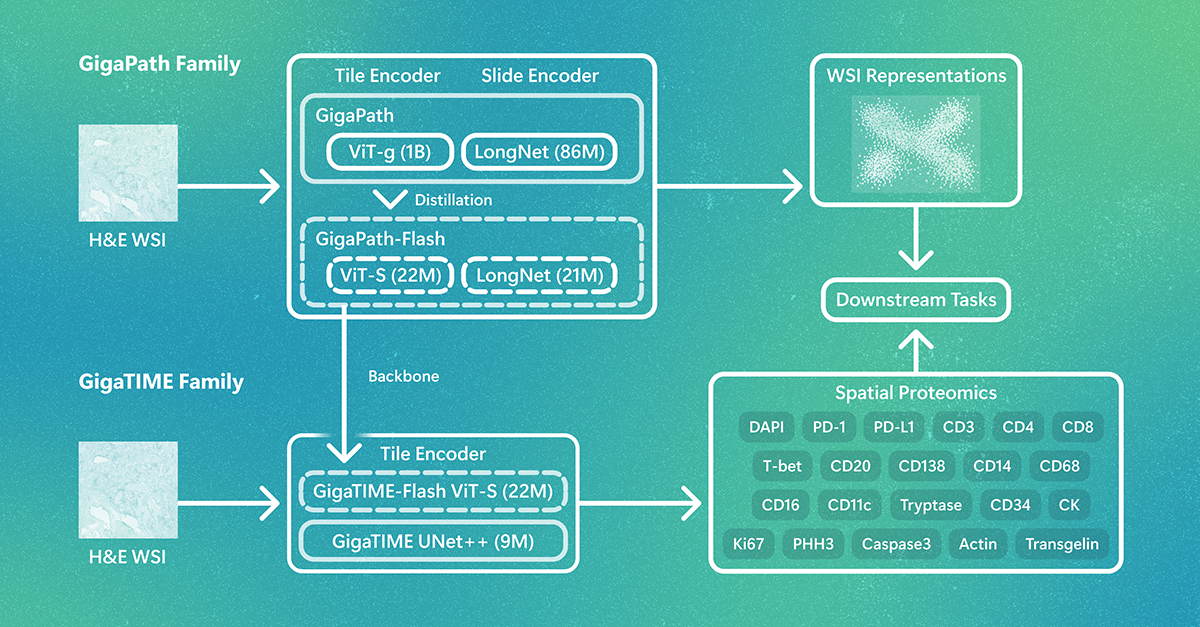
What if pathology foundation models could do more with less? GigaPath-Flash and GigaTIME-Flash cut computational demands while maintaining strong performance, opening the door to larger studies and broader exploration. The post GigaPath-Flash and GigaTIME-Flash: Toward population-scale discovery with efficient pathology foundation models appeared first on Microsoft Research.
MIT News · Artificial Intelligence· news.mit.eduAug 31, 2026
With millions of users across the world, Julia has been used to conduct cutting-edge research and to design new drugs, jet engines, heat pumps, and more.
MIT News · Artificial Intelligence· news.mit.eduAug 27, 2026
A new machine-learning framework aims to improve the success rate of computational protein design while moving away from results that reproduce sequences found in nature.