Mobile Edge Computing (MEC) is promising to enable low delay services with which users can offload computing intensive and delay sensitive tasks to the edge. Considering a multi-cell MEC (MC-MEC) network without sufficient resources to serve all users, user selection and non-orthogonal multiple access (NOMA) should be introduced. Then, to maximize the delay-aware average user service satisfaction degree (DA-AveUSD), user selection and resource allocation are jointly optimized (DA-JUSRA), which is modeled as a mixed integer nonlinear programming (MINLP) problem and proven to be NP-hard. To solve this problem, it is decomposed into two independent subproblems, i.e., the power allocation (PA) problem and the user selection, subchannel scheduling and computing resource allocation (USC) problem. Next, a convex evolutionary alternating optimization (CEAO) algorithm is proposed, which alternately applies the convex optimization method and the Karush-Kuhn-Tucker (KKT)-embedding enhanced elite genetic algorithm (KKT-embedding E2GA) to solve the PA and the USC problem, respectively. Simulations show that compared to the optimal exhaustive search algorithm, the proposed CEAO algorithm converges rapidly within a few iterations, with a gap in DA-AveUSD of less than 1% to the optimum performance. Next, compared to existing user selection schemes, DA-JUSRA with CEAO can enhance DA-AveUSD by more than 50% and yield a higher optimal load.
Ningzhe Shi, Yiqing Zhou, Ling Liu et al.· IEEE Transactions on Mobile...· 1 citation
The implementation of surface electromyography (sEMG)-based hand gesture recognition on mobile and wearable systems is frequently restricted by the finite computing, memory, and battery capabilities of edge devices. Even though a low-density sEMG setup is a feasible hardware implementation, achieving robust recognition under such constraint conditions becomes very challenging due to the non-stationary nature and inter-subject variance. In this paper, we propose DSCAttenEMG, an efficient neural network that combines both Depthwise Separable Convolution (DSC) for local feature extraction and Multi-Head Self-Attention (MHSA) to model long-range dependencies on EMG/IMU data, using 1× 1 DSC followed by Global Average Pooling to replace high-dimensional fully connected layers. Extensive experimentation on a self-collected dataset, the public SeNic and BandMyo datasets shows that our approach achieves state-of-the-art recognition performance (94.45%, 94.11% and 92.89%) at negligible complexity (only 178–179 K parameters). The model is capable of real-time inference (0.93 ms on RTX 4090 GPU, 6.68 ms on NVIDIA Jetson AGX Orin, 1.4/0.7 ms on CPU/NPU of Qualcomm mobile platform) and has a high degree of practicality for embedded deployment (118 samples/s at <inline-formula><tex-math notation="LaTeX">$\sim$</tex-math><alternatives><mml:math><mml:mo>∼</mml:mo></mml:math><inline-graphic xlink:href="wen-ieq1-3697898.gif"/></alternatives></inline-formula>1 W on K230 edge AI platform). This amalgamation of three pivotal strengths, elevated accuracy, enhanced efficiency, and pragmatic viability, highlights its substantial potential for practical mobile and wearable applications.
Xianglong Wan, Dexin Li, Dandan Fu et al.· IEEE Transactions on Mobile...· 0 citations
The rise of edge-cloud computing has accelerated data sharing among mobile users. To resist malicious senders within organizations from leaking sensitive data, access control encryption (ACE) schemes have been employed to secure data flows, in which each sender obtains an encryption key according to the access control policy to encrypt the data, and a sanitizer (i.e., the edge node) inspects all shared data between the sender and receiver. Although attribute-based ACE schemes have been put forward to support fine-grained data sharing, they lack temporal constraints on write control, which is crucial in mobile data sharing scenarios, and have high sanitization overhead at the edge node. In addition, they only provide selective security and are therefore vulnerable to adaptive adversaries. To this end, we propose TSFlow, a time-aware secure flow control framework in mobile edge-cloud that regulates which senders can transmit data to which receivers during the authorized time interval, preventing malicious sending by expired senders. At its core is TA-ACE, a time-aware attribute-based ACE that issues each sender an encryption key tied to an expressive access structure and a time interval. Encrypted data can be sanitized at the edge only if it is well-formed with a valid encryption key and encrypted within the time interval, and any legitimate receiver satisfying the access structure can decrypt the sanitized ciphertext. We formally prove that TA-ACE satisfies the adaptive no-read and no-write rules, and demonstrate the reasonable efficiency of TSFlow through experiments for secure flow control in mobile edge-cloud.
Chao Wang, Qinlong Huang, Caiqun Shi et al.· IEEE Transactions on Mobile...· 0 citations
The dynamic nature of thermal processes means that predictive algorithms are an obvious choice for controlling processes of this type. Unfortunately, the product variability commonly found in real-world processes forces changes in the operating point. This, in turn, forces changes in the controller settings. Unfortunately, even for commonly used PI controllers, this is not usually done in practice. This approach results in a deterioration of the control loop efficiency indices and, consequently, the efficiency of the process and even the quality of the product. Therefore, the implementation of a predictive controller in the control system that would not require personnel to re-parameterize in the event of a change in the operating point seems very attractive. The linear version of the DMC predictive controller meets these expectations, as it features a low computational complexity of the control law formula. This feature allows for its implementation in a PLC. It should be emphasized that the components of the control law for a specific operating point are the result of complex calculations that are difficult to perform in a PLC. A change in the operating point forces them to be re-determined. Therefore, only the combination of a PLC and an industrial computer (IPC) in an edge computing architecture allows the full use of the afore-mentioned advantages of the DMC predictive controller. This paper presents a predictive edge dynamic matrix control (EDMC) algorithm designed to control heat sources operating as a part of heat distribution systems. The EDMC algorithm is implemented partially in a PLC and partially in an edge device. This cooperation significantly increases the system’s available computational power and makes this solution possible to implement in industry. In addition, the publication presents a comparison of the performance quality offered by the EDMC system described in relation to the commonly used PI controller.
G. Malanowski, Malgorzata Michalczyk, Tomasz Klopot· Advances in Science and Tech...· 0 citations
As Satellite Edge Computing (SEC) emerges as a computing backbone of 6 G IoT, its feasibility is threatened by frequent handovers that disrupt task continuity and cause deadline violations in AI-driven workloads. Conventional communication-centric handover strategies overlook the urgency of computational tasks, further exacerbating these issues. To address this gap, we propose the <bold>C</bold>omputation <bold>A</bold>ware <bold>C</bold>onditional <bold>H</bold>andover <bold>O</bold>ptimization (CACHO) framework, a non-intrusive solution fully compatible with 3GPP Conditional Handover (CHO). The framework integrates model partition driven delayed execution to enable seamless migration via inter-satellite tensor transmission, timeout-risk predictive proactive triggering to protect at-risk tasks from overloaded satellites, and task-load-aware target selection to balance computational workloads and service popularity. These modules are orchestrated within standardized CHO workflows without altering the core logic, ensuring deployability in existing satellite network systems. Simulations based on real Starlink constellation data demonstrate that our approach reduces task timeout rates by 29.95–51.02<inline-formula><tex-math notation="LaTeX">$\%$</tex-math><alternatives><mml:math><mml:mo>%</mml:mo></mml:math><inline-graphic xlink:href="xu-ieq1-3674471.gif"/></alternatives></inline-formula> compared to the 3GPP standard CHO and several state-of-the-art baselines, while maintaining handover success rates and minimizing extra handovers needed. Beyond performance gains, this work provides the first blueprint for embedding task life-cycle awareness into handover workflows, bridging mobility management and computation guarantees, and advancing the feasibility of robust SEC for mission-critical 6G IoT applications.
Chuxing Fang, Changqiao Xu, Zitong Li et al.· IEEE Transactions on Mobile...· 0 citations
Large language models (LLMs) are increasingly deployed in edge computing environments to reduce latency and preserve privacy. However, their inference process presents fundamental challenges for resource-constrained IoT devices. LLM inference involves computationally asymmetric stages: parallelizable prompt processing and sequential token decoding. This asymmetry creates deployment bottlenecks where IoT devices lack capacity for prompt processing while edge nodes suffer from inefficient sequential decoding. This paper presents <italic>E<inline-formula><tex-math notation="LaTeX">$^{2}$</tex-math><alternatives><mml:math><mml:msup><mml:mrow/><mml:mn>2</mml:mn></mml:msup></mml:math><inline-graphic xlink:href="feng-ieq3-3676689.gif"/></alternatives></inline-formula>LLM</italic>, an efficient distributed inference framework for large language models in heterogeneous edge-IoT environments. <italic>E<inline-formula><tex-math notation="LaTeX">$^{2}$</tex-math><alternatives><mml:math><mml:msup><mml:mrow/><mml:mn>2</mml:mn></mml:msup></mml:math><inline-graphic xlink:href="feng-ieq4-3676689.gif"/></alternatives></inline-formula>LLM</italic> leverages high-capacity edge devices for structural planning and introduces auxiliary lightweight models to generate segment-specific key-value (KV) caches. These minimal inference artifacts enable collaborative parallel decoding across IoT devices without requiring full model instantiation. The framework employs static-dynamic KV cache separation to minimize communication overhead while maintaining semantic coherence through structure-guided coordination. Extensive evaluation on realistic edge testbeds demonstrates significant performance improvements. Under diverse deployment settings, <italic>E<inline-formula><tex-math notation="LaTeX">$^{2}$</tex-math><alternatives><mml:math><mml:msup><mml:mrow/><mml:mn>2</mml:mn></mml:msup></mml:math><inline-graphic xlink:href="feng-ieq5-3676689.gif"/></alternatives></inline-formula>LLM</italic> achieves 74% –87.7% end-to-end latency reduction compared with several state-of-the-art baselines, while maintaining comparable generation quality; meanwhile, it also delivers a 34.6% –72.2% reduction in communication overhead, improves 9-12 × in energy efficiency. The framework exhibits strong scalability under bandwidth-limited conditions, enabling efficient LLM deployment across heterogeneous edge-IoT environments.
Xingyu Feng, Huanqi Yang, Zhuangzhuang Chen et al.· IEEE Transactions on Mobile...· 0 citations
Blockchain-enabled mobile edge computing (MEC) must jointly optimize task offloading and consensus finality under highly heterogeneous AIoT devices, where latency/energy constraints and fairness-sensitive incentives coexist with time-varying validator reliability. We propose FE-CTDE, a unified framework that couples (1) a Stackelberg pricing-and-allocation layer that reaches a unique equilibrium and reduces utility disparity, (2) a reliability-aware dynamic BFT committee and block-packing mechanism that stabilizes confirmation delay under intermittent connectivity, and (3) a centralized-training/decentralized-execution multi-agent policy that outputs a continuous offloading ratio while requiring only local observations at run time. Extensive simulations across diverse heterogeneity, workload burstiness, and link intermittency show that FE-CTDE consistently improves social welfare and fairness while reducing end-to-end latency/energy and sustaining higher effective consensus throughput, outperforming strong baselines by up to 22.23%. We further report protocol/learning overheads and provide reproducible implementation details.
Libo Feng, Chen-Xi Wang, Zhenli He et al.· IEEE Transactions on Mobile...· 2 citations
An efficient, balanced state discovery heuristic algorithm that will discover the nearest balanced state for any size of the graph network and approximate the frustration of the network is proposed.
Muhieddine Shebaro, Jelena Tešić· Journal of Computer Science· 1 citation
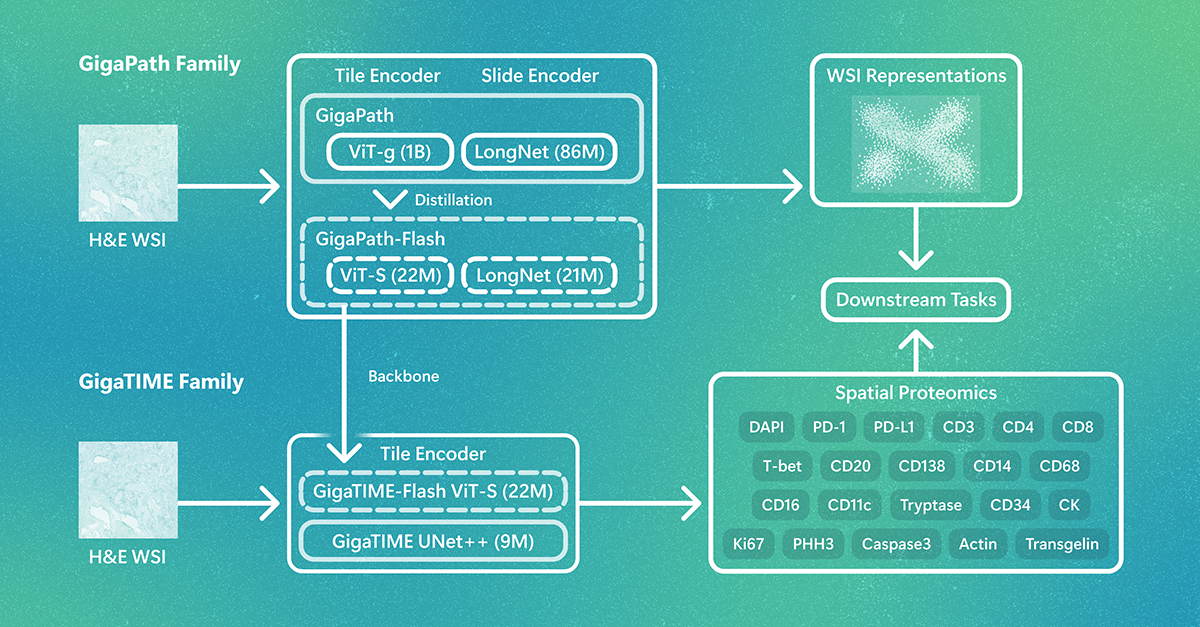
What if pathology foundation models could do more with less? GigaPath-Flash and GigaTIME-Flash cut computational demands while maintaining strong performance, opening the door to larger studies and broader exploration. The post GigaPath-Flash and GigaTIME-Flash: Toward population-scale discovery with efficient pathology foundation models appeared first on Microsoft Research.
MIT News · Artificial Intelligence· news.mit.eduAug 31, 2026
With millions of users across the world, Julia has been used to conduct cutting-edge research and to design new drugs, jet engines, heat pumps, and more.
MIT News · Artificial Intelligence· news.mit.eduAug 27, 2026
A new machine-learning framework aims to improve the success rate of computational protein design while moving away from results that reproduce sequences found in nature.