This report examines the use of algorithmic risk assessments in law enforcement and the safeguards required when a score influences an individual's treatment. It analyses data quality, the object of prediction, classification errors, discriminatory effects and the distinction between an intermediate assessment and a de...
Sergei Khrabrykh, ARGA Observatory· Zenodo (CERN European Organi...· 0 citations
The Dynamic Explainable Framework (DEF), which couples a machine-learning detection backbone with inference-time SHAP and LIME explanations and an explanation-aware alert prioritization layer, is proposed and designed and profiled for real-time operation on benchmark traffic traces.
Muhammad Usama Nazir, Mohammed Alsuhaibani, Asri Binngadi· Scientific Reports· 0 citations
A theoretical framework for understanding explainability of XAI is offered and the key concepts related to the model are presented and can serve as a starting point for developing XAI-based library services.
This paper is the application companion to the TLCTC v2.6 core paper, which defines and freezes the taxonomy: ten cause-oriented threat clusters, ten axioms, the classification rules, the attack-path notation, and the two-layer (strategic/operational) model. The companion takes that taxonomy as given and shows how to p...
Bernhard Kreinz· Zenodo (CERN European Organi...· 0 citations
Reach audiences
Advertise in front of researchers, engineers, and readers.
This study explores ethical concerns related to trust, fairness, transparency, accountability, and data privacy through the SAFE-T Framework (Stakeholder-Aligned Fairness, Ethics, Transparency in AI-Education), a model designed to enhance ethical AI governance in education.
C. Umoke· Research Journal of Pure Sci...· 4 citations· ⚡2
The cryptocurrency market, specifically Solana (SOL), exhibits extreme volatility that is difficult for conventional algorithms to predict accurately. Additionally, advanced Deep Learning models often act as black-boxes. This study implements the Temporal Fusion Transformer (TFT) architecture for robust and interpretab...
Personalized learning in AI-driven music education still faces challenges such as the difficulty of integrating multimodal learning evidence, the complexity of modeling music skill dependencies, and the lack of long-term optimization of learning pathways. To address these issues, this paper proposes a framework for opt...
Meng Lin· International Journal of Art...· 0 citations
This review critically examines the integration of AI, IoT, and HCI in smart healthcare monitoring and identifies unresolved challenges involving dataset bias, sensor reliability, model drift, human over-reliance, alarm fatigue, interoperability, regulatory compliance, and equitable access.
Swamy Tn· International Journal of Res...· 0 citations
This study aims to examines whether generative artificial intelligence (AI) and virtual reality (VR) function as equalizers or reproduce existing interpretive asymmetries in digital heritage interpretation among visitors with varying levels of cultural proximity.
A quasi-experimental design (n = 78) compared...
Yang-Chun Xiong, Ao-Ran Zheng· Journal of Hospitality and T...· 0 citations
The article proposes the Human-Supervised Generative AI Framework for Physical Education and Sport, which classifies tasks by consequence and requires source grounding, data minimization, professional review, disclosure, and outcome monitoring.
Original version 1.1 description (planned methods): Prespecified protocol for a systematic review and meta-analysis of child-facing technology-mediated interventions for gross motor skill learning in typically developing children aged 3–12 years. The review distinguishes immediate acquisition from delayed retention and...
Hiroo Shimizu· Zenodo (CERN European Organi...· 0 citations
OMANISHA (Online Misogynistic Annotated Natural-language Instances for Sentiment and Hate Analysis) is a Bengali dataset developed to support the automatic detection of misogynistic discourse in online spaces. Misogynistic content on online platforms has serious psychological, social, and institutional consequences for...
Fatama Jannat Tisha, Bibhas Roy Chowdhury Piyas, Nurjahan Afrose et al.· Mendeley Data· 0 citations
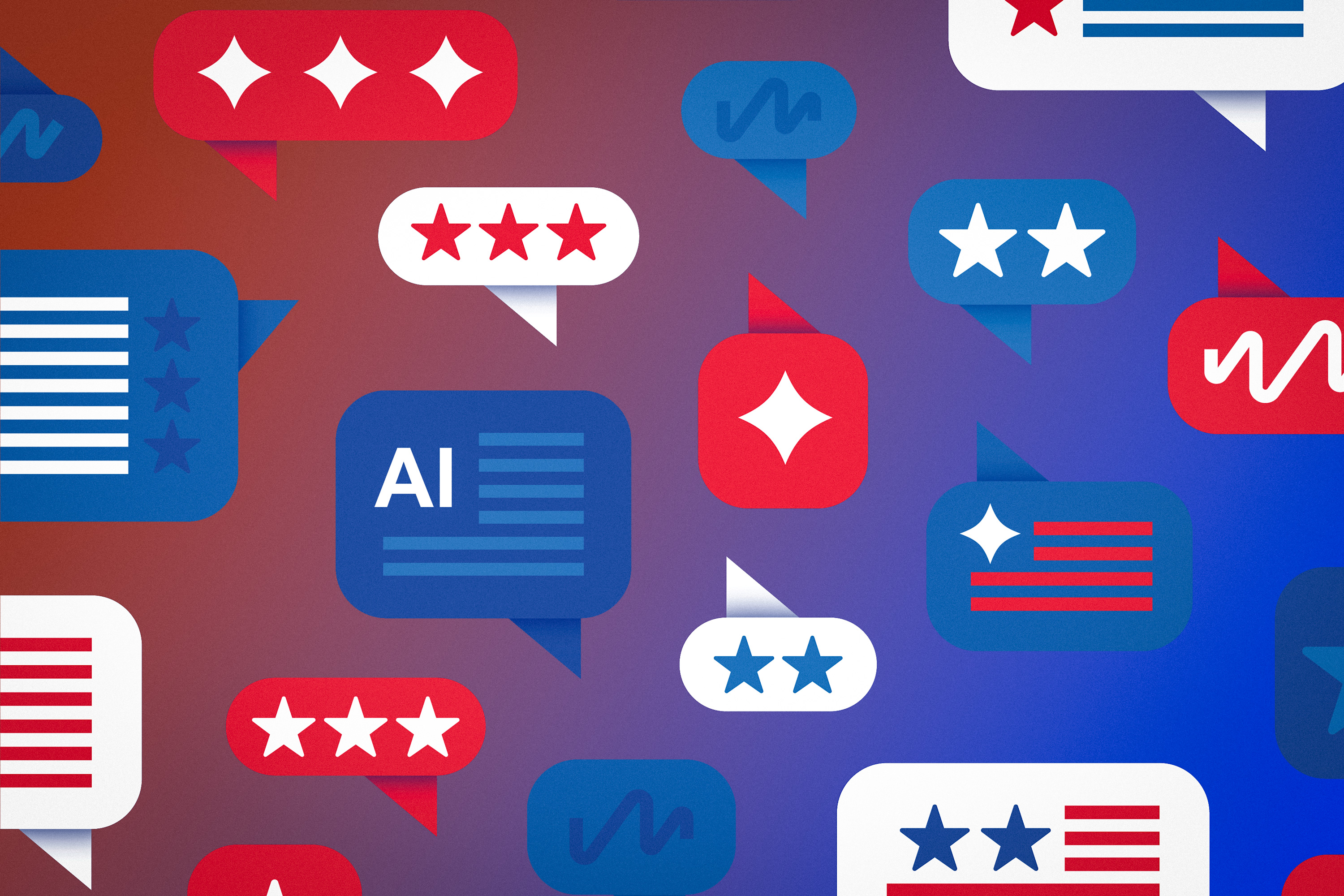
MIT professors Adam Berinsky and Chara Podimata discuss a new project to track how AI chatbots are responding to questions about the 2026 U.S. midterm elections.
Microsoft Research Blog· microsoft.comOct 30, 2026
Evaluating Microsoft Copilot at enterprise scale requires test data that captures the full complexity of real organizations, yet real enterprise data contains sensitive information that cannot be used for evaluation under any circumstances. The post From synthetic enterprise data evaluations to real Microsoft Copilot AI confidence appeared first on Microsoft Research.
Critical flaws, compromised release channels and agentic AI threats landed within days of each other in mid-October 2026. Why “Black October” may say more about how well we now find weaknesses than about the attacks themselves. The post Black October? The Week AI Changed the Cybersecurity Conversation appeared first on GPT-Lab.
Microsoft Research Blog· microsoft.comOct 29, 2026
Host Sowbhagya Suresh shares some of the latest news and cutting-edge research from across Microsoft—from understanding the challenges facing coding agents to uncovering how people use AI at work and improving extended-range weather forecasting. The post Microsoft Research Focus – Edition #97 appeared first on Microsoft Research.