AI-Powered Smart Contract Security Optimization Using Expert Predictive Learning
Ashish Kalyan Pattanayak, Sriram Tripathy, Baidehi Samantray et al.
· Lecture notes in networks an... · 0 citations
Category
2,807 papers
Background The use of artificial intelligence (AI) in Human Resource (HR) is often linked to HR employee performance. This view, however, does not fully explain how performance emerges within AI-integrated work environments, where outcomes depend on how HR employees actually behave. Although a few emerging research has...
This record documents a two-stage self-referential elicitation experiment using AI-generated NotebookLM Audio Overview dialogue. The experiment examines whether an analytical dialogue format continues to generate interpretive structure around deliberately low-information material after explicitly recognizing that the m...
Method note reporting the pre-registered retrospective test of AI-RISKPATH: whether a mechanical chaining engine, driven only by precondition/effect labels attached to the 208 techniques of MITRE ATLAS v2026.09, can reconstruct the 73 attack chains ATLAS documents. The case studies were split by a public randomness bea...
Reach audiences
Advertise in front of researchers, engineers, and readers.
(c) 2026 Pranay Mahendrakar. Licensed under CC BY 4.0. The dominant frame for large reasoning models borrows a label from dual-process psychology: a fast, intuitive System 1 and a slower, deliberate System 2, with longer chains of thought read as more of the latter and therefore, on average, more reliable. A survey of...
Early and accurate cancer diagnosis combined with robust survival risk prognostication remains the paramount determinant of therapeutic success in precision oncology. While routine clinical workflows evaluate hematoxylin and eosin (H&E) stained gigapixel Whole Slide Images (WSI) for morphological staging and transcript...
Large Language Models (LLMs) and other generative forms of artificial intelligence are rapidly moving into enterprise environments. Challenges surround ensuring the security of such models, managing risks associated with their use, ensuring that all use meets organizational and external compliance requirements, and ens...
Human-centric identity systems deployed in real-world environments continuously encounter non-stationary conditions, such as changing illumination, background noise, device transitions, and physiological aging. These environmental and temporal variations introduce distribution shift, degrading system performance, eleva...
Human-centric identity systems deployed in real-world environments continuously encounter non-stationary conditions, such as changing illumination, background noise, device transitions, and physiological aging. These environmental and temporal variations introduce distribution shift, degrading system performance, eleva...
Saliency maps are widely used to explain deep learning predictions in medical imaging, yet visually plausible explanations do not necessarily reflect a model's true decision process and may therefore mislead clinicians. We investigate this problem using a Vision Transformer-based breast MRI classifier trained on the OD...
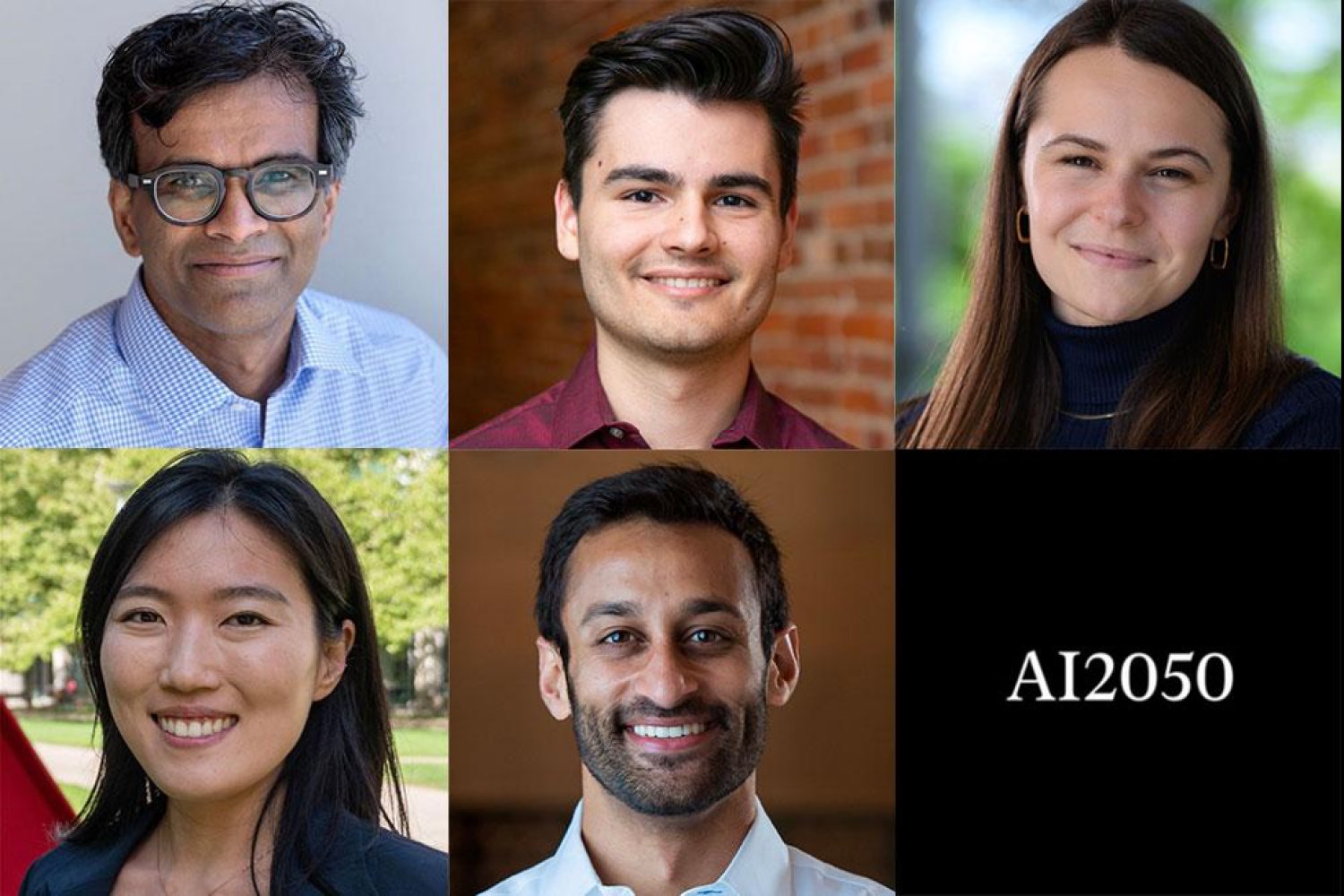
Five MIT faculty members and two additional alumni are honored with fellowships to advance research on beneficial AI.
MIT professors Adam Berinsky and Chara Podimata discuss a new project to track how AI chatbots are responding to questions about the 2026 U.S. midterm elections.
Evaluating Microsoft Copilot at enterprise scale requires test data that captures the full complexity of real organizations, yet real enterprise data contains sensitive information that cannot be used for evaluation under any circumstances. The post From synthetic enterprise data evaluations to real Microsoft Copilot AI confidence appeared first on Microsoft Research.
 GPT-Lab
· gpt-lab.eu
Oct 30, 2026
Critical flaws, compromised release channels and agentic AI threats landed within days of each other in mid-October 2026. Why “Black October” may say more about how well we now find weaknesses than about the attacks themselves. The post Black October? The Week AI Changed the Cybersecurity Conversation appeared first on GPT-Lab.
Host Sowbhagya Suresh shares some of the latest news and cutting-edge research from across Microsoft—from understanding the challenges facing coding agents to uncovering how people use AI at work and improving extended-range weather forecasting. The post Microsoft Research Focus – Edition #97 appeared first on Microsoft Research.
We’re on a journey to advance and democratize artificial intelligence through open source and open science.
We use cookies to run the site and, with your consent, for analytics and to show ads. See our Cookie Policy.