A snapshot of the literature review of the threat modeling for composable architectures is offered, why automation is difficult in this context is shown, and an automation framework to allocate scarce resources according to risk exposure to composable architecture components is proposed.
Liviu-Mihai Popescu, R. Brad· Future Internet· 0 citations
The increasing occurrence of structural breaks, financial crises, and economic uncertainty has significantly weakened the predictive performance of traditional macroeconomic forecasting models. In response to these limitations, this study proposes a blockchain-enabled causal machine learning framework designed to impro...
Oumaima Abouzaid, Faouzi Boussedra· Frontiers in Blockchain· 0 citations
Marine biofouling is a disadvantage to submerged structures because it reduces the hydrodynamic efficiency, the structural integrity, and the operational costs, hence the necessity of conducting accurate inspection and monitoring as part of marine infrastructure management.. Although underwater imaging systems enable l...
J. S. Shyam Mohan, Ankur Dumka· Journal Of Big Data· 0 citations
Reach audiences
Advertise in front of researchers, engineers, and readers.
The development of artificial intelligence in education has outpaced the institutionalisation of policies governing its use, accountability, and implementation. Cross-national scholarship remains dominated by discussions of adoption, pedagogical opportunities, and ethical risks, while variation in policy enactment acro...
Muh Fitrah, Ruslan Ruslan, Luthfiyah Luthfiyah et al.· Educational Point· 0 citations
Purpose This study examines how GenAI chatbots can support Hurricane preparedness among Hispanic/Latino communities by comparing combined audio-text delivery with text-only delivery and culturally tailored with generic content. It focuses on information overload and emotional attachment as cognitive and affective mecha...
This review highlights the potential of DL and multi-omics integration in advancing precision oncology for brain cancer by enhancing diagnostic precision, prognostic accuracy, and personalized therapy development.
Sana Munquad, Anam Upadhyay, A. Das· Frontiers in Bioinformatics· 0 citations
Soil salinization poses an increasingly severe threat to sustainable agriculture globally, while conventional seed priming optimization remains time- and resource-intensive, limiting its widespread adoption. This study developed an innovative smart seed priming framework that seamlessly combined multispectral imaging t...
Zhi-Cheng Jia, Fang Wang, Chang-Ran Li et al.· Journal of Cleaner Productio...· 0 citations
This work introduced a vision-based waste classification system that relies on Deep Meta-Learner Stacking with Explainable AI (DMLSE) to merge the unique feature representations of a BasicCNN, VGG16, ResNet50V2, and MobileNetV2 across the synthetic, garbage, and waste classification datasets.
T. V. Shareena, S. Padmavathi· SN Computer Science· 0 citations
Impaired mobility is among the most common impairments caused by neurologic, neurodegenerative, and orthopaedic disorders. Depending upon the cause being stroke, Parkinson's disease, spinocerebellar ataxia, or osteoarthritis needing arthroplasty, the disruption in gait and mobility causes dependency, increased risk of...
Ankit Vijayvargiya, Rajesh Kumar, Pilani Nkomozepi et al.· Frontiers in Robotics and AI· 0 citations
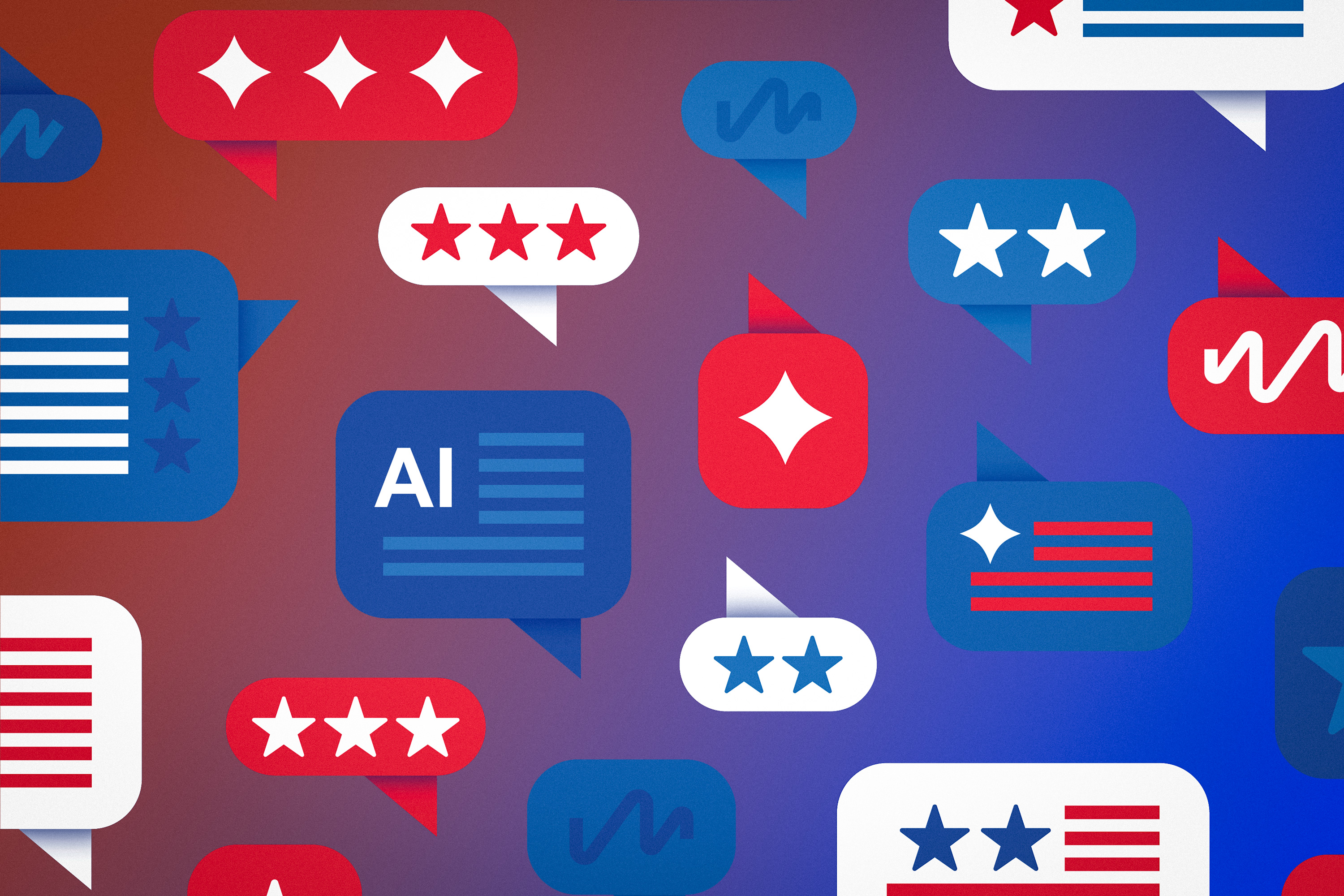
MIT professors Adam Berinsky and Chara Podimata discuss a new project to track how AI chatbots are responding to questions about the 2026 U.S. midterm elections.
Microsoft Research Blog· microsoft.comOct 30, 2026
Evaluating Microsoft Copilot at enterprise scale requires test data that captures the full complexity of real organizations, yet real enterprise data contains sensitive information that cannot be used for evaluation under any circumstances. The post From synthetic enterprise data evaluations to real Microsoft Copilot AI confidence appeared first on Microsoft Research.
Critical flaws, compromised release channels and agentic AI threats landed within days of each other in mid-October 2026. Why “Black October” may say more about how well we now find weaknesses than about the attacks themselves. The post Black October? The Week AI Changed the Cybersecurity Conversation appeared first on GPT-Lab.
Microsoft Research Blog· microsoft.comOct 29, 2026
Host Sowbhagya Suresh shares some of the latest news and cutting-edge research from across Microsoft—from understanding the challenges facing coding agents to uncovering how people use AI at work and improving extended-range weather forecasting. The post Microsoft Research Focus – Edition #97 appeared first on Microsoft Research.