Unit I – AI and Its Subfields is an Open Educational Resource (OER) presentation developed for the AI Fundamentals course for undergraduate students. This presentation provides a structured introduction to Artificial Intelligence and its major concepts. It covers the definition, objectives, characteristics, history and...
Venkata Krishnaveni Chennuru· Zenodo (CERN European Organi...· 0 citations
Digital transformation and artificial intelligence are reshaping how organizations develop capabilities, make decisions, innovate, and pursue sustainable performance. However, existing research largely examines digital transformation, Dynamic Capabilities, AI capability, organizational intelligence, and sustainability...
Samriddhi Bhattacharyya· Journal of Business Practice...· 0 citations
This study introduces a modular, AI-powered disease diagnosis system that combines deep learning, neuro-symbolic reasoning, and structured automation to support early, scalable, and explainable clinical decision-making. Built upon the large-scale DDXPlus dataset, the system processes over one million patient records in...
Abdulrahman Khaled Ali Odhaib, Rana Zaki Ali Abdulrahman Al-Maflehi, Niayesh Gharaei et al.· Scientific Reports· 0 citations
Reach audiences
Advertise in front of researchers, engineers, and readers.
Unit II – Applications of Artificial Intelligence is an Open Educational Resource (OER) presentation developed for the undergraduate AI Fundamentals course. This presentation introduces the applications of Artificial Intelligence across six important domains: Healthcare, Finance, Retail, Agriculture, Education, and Tra...
Venkata Krishnaveni Chennuru· Zenodo (CERN European Organi...· 0 citations
Shake a mixture and the large grains come to the top. This paper asks whether the usual explanation survives the geometry──the answer is that it does not: the gap is too small. No new mathematical theorem and no new law is claimed. Scope of this paper (scope note): No new mathematical theorem and no new law is claimed─...
Yuuki Yamagishi· Zenodo (CERN European Organi...· 0 citations
Artificial Intelligence (AI) is becoming increasingly usual in HR management, especially in talent acquisition and AI-assisted decision making. But, in addition to the technological capacities, the successful application of AI needs HR professionals to understand and evaluate the recommendations of AI. In the present r...
Binu Menon, Saraswathy Kumar· Canadian Journal of Marketin...· 0 citations
The fast growth of dark web processes has made cybercrime an adaptive and intelligence-driven phenomenon that warrants a change in thinking about digital policing, traditionally basing it on fixed rules and post hoc investigation. The strategy involves integrating transformer-based semantic analysis, time behavior and...
Udit Mamodiya, Indra Kishor· Advances in computational in...· 0 citations
Description This repository contains the complete, reproducible PyTorch source code for the study "Deep Learning for Odontoid Fractures: The Critical Role of Patient-Level Partitioning and Grad-CAM Verification in Model Generalization". The codebase implements an end-to-end deep learning framework designed to eliminate...
Yunus Emre Kıymaz, Şakir Taşdemir, Burak Gezer et al.· Zenodo (CERN European Organi...· 0 citations
This conceptual working paper introduces the Integrated BIM-to-Decision Framework, a six-layer architecture that connects the origin of information demand to accountable engineering decisions and closes the process through structured feedback. It addresses a persistent limitation in BIM implementation: the tendency to...
Housien Al khadraa· Zenodo (CERN European Organi...· 0 citations
Research Manager Mike Walker reflects on a career spanning hacker culture, cybersecurity, and AI, sharing lessons about trust, teamwork, leadership, and why solving difficult problems requires curiosity, judgment, agility—and an understanding of the rules. The post Learn the rules: The hacker mindset appeared first on Microsoft Research.
Is your company’s AI sovereign? A practical guide for CIOs on AI vendor lock-in, EU Data Act switching, cloud sovereignty, and testing your exit plan before you need it. The post Sovereignty Is the Option to Leave appeared first on GPT-Lab.
MIT News · Artificial Intelligence· news.mit.eduNov 2, 2026
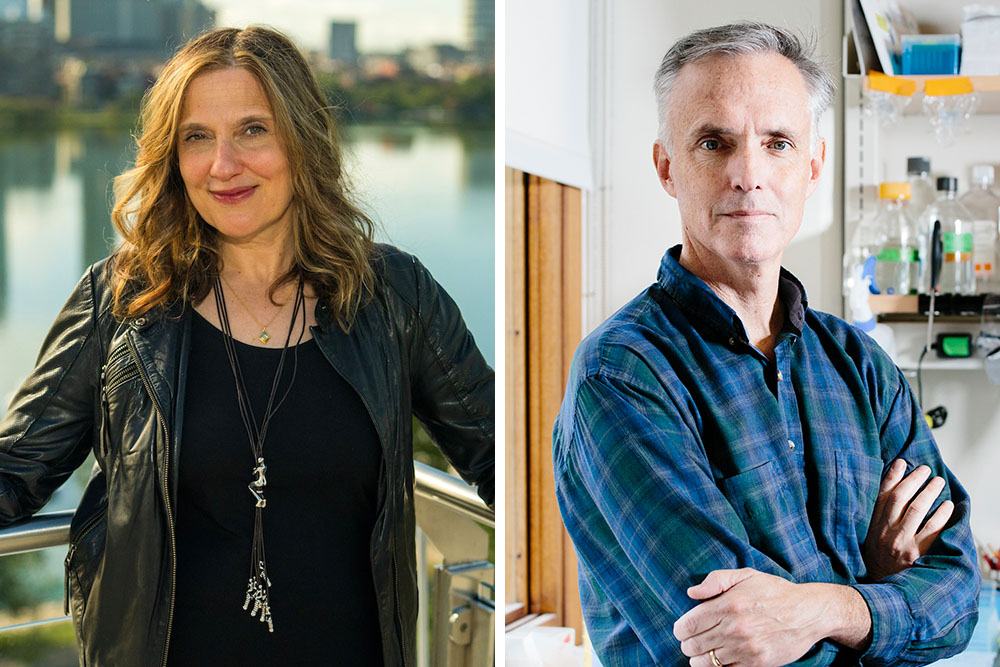
The MIT professors collaborated to identify the first AI-discovered antibiotic, a scientific breakthrough that is widely recognized as a milestone in AI-driven drug discovery.
MIT News · Artificial Intelligence· news.mit.eduOct 30, 2026
MIT professors Adam Berinsky and Chara Podimata discuss a new project to track how AI chatbots are responding to questions about the 2026 U.S. midterm elections.