For analytical clarity, the contributions can be organized into four interrelated thematic areas: Smart Forecasting Beyond Finance; Deep Learning and Hybrid Models for Financial Forecasting; Large Language Models for Next-Generation Forecasting; and Perspectives on Intelligent Forecasting. Together, these themes reflec...
L. Barolli, Antonino Ferraro, Antonio Galli et al.· Frontiers in Big Data· 0 citations
Unit IV – AI in Research, Generative AI and Prompt Engineering is an Open Educational Resource (OER) presentation developed for the undergraduate AI Fundamentals course. This presentation introduces the use of Artificial Intelligence in experimentation and multidisciplinary research, followed by the fundamentals of Gen...
Venkata Krishnaveni Chennuru· Zenodo (CERN European Organi...· 0 citations
Artificial Intelligence (AI) has become a foundational capability for modern intelligent enterprises,transforming business operations, customer engagement, decision-making, supply chains, cybersecurity, enterprise architecture, and digital innovation. Organizations increasingly deploy Generative AI, Large Language Mode...
Sanjeeve Kumar Gajadi· Zenodo (CERN European Organi...· 0 citations
This Zenodo record is a permanently preserved version of a Structured PREreview. You can view the complete PREreview at https://prereview.org/reviews/22693218. Does the introduction explain the objective of the research presented in the preprint? Yes The introduction states its objective directly rather than making the...
Mayur Jain· Zenodo (CERN European Organi...· 0 citations
Reach audiences
Advertise in front of researchers, engineers, and readers.
This paper develops a theoretical model of how responsibility structures may come under pressure for reconfiguration as non-human reactive entities—including generative AI, autonomous control systems, recommendation algorithms, and other computational systems—participate continuously in social operations. Rather than a...
Kouhei Misugi· Zenodo (CERN European Organi...· 0 citations
Principal component analysis is described as extracting the main direction in the data. This paper asks whether the data alone fix that direction──the answer is that they do not: the units do. No new mathematical theorem and no new law is claimed. Scope of this paper (scope note): No new mathematical theorem and no new...
Yuuki Yamagishi· Zenodo (CERN European Organi...· 0 citations
The rapid expansion of Nigeria's digital lending industry has led to the development of effective credit risk assessment systems. The low credit histories and strong information asymmetry were two of the numerous issues that the traditional credit scoring algorithms had to deal with. The impact of artificial intelligen...
Hauwa Modu Kumshe, Haziel Yusuf Hassan, Mohammed Umar Tugga et al.· Global journal of economic a...· 0 citations
Artificial-intelligence-based management systems used by the world's leading commercial banks to assess credit risk and detect problem loans at an early stage are analyzed. The role and potential of Machine Learning, Deep Learning, Big Data Analytics, Explainable AI (XAI), Early Warning Systems (EWS), Behavioral Scorin...
Jamolov Alovuddin· Zenodo (CERN European Organi...· 0 citations
The GAA-LS provides a psychometrically supported instrument for assessing students’ assessment-specific capacity to use GenAI responsibly within assessment contexts and contributes to applied measurement, feedback design, and academic integrity policy in AI-supported higher education.
Jun-Tao Nie, Ze-Yu Zhang, Xiao-Mei Lu et al.· Frontiers in Education· 2 citations
The swift advancement of multimodal artificial intelligence (AI) has changed the face of integration of diverse data types, such as medical images, texts, biosignals, genomics, wearables, and clinical data in the field of medicine. However, the deployment of reliable, secure, and scaled multimodal healthcare systems is...
The landscape of unimodal data modalities used in oncological practice including clinical records, multi-scale imaging, and multi-omics signatures is examined, alongside a critical comparison of the deep-learning architectures and integration frameworks used to combine these data sources into advanced predictive models...
Alexandra Chera, Ana-Maria Chirilaș, A. El-Sabeh et al.· Frontiers in Artificial Inte...· 0 citations
Research Manager Mike Walker reflects on a career spanning hacker culture, cybersecurity, and AI, sharing lessons about trust, teamwork, leadership, and why solving difficult problems requires curiosity, judgment, agility—and an understanding of the rules. The post Learn the rules: The hacker mindset appeared first on Microsoft Research.
Is your company’s AI sovereign? A practical guide for CIOs on AI vendor lock-in, EU Data Act switching, cloud sovereignty, and testing your exit plan before you need it. The post Sovereignty Is the Option to Leave appeared first on GPT-Lab.
MIT News · Artificial Intelligence· news.mit.eduNov 2, 2026
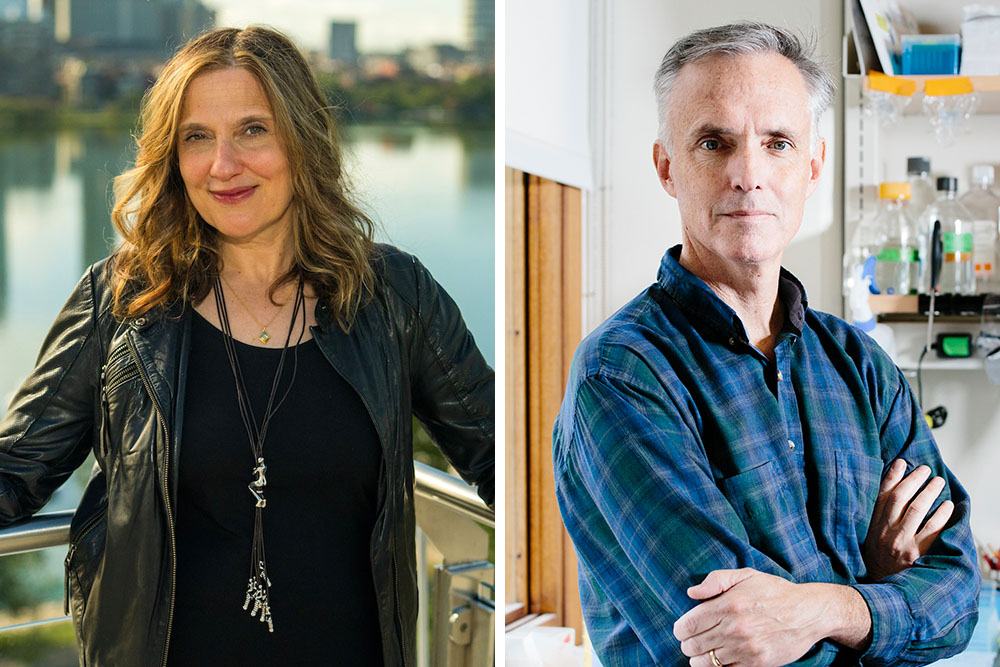
The MIT professors collaborated to identify the first AI-discovered antibiotic, a scientific breakthrough that is widely recognized as a milestone in AI-driven drug discovery.
MIT News · Artificial Intelligence· news.mit.eduOct 30, 2026
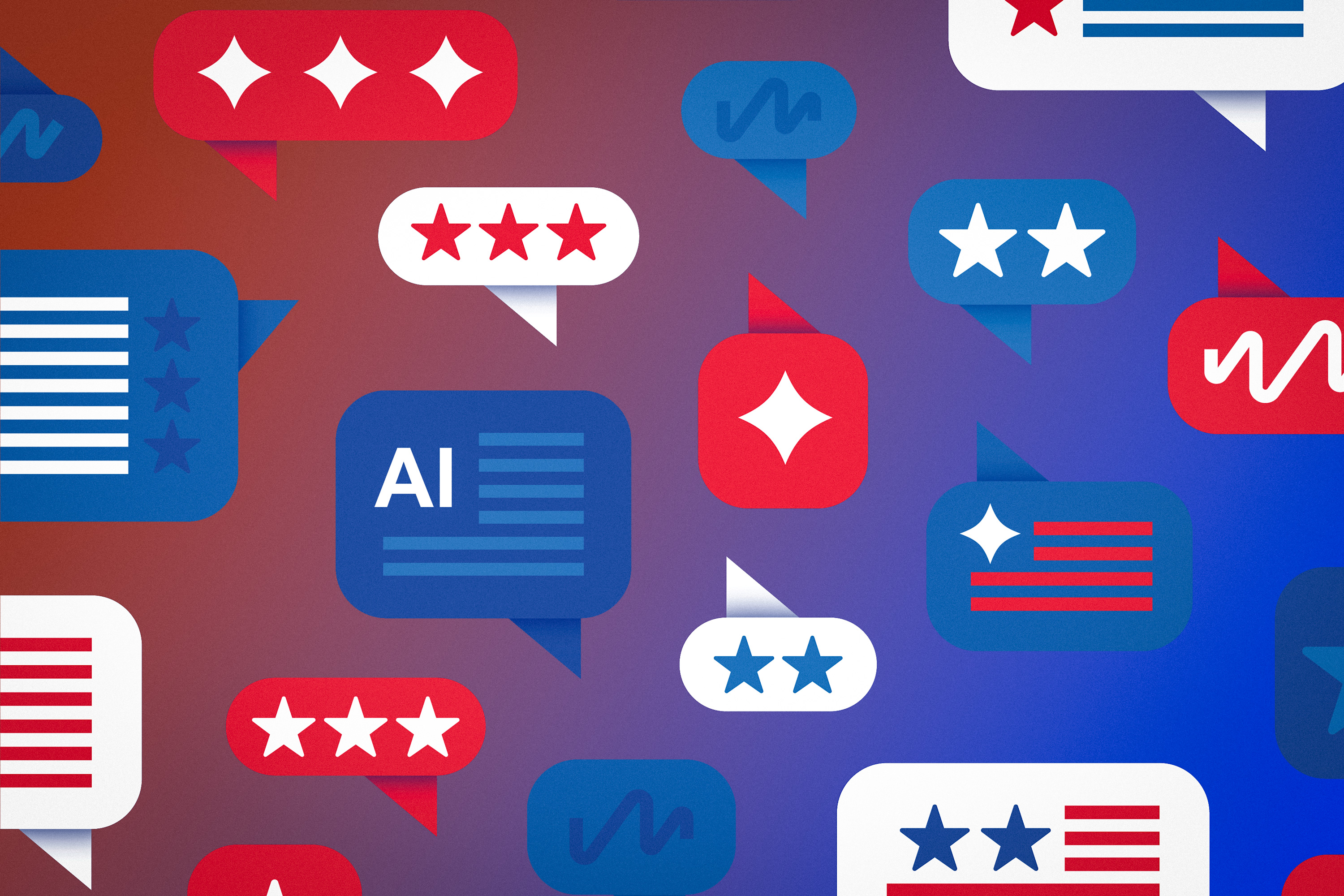
MIT professors Adam Berinsky and Chara Podimata discuss a new project to track how AI chatbots are responding to questions about the 2026 U.S. midterm elections.
We use cookies to run the site and, with your consent, for analytics and to show ads.
See our Cookie Policy.