Background Accurate discrimination between benign and malignant breast masses is essential for biopsy decisions and individualized management. This study aimed to develop an interpretable machine-learning model integrating artificial intelligence (AI)-structured digital breast tomosynthesis (DBT) mass features with per...
Lu Nie, Yun Wei, Xinyu Feng et al.· Frontiers in Cell and Develo...· 0 citations
This research data package supports the manuscript entitled “Emission-prioritized explainable AI for auditing circular-economy and carbon-neutrality integration in project environmental assessment documents”. It contains processed document-level features, sentence-level evidence, country-sector indicators, topic/model...
Abstract—Abstract—Explainable AI methods such as SHAP,which is a tool for generating Shapley Additive explanations are widely used in health and fitness applications to give reasons for predictions , but their reliability is usually studied on static datasets. Most fitness apps collect user data incrementally, leading...
Ariana Khoujini· Zenodo (CERN European Organi...· 0 citations
The review combines recent research findings with guidance on new investigation tracks for developing all-encompassing AI systems which both spread far-reaching outcomes and follow sustainability requirements.
D. Usman· International Journal of Com...· 0 citations
Reach audiences
Advertise in front of researchers, engineers, and readers.
A conceptual framework is proposed to illustrate the integration of customer behavioral characteristics, policy attributes, and advanced machine learning models into an intelligent decision-support system for claim prediction, highlighting the importance of explainable AI, continuous model monitoring, and human-in-the-...
Pragadeesh Roopchander· International Journal of Cre...· 0 citations
This paper presents a novel framework for neuro-symbolic reasoning, addressing the longstanding challenge of integrating neural networks and symbolic reasoning. The core idea is to leverage the strengths of both approaches by employing a Graph Neural Network (GNN) to represent knowledge and perform initial reasoning st...
Jincheng Zhang· Zenodo (CERN European Organi...· 0 citations
Artificial Intelligence can be useful in the teaching of Indian Writing in English only when it remains subordinate to literary judgement, cultural awareness, and independent thought.
R. Prabu· International journal for de...· 0 citations
Digital banks increasingly use machine learning and generative AI inside decisions that affect access to credit, fraud interventions, financial-crime controls, customer support and internal operations. The principal governance problem is not that regulators have demanded a single form of ‘explainable AI’. It is that a...
This paper explains why organizations that adopt the same generative AI/LLM technology end up with different results. It argues the real driver isn't the technology itself but "appropriation" — how employees actually use it day to day, which can differ from how it was intended. Using Adaptive Structuration Theory (DeSa...
Likhitha Macha· Zenodo (CERN European Organi...· 0 citations
Literary trends of the update of the living systematic mapping review REHALISE up to May 31st, 2025, suggest a slight and gradual shift toward more clinically oriented applications, though robustness and reproducibility remain critical concerns.
Francesco Negrini, Calogero Malfitano, M. Valeri et al.· European Journal of Physical...· 0 citations
MUSIC AS THE COSMIC PRIMORDIAL CODE The Feminine Essence and the Entangled Symphony of Existence ( ( (( HMC-GATE )) ) ) ARTISTIC-PHYLOSOPYCAL METACOGNITION ( APM- METACOGNITION ) AUTHORS NOTE : YOU ARE THE ESSENCE OF THE EXISTENCE when the universe, through the architecture of flesh and nerve, became capable of hearing...
Mohammad Ali Piran· Zenodo (CERN European Organi...· 0 citations
Abstract Background Neonatal Intensive Care Units represent high-risk clinical environments where timely and accurate decision-making is critical for newborn survival, increasing the demand for advanced technological support. As artificial intelligence becomes progressively integrated into neonatal care, it is transfor...
AI agents can generate code at a scale that’s hard for humans to review line-by-line. PDD Kit helps ensure the code is doing what the developer intended by creating formal specifications and testing against them. It converts developer intent into a Verus specification, proves AI-generated code meets it for every input, and uses tests where proofs aren't practical. Developers review intent, not every line. The post Formally verifying agent-written full-stack web apps with PDD Kit appeared first o…
Research Manager Mike Walker reflects on a career spanning hacker culture, cybersecurity, and AI, sharing lessons about trust, teamwork, leadership, and why solving difficult problems requires curiosity, judgment, agility—and an understanding of the rules. The post Learn the rules: The hacker mindset appeared first on Microsoft Research.
Is your company’s AI sovereign? A practical guide for CIOs on AI vendor lock-in, EU Data Act switching, cloud sovereignty, and testing your exit plan before you need it. The post Sovereignty Is the Option to Leave appeared first on GPT-Lab.
MIT News · Artificial Intelligence· news.mit.eduNov 2, 2026
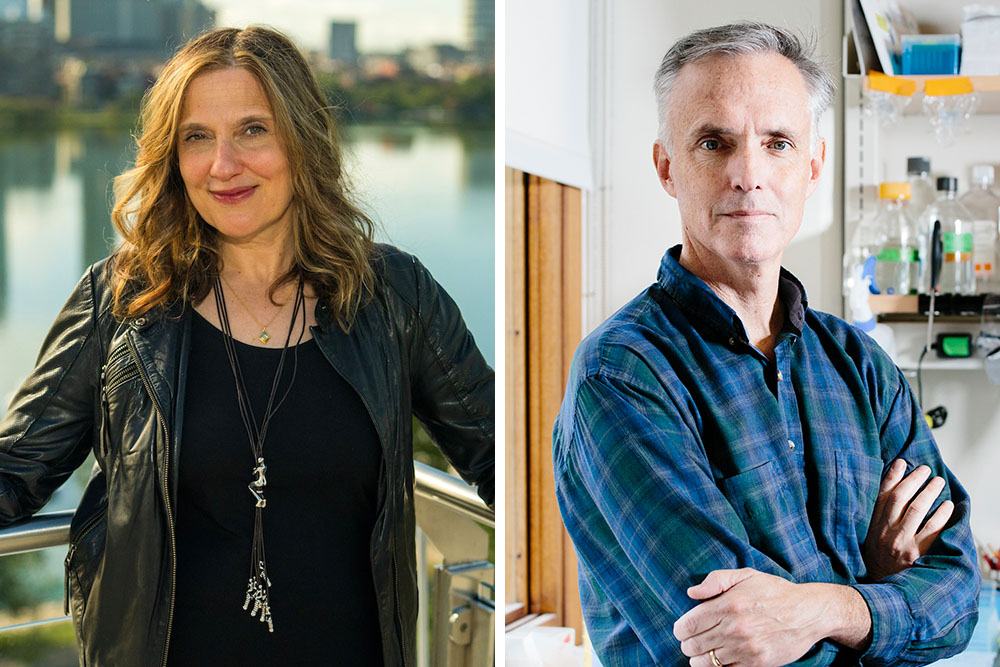
The MIT professors collaborated to identify the first AI-discovered antibiotic, a scientific breakthrough that is widely recognized as a milestone in AI-driven drug discovery.
We use cookies to run the site and, with your consent, for analytics and to show ads.
See our Cookie Policy.