Background Accurate prediction of 90-day outcomes following ischemic stroke is crucial for optimizing clinical strategies. This study aimed to systematically review and meta-analyze studies using deep learning (DL) and hand-crafted radiomics (HCR) models for predicting 90-day modified Rankin Scale (mRS) outcomes after...
I. Kiani, K. Darmiani, P. Valizade et al.· medRxiv· 0 citations
A reproducible teaching lab about missing-name policies, uncertain strings, tied ranks and denominator choice in NYC DOHMH dog-license records. The archive contains the lesson and facilitator answers, a saved two-field public-data projection, Python standard-library reproduction and verification scripts, calculated CSV...
iDogNames· Zenodo (CERN European Organi...· 0 citations
This report explains the data, methods, and results of an AI-driven wind and solar energy forecasting and grid instability early-warning system. It uses hourly generation and weather records from 1 January 2020 to 30 November 2025. Models are trained on 2020 to 2024 data and evaluated on the held-out year 2025. The rep...
Rudra Prashant Jadhav· Zenodo (CERN European Organi...· 0 citations
Alzheimer’s Disease (AD) is a progressive neurodegenerative condition wherein the early identification of Cognitively Normal (CN), Mild Cognitive Impairment (MCI) and AD is of importance to researchers. The different medical equipment used and data collection settings bring about differences that do not pertain biologi...
Firdose Fathima Begum Syeda, Faridha Dudekua, Joice Vidhya Grace Lakka et al.· Journal of Artificial Intell...· 0 citations
Reach audiences
Advertise in front of researchers, engineers, and readers.
When a clinical AI system’s output differs from a human clinician’s judgment, what follows is consequential and underspecified. Current AI interfaces offer only a narrow lane for what happens next: they present the AI output (and its associated potential divergence) as an adjudicative choice for a human to accept, over...
Florence Xini Doo, Gabriel A. Brat, Sarah Collins Rossetti et al.· npj Digital Medicine· 0 citations
This chapter builds AI literacy for leaders who have no technical background and no need to acquire one. The aim is judgment, not coding. It lays out a working map of the main technologies, from machine learning and deep learning through natural language processing, generative AI, computer vision, and robotics and expl...
Purpose This study aims to analyze the linear structural relationships and nonlinear predictive contributions associated with tourist satisfaction in the Trusmi Batik Tourism Area. By integrating PLS-SEM, ANN, and SHAP-based XAI, it evaluates how destination attributes function as hygiene or motivator factors. The ulti...
Yusa Inderapermana, Yuliana Susilowati, Wawan Hendriawan Nur et al.· Journal of Hospitality and T...· 0 citations
Organizations are adopting generative AI and AI decision support in professional work while evidence on their effects is still accumulating. Empirical studies document substantial productivity gains in some settings and losses in others, and practitioners carry assumptions formed during early use into everyday professi...
Respiratory diseases such as asthma, pneumonia, chronic obstructive pulmonary disease (COPD), tuberculosis, and COVID-19 require timely recognition and appropriate medical evaluation. Cough is a common symptom of many respiratory conditions and contains acoustic characteristics that can provide useful information for d...
Prof. Dr. J. K. Shimpi Kakade Sagar Nitin, Dr. H. B. Jadhav Prof. S. D. Satre· International Journal of Adv...· 0 citations
Objective: The rapid digitisation of healthcare has necessitated the development of high-performance predictive models for clinical diagnostics. While traditional statistical frameworks such as Multiple Logistic Regression (MLR) are favoured for their intrinsic interpretability, they often encounter an accuracy ceiling...
James Chukwuka Ohayi, Uchenna Chinedu Nduka, Everestus O. Ossai· Zenodo (CERN European Organi...· 0 citations
Artificial intelligence (AI) is changing the way we discover anticancer drugs. It tackles the problems of traditional methods, such as prolonged timelines for drug development, higher costs, and substantial inter-patient heterogeneity. This review explains how AI is applied throughout the cancer drug pipeline. This inc...
Faizan Ul Haque Nagrami, Pahchan Shukla, Ruchi Yadav et al.· Frontiers in Oncology· 0 citations
Service organizations increasingly employ artificial intelligence and predictive analytics to allocate financial, technological, workforce, and operational resources. Although algorithmic systems can process complex organizational data, purely prediction-driven approaches may generate recommendations that are difficult...
Adiluzzaman Adiluzzaman, Arsal Arif, Syeda Nazia Huq et al.· Global Journal of Engineerin...· 0 citations
In Compton Lecture, the distinguished legal scholar warns of potential “loss of the Enlightenment” while suggesting ways innovations can meet our civic and cultural needs.
Assistant Professor Benjamin Lindquist studies how engineers deliberately injected randomness into early AI, giving rise to deep-learning models that sometimes hallucinate.
Microsoft Research Blog· microsoft.comOct 22, 2026
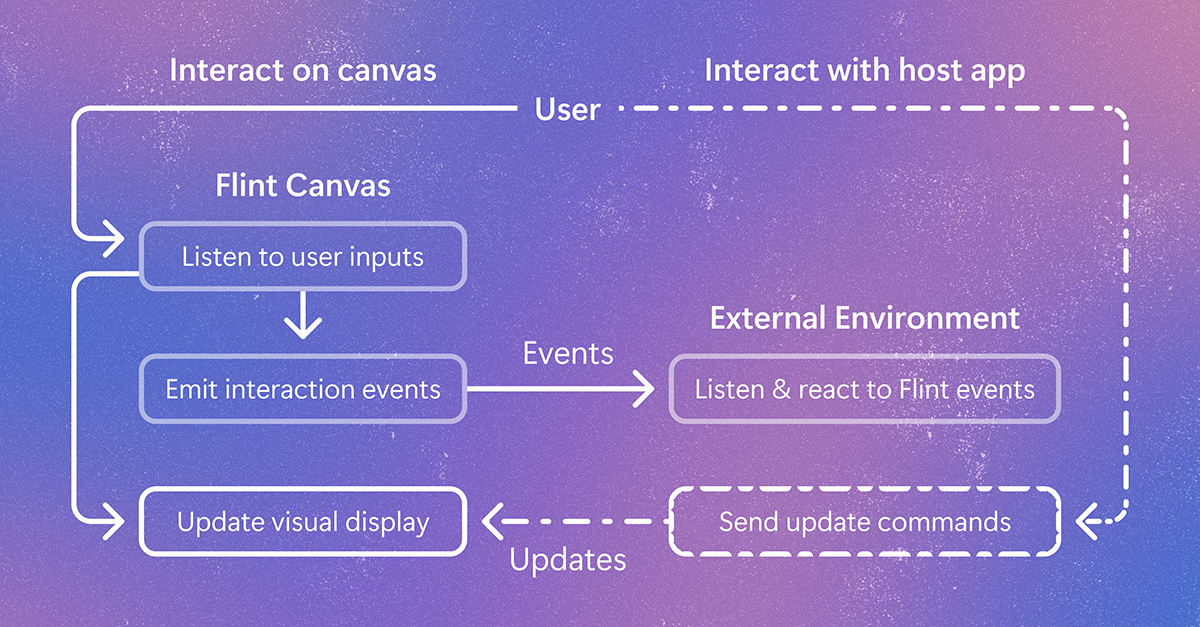
Flint-interactive gives AI agents a language for creating interactive visualizations. Click a chart, filter data, highlight related content, and explore beyond the view the author originally chose. The post Flint-interactive: A language for creating interactive data visualizations appeared first on Microsoft Research.