The increasing demand for sustainable and low-carbon construction materials has intensified research into supplementary cementitious materials derived from agricultural residues. Rice husk ash (RHA), owing to its high amorphous silica content, pozzolanic activity, porous morphology, and potential to reduce Portland cem...
P. Hema Bindu, Dr. Swati Agrawal, R. R. L. Birali· International Journal of Sci...· 0 citations
Over the past few decades, organizations have systematically shifted from fragmented, function-specific software tools toward integrated enterprise architectures, with Enterprise Resource Planning (ERP) serving as the central technological backbone and a codified model of organizational operations. As contemporary digi...
Kadir ÇIRAY, Hacer Arıol Taymaz· Özgür Yayınları eBooks· 0 citations
This manuscript presents a revised account of the assumptions, calculations, and unresolved derivations underlying selected predictions of Fundamental Information Theory (FIT). It examines three central hypotheses: normal neutrino mass ordering with a massless lightest state, a leptonic CP phase within 270°–290°, and a...
Franciscus Gerardus Adrianus Van den Berg· Zenodo (CERN European Organi...· 0 citations
Most classrooms still move at one speed. A teacher with thirty or forty students has to choose a pace that suits the middle of the class, which leaves weaker students behind and keeps stronger students waiting. AI-based adaptive learning systems promise to change this by watching how each student answers, estimating wh...
Manvigas Singh Aulakh, Raghu Raja Mehra· International Journal of Sci...· 0 citations
Reach audiences
Advertise in front of researchers, engineers, and readers.
Credit scoring is an area where Machine Learning models should be evaluated not only for predictive performance, but also for fairness, explainability, and robustness as part of a broader trustworthy-AI governance process. This paper presents a SAFE agentic credit-scoring system that coordinates multiple stages of Mach...
Human-facing AI systems are mainly designed and evaluated for what they do for users, and seldom for what sustained use does to users' own capabilities. Evidence that AI use can erode, preserve, or improve human capability is accumulating across several fields, but it remains scattered and has not yet shaped how AI sys...
Vo Thanh Khang Nguyen, Truong Thanh Hung Nguyen, Hoang-Loc Cao· Zenodo (CERN European Organi...· 0 citations
The temperature-controlled supply chain, known as the cold chain, which is very important for retaining quality within perishables such as food or pharmaceuticals and biologicals, is considered to be the most perishable of all goods, where safety and compliance with regulatory standards are concerned. The challenges th...
The first essay is a meta-analysis that provides the first systematic examination of how the AI–human gap in customer responses varies across customer journey stages, and how anthropomorphic design factors moderate this gap at each stage. Analyzing 1,425 effect sizes drawn from 401 studies reported in 129 publications,...
Elaheh Saffari· Old Dominion University· 0 citations
Full manuscript and corresponding code/data for: Pilot smoothing for budgeted audits of environmental classifier alarms. manuscript.pdf contains the research paper. code-and-data.zip contains executed numerical results and reproducibility scripts; internal FILE_DESCRIPTIONS.json gives per-file descriptions and TABLE_IN...
Automated Compliance Checking (ACC) is now a central activity in AEC. It supports design assurance, regulatory compliance, and digital delivery from early design through to review. Yet many current ACC systems remain opaque. Complex rule sets and AI-assisted reasoning often produce results that are difficult to inspect...
Youssef Senousy, Franco Cheung, Ogerta Elezaj et al.· Proceedings of Digital Front...· 0 citations
"Artificial intelligence (AI) is changing how candidates prepare for high-stakes examinations, yet evidence from small-island systems is scarce. This convergent mixed-methods study examined how 171 stakeholders in 15 Caribbean territories perceive AI\u2019s role in examination preparation. Twenty four-point Likert item...
In Compton Lecture, the distinguished legal scholar warns of potential “loss of the Enlightenment” while suggesting ways innovations can meet our civic and cultural needs.
Assistant Professor Benjamin Lindquist studies how engineers deliberately injected randomness into early AI, giving rise to deep-learning models that sometimes hallucinate.
Microsoft Research Blog· microsoft.comOct 22, 2026
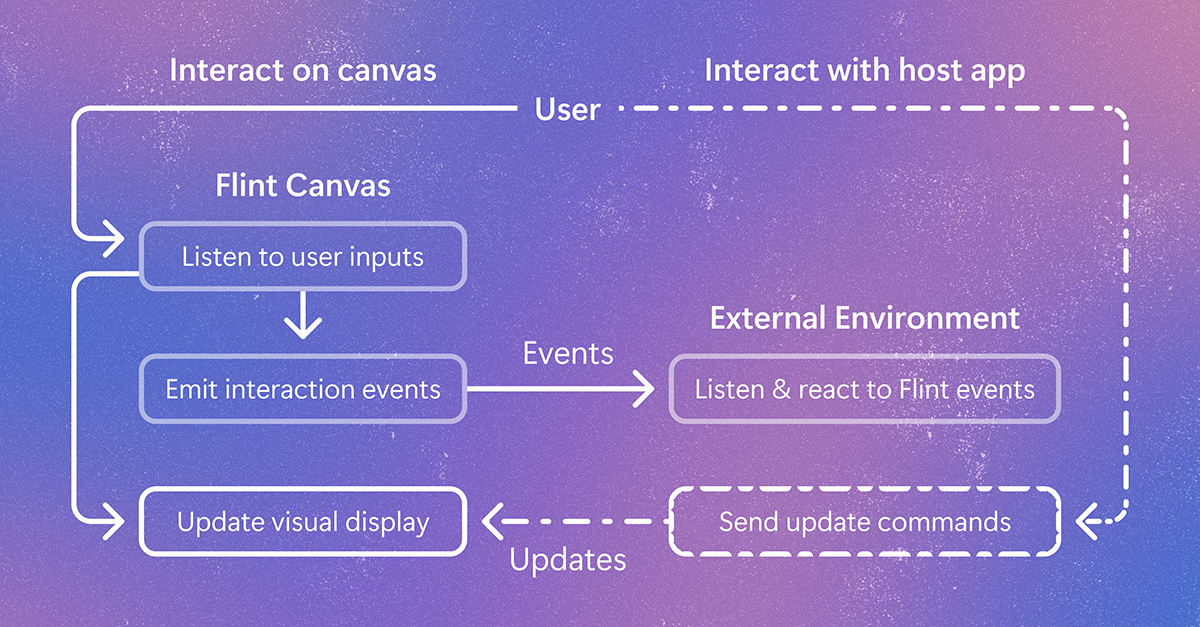
Flint-interactive gives AI agents a language for creating interactive visualizations. Click a chart, filter data, highlight related content, and explore beyond the view the author originally chose. The post Flint-interactive: A language for creating interactive data visualizations appeared first on Microsoft Research.