This work analyzes how well the mediators regulate emotions within a dispute -- finding AI mediators perform significantly better than humans at reducing negative emotion, and examines whether AI mediators facilitate disputants better realizing joint gains in disputes with high integrative potential.
This work presents CANDOR (Collecting and Analyzing Networked Data for Open Research), an end-to-end infrastructure for participant-mediated collection and governance of sensitive digital trace data, and compares existing data donation infrastructures, identifying how different approaches support participant control, d...
Andrew Zhao, Rijul Magu, E. Raj et al.· 0 citations
Drawing across observed calls, interviews, and probe reactions, design considerations for AI roleplay training are derived: keep AI in a rehearsal role, provide descriptive rather than prescriptive feedback, and evaluate counseling process rather than agreement with prescribed responses.
N. K. R. Sehgal, Sunny Rai, Sai Preethi Matam et al.· 0 citations
RankGround is a two-stage framework that achieves accurate GUI grounding with a single VLM call per query and achieves 1.4 times faster inference and improves localization accuracy by 5.5% on average over the second-best method across all backbones and screen scales, establishing a new state of the art in both efficien...
Li-Yang Fan, Xin-Ping Bi, Yi-Tai Li et al.· ACM International Conference...· 0 citations
Reach audiences
Advertise in front of researchers, engineers, and readers.
This work formalizes a different design target, structured unpredictability, as conditional dependence between an output and a persistent hidden state beyond what an observer can infer from the transcript, as conditional dependence between an output and a persistent hidden state beyond what an observer can infer from t...
In collaborative tasks with asymmetric information, participants coordinate their understanding through interaction. We ask whether gaze provides evidence about grounding across two such tasks. Working from discrete behavioral annotations, we map HCRC MapTask (Anderson et al., 1991) and MUNDEX (T\"urk et al., 2023) int...
It is suggested that chatbot communication style influences users' perceptions of conversational agents and may improve performance relative to less supportive chatbot designs, but the overall value of chatbot interaction depends on the task context.
Erik Derner, Dalibor Kučera, Aditya Gulati et al.· Computers in Human Behavior· 0 citations
This survey consolidates and analyzes developments across EEG-to-image synthesis, EEG-to-text generation, and EEG-to-audio reconstruction, and highlights open-source datasets and baseline implementations to facilitate systematic benchmarking and accelerate progress in EEG-driven neural decoding.
Shreya Shukla, Jose Torres, Akshaj Murhekar et al.· arXiv.org· 10 citations
Affora is presented, a design system that supports both readers and agents while preserving visual freedom and familiar human workflows through a shared interface rather than a separate agent-only surface.
GYROval - Gridded Yielding of Robust value Orientation is presented, together with the results of administering it to twenty models, a robust benchmark for measuring cultural value orientation in large language models on the two Inglehart-Welzel axes over several domains and roles.
Alexander Didenko, A. Shabanova, Vladislav Zapylikhin et al.· 0 citations
This work audits five LLM overseers on 19 compliance tasks, varying only trace detail and evidence labeling, finding that elaborate traces shift the decision criterion toward rejection, increasing false alarms in susceptible overseers.
This work analyzes three public corpora: CoAuthor (1,447 keystroke-level co-writing sessions), RealHumanEval (editor telemetry from 243 programmer records), and a pre-LLM CS1 corpus as a human-only baseline, comparing minimal-AI work, collaborative AI use, and simulated wholesale delegation.
AI agents can generate code at a scale that’s hard for humans to review line-by-line. PDD Kit helps ensure the code is doing what the developer intended by creating formal specifications and testing against them. It converts developer intent into a Verus specification, proves AI-generated code meets it for every input, and uses tests where proofs aren't practical. Developers review intent, not every line. The post Formally verifying agent-written full-stack web apps with PDD Kit appeared first o…
Professor Paris Smaragdis develops computers with superhuman hearing for applications like speech recognition, music understanding, and environmental monitoring.
MIT News · Artificial Intelligence· news.mit.eduOct 23, 2026
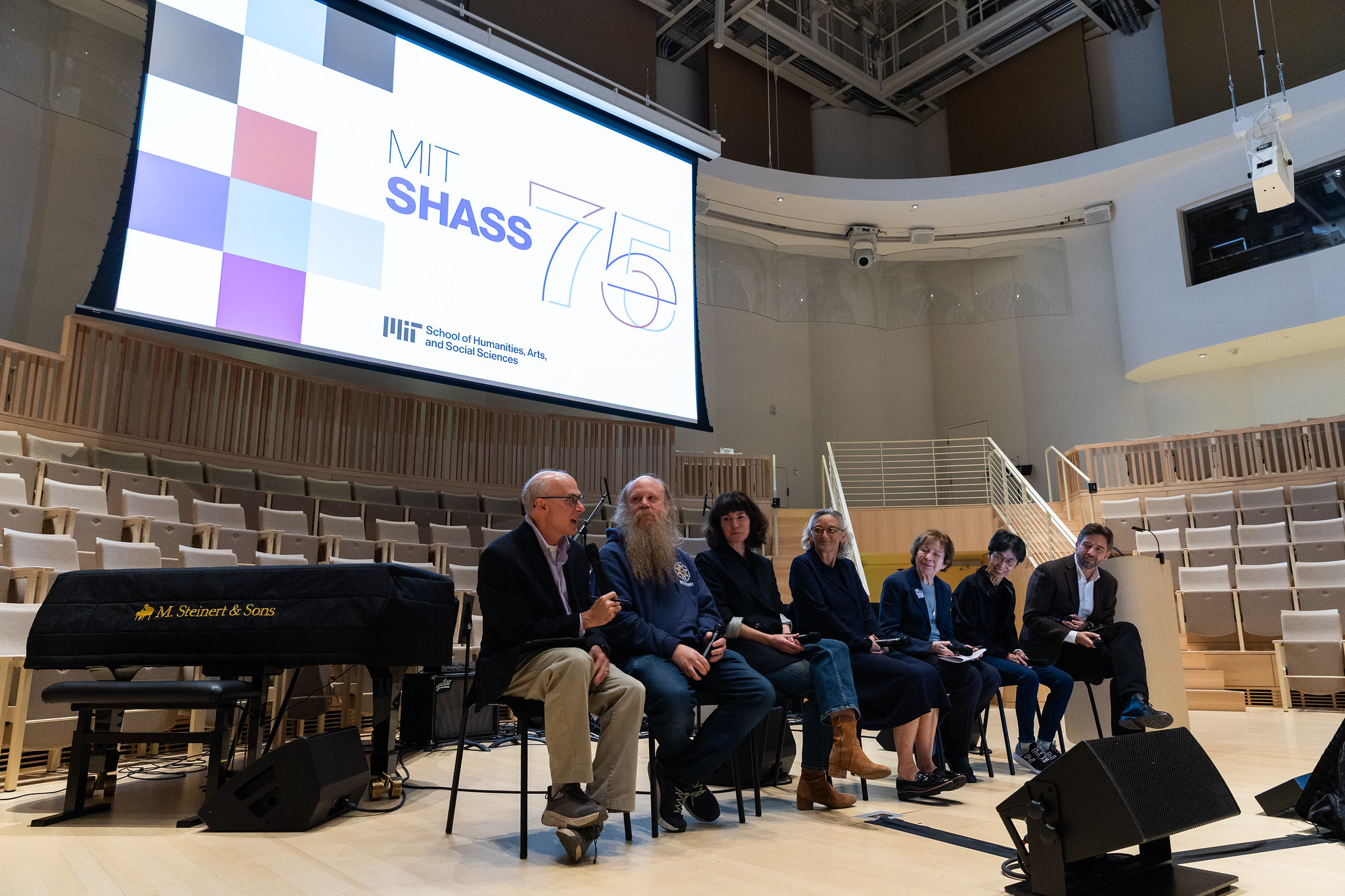
During the School of Humanities, Arts, and Social Sciences’ 75th Anniversary Symposium, President Sally Kornbluth said “MIT has never needed your particular insight and guidance more than we do now.”
MIT News · Artificial Intelligence· news.mit.eduOct 23, 2026
Assistant Professor Benjamin Lindquist studies how engineers deliberately injected randomness into early AI, giving rise to deep-learning models that sometimes hallucinate.
MIT News · Artificial Intelligence· news.mit.eduOct 22, 2026
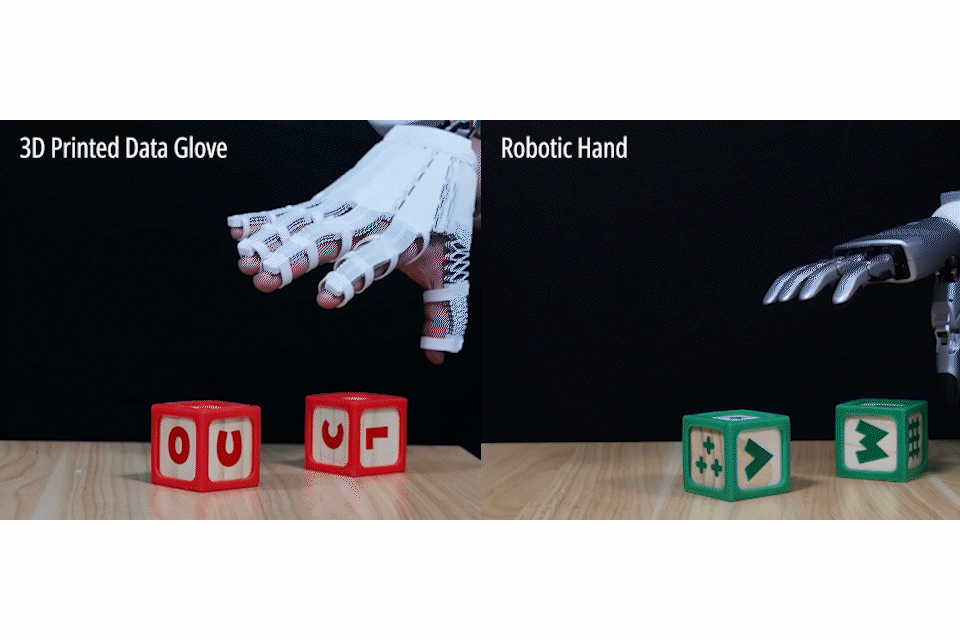
“X-Hinges” helps design and 3D print items like lamps and gloves with an interactive twist: automatically embedded sensors that perceive and adaptively respond to human contact.
We use cookies to run the site and, with your consent, for analytics and to show ads.
See our Cookie Policy.