It is found that AI assistance increases accuracy by 3-7% when participants viewed the relevant video segment, and by 27-35% when they did not, while efficiency increases by 10% for short videos and 25% for longer ones, and self-reported confidence in answers remains stable across all three conditions.
Anders Giovanni Møller, Elisa Bassignana, Francesco Pierri et al.· arXiv.org· 2 citations
TxSum is formulated, a new domain-grounded NLP task for DeFi transaction explanation, and MATEX, a grounded multi-agent framework for high-stakes transaction explanation is introduced, which achieves the strongest overall explanation quality.
Zifan Peng, Jingyi Zheng, Yule Liu et al.· 1 citation
D2Snap, an algorithm to downsample the DOM, premised on preserving actionability and actionability-discriminating features, is proposed and evaluated using a snapshot-variant web agent (GPT-4o) on a dataset sampled from Online-Mind2Web.
Thassilo M. Schiepanski, Nicholas Piël· arXiv.org· 4 citations
After interaction, users are still rating the pitch, not the product: user-elicited LLM evaluations, including the preference data driving public leaderboards, measure expectation management at least as much as the model itself.
Robert D. Morabito, Tyler McDonald, C. Viswanath et al.· arXiv.org· 0 citations
Reach audiences
Advertise in front of researchers, engineers, and readers.
Pearmut is introduced, a lightweight yet feature-rich platform that makes end-to-end human evaluation as easy to run as automatic evaluation and enables reliable human evaluation to become a practical, routine component of model development and diagnosis rather than an occasional effort.
Vilém Zouhar, Tom Kocmi· arXiv.org· 11 citations· ⚡2
A clinician-support framework in which post-session interviewer ratings are combined with automatic language-based predictions to estimate patient-reported interaction quality in free clinical interviews is evaluated, suggesting that automatic language analysis and interviewer judgment capture complementary aspects of...
Ao-Wen Shi, Michal Balazia, Danilo Postin et al.· 0 citations
People share mental health diagnoses on social media, yet how such language becomes visible around their self-disclosure, and whether community engagement tracks it, remain unexamined across conditions. We analyze 89,605 Reddit posts from 739 users across eight conditions, removing each user's diagnosis disclosure and...
Renkai Ma, Lingyao Li, Shan-Ting Chen et al.· 0 citations
This work proposes the first taxonomy of LLM refusals that is grounded in pragmatic theory and finds that although models differ in how they refuse, their refusals are overall explicit and strongly morally evaluative, with interactional repair occurring mainly through offering or providing safer alternatives instead of...
Ruo-Xuan Li, Pin-Qiao Wang, Sheng Li et al.· 1 citation
It is found that cultural alignment depends not simply on recognizable cultural markers, but on how those markers fit social, linguistic, procedural, and visual context, and how those markers fit social, linguistic, procedural, and visual context.
Millicent Ochieng, F. D. M. A. Ali, Elizabeth A. Ankrah et al.· 0 citations
Layer-by-layer analysis of GenAI VP dialogue logs can reveal process patterns associated with high rated history taking and support process-focused feedback in medical education.
Xinyu Li, Zijian Li, Mengyu Xia et al.· 0 citations
The TSExplorer tool enables users to inspect high-dimensional datasets through multiple complementary 2D visualizations derived from high-dimensional feature representations to support a wide range of workflows.
Einari Vaaras, Manu Airaksinen, O. Räsänen· 0 citations
Comparing machine learning and deep learning models for classifying postural states in VR under visual perturbations suggests that multimodal sensing, temporal deep learning, and explainable AI can support reliable classification of balance-related instability in VR.
N. Anjum, M. Pavel, Robert Gonzalez et al.· 0 citations
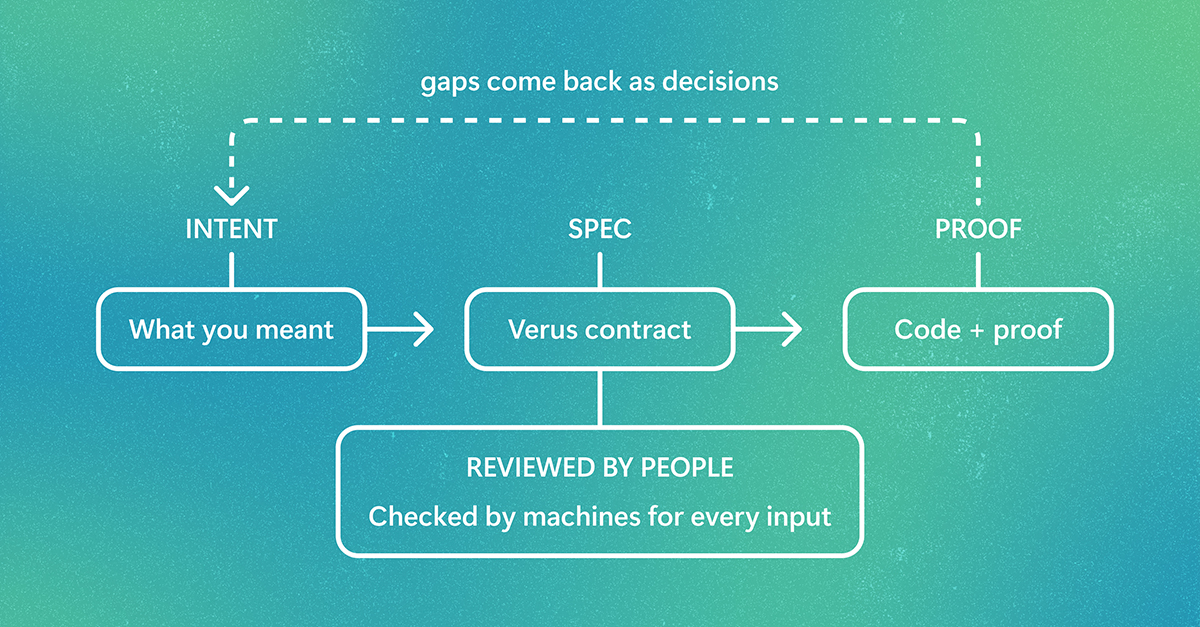
AI agents can generate code at a scale that’s hard for humans to review line-by-line. PDD Kit helps ensure the code is doing what the developer intended by creating formal specifications and testing against them. It converts developer intent into a Verus specification, proves AI-generated code meets it for every input, and uses tests where proofs aren't practical. Developers review intent, not every line. The post Formally verifying agent-written full-stack web apps with PDD Kit appeared first o…
Professor Paris Smaragdis develops computers with superhuman hearing for applications like speech recognition, music understanding, and environmental monitoring.
MIT News · Artificial Intelligence· news.mit.eduOct 23, 2026
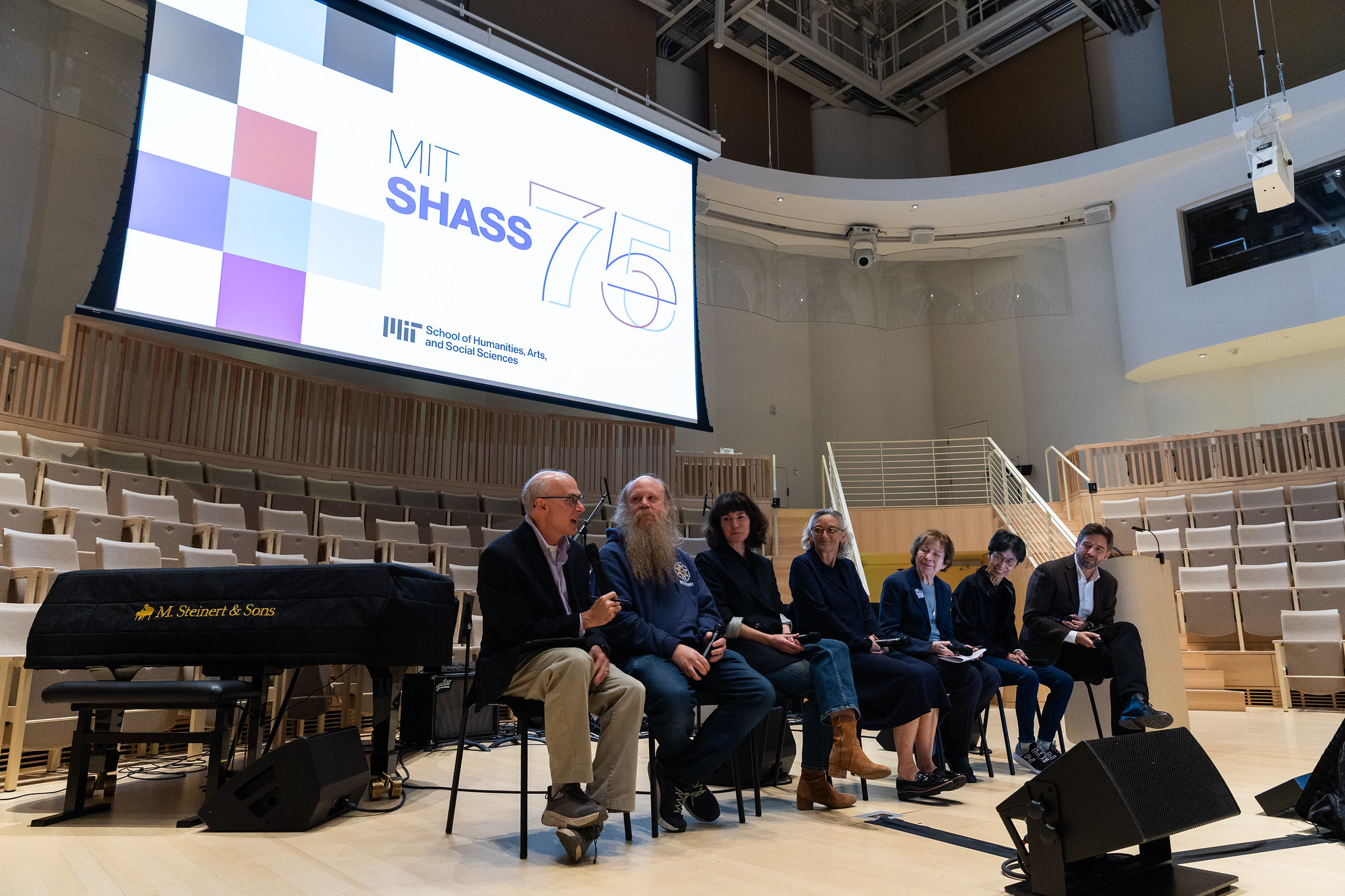
During the School of Humanities, Arts, and Social Sciences’ 75th Anniversary Symposium, President Sally Kornbluth said “MIT has never needed your particular insight and guidance more than we do now.”
MIT News · Artificial Intelligence· news.mit.eduOct 23, 2026
Assistant Professor Benjamin Lindquist studies how engineers deliberately injected randomness into early AI, giving rise to deep-learning models that sometimes hallucinate.
MIT News · Artificial Intelligence· news.mit.eduOct 22, 2026
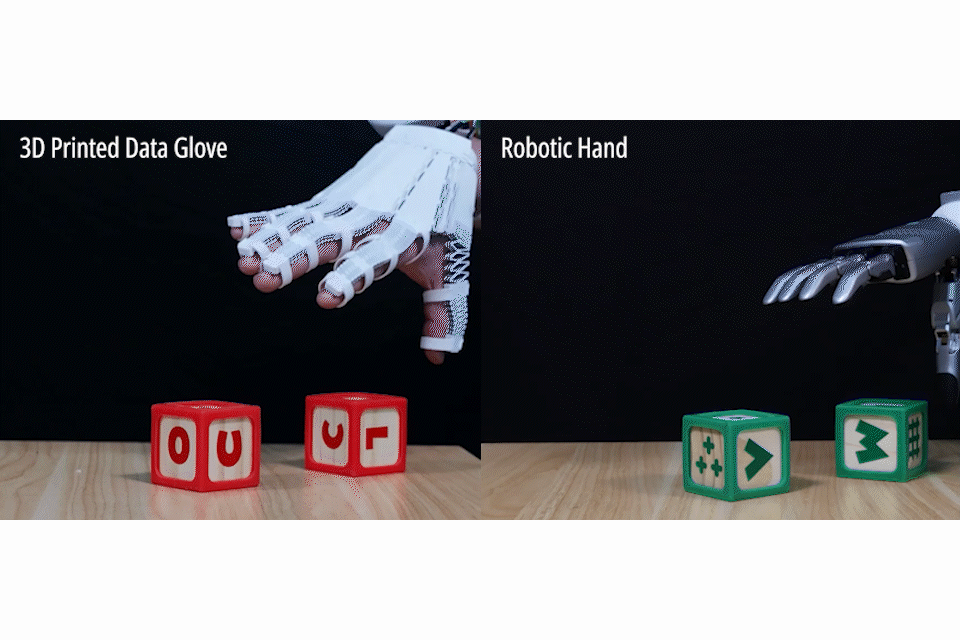
“X-Hinges” helps design and 3D print items like lamps and gloves with an interactive twist: automatically embedded sensors that perceive and adaptively respond to human contact.
We use cookies to run the site and, with your consent, for analytics and to show ads.
See our Cookie Policy.