Artifact removal routinely precedes the classification of electrodermal activity (EDA), on the assumption that a cleaner signal supports a better decision. We tested this assumption in a virtual-reality (VR) balance-disturbance task. A residual gating network was trained on a benchmark with expert-corrected EDA, frozen...
Haochen Chai, Qixu Zhu, Siyao Li et al.· 0 citations
This demo paper presents the conceptual foundations and the first steps towards implementation of a novel no-code solution for movement data analytics based on the open-source Python library MovingPandas and the open-source geographic information system QGIS. The resulting Trajectools plugin is available open-source at...
Egocentric bimanual hand pose estimation is important for virtual interaction, wearable control, and rehabilitation, but visual observations are often degraded by self-occlusion, hand-hand contact, and object manipulation. We propose EVFormer, a multimodal framework that combines the current RGB frame with the precedin...
Jia-Cheng Ge, Si-Yu Zhang, Sheng-Jie Li et al.· 0 citations
Interdisciplinary student teams must negotiate differences in terminology, priorities, and practices, yet these differences are difficult to surface in text-based communication. We introduce Spritz, a Discord-based LLM technology probe designed to create a situated experience of AI-mediated collaboration for reflection...
Ching-Jung Cheng, Yu-Chan Chung, Bing-Chen Chiu et al.· 0 citations
Reach audiences
Advertise in front of researchers, engineers, and readers.
The growing use of large language models (LLMs) by young adults seeking sensitive health information has raised important questions in Human-AI Interaction about how these systems can support understanding and navigation of reproductive well-being. In response to Feminist HCI principles, we introduce OpenBloom, a web a...
Yang Hong, Ashley Hua, Adya Daruka et al.· 0 citations
In 2024, Saudi Arabia's Personal Data Protection Law (PDPL) came into force. However, little work has been done to assess its implementation. In this paper, we analyzed 100 e-commerce websites operating in Saudi Arabia against the PDPL, examining the presence of a privacy policy and, if present, the policy's declaratio...
Heterogeneous multi-robot path planning is a well-studied problem in which agents with disparate kinematic and dynamic models must coordinate to achieve shared objectives. These formulations, however, treat all agents as robotic-their cost models are mechanical and their traversability is sensor-derived. In human-robot...
Kristian Dalland, Prithvi Poddar, Souma Chowdhury et al.· 0 citations
Robot delivery studies can overstate transport capacity when travel to pickups and human support fall outside the modeled schedule. We formulate a location aware dispatch model that couples robot admission to transporter support and shared elevators, charging, and cleaning. The model replays 33,079 observed hospital re...
Krzysztof Siwek, Aleksandra \'Swietlicka· 0 citations
Autonomous social navigation requires balancing efficiency, physical safety, and social compliance. Reinforcement Learning (RL) methods provide a viable and effective solution but often rely on unrealistic assumptions, such as the knowledge of humans'position and velocity. In this paper, we introduce JESSI (JAX-based E...
T. van der Meer, A. Garulli, Antonio Giannitrapani et al.· 0 citations
Aspiring international students across Asian countries increasingly depend on commercial education agents to navigate scholarships, documentation, and visas. Alongside this commercial infrastructure, volunteer-run Facebook groups have emerged. Unpaid admins and moderators, often under their real identities, vet informa...
Umme Jannat Taposhi, Md. Tawhid Anwar, Alvi Islam Ratul et al.· 0 citations
We propose a force-based model for social navigation of a tour-guide robot. Social forces due to various factors like obstacles, user position and heading, have been accounted for in the model. We claim that each one of these forces makes the robot more sociable to the user and we design an experimental setup for evalu...
This work introduces Enumerate-then-Answer (EtA), which reverses the generation order so that answer-evidence agreement becomes a property of the output structure, and Enumeration-Consistent Policy Optimization (ECPO), a reinforcement learning stage that uses the union of multiple rollouts as a recall teacher without g...
Run-Wei Guan, Rong-Sheng Hu, Shang-Shu Chen et al.· 0 citations
AI agents can generate code at a scale that’s hard for humans to review line-by-line. PDD Kit helps ensure the code is doing what the developer intended by creating formal specifications and testing against them. It converts developer intent into a Verus specification, proves AI-generated code meets it for every input, and uses tests where proofs aren't practical. Developers review intent, not every line. The post Formally verifying agent-written full-stack web apps with PDD Kit appeared first o…
Professor Paris Smaragdis develops computers with superhuman hearing for applications like speech recognition, music understanding, and environmental monitoring.
MIT News · Artificial Intelligence· news.mit.eduOct 23, 2026
During the School of Humanities, Arts, and Social Sciences’ 75th Anniversary Symposium, President Sally Kornbluth said “MIT has never needed your particular insight and guidance more than we do now.”
MIT News · Artificial Intelligence· news.mit.eduOct 23, 2026
Assistant Professor Benjamin Lindquist studies how engineers deliberately injected randomness into early AI, giving rise to deep-learning models that sometimes hallucinate.
MIT News · Artificial Intelligence· news.mit.eduOct 22, 2026
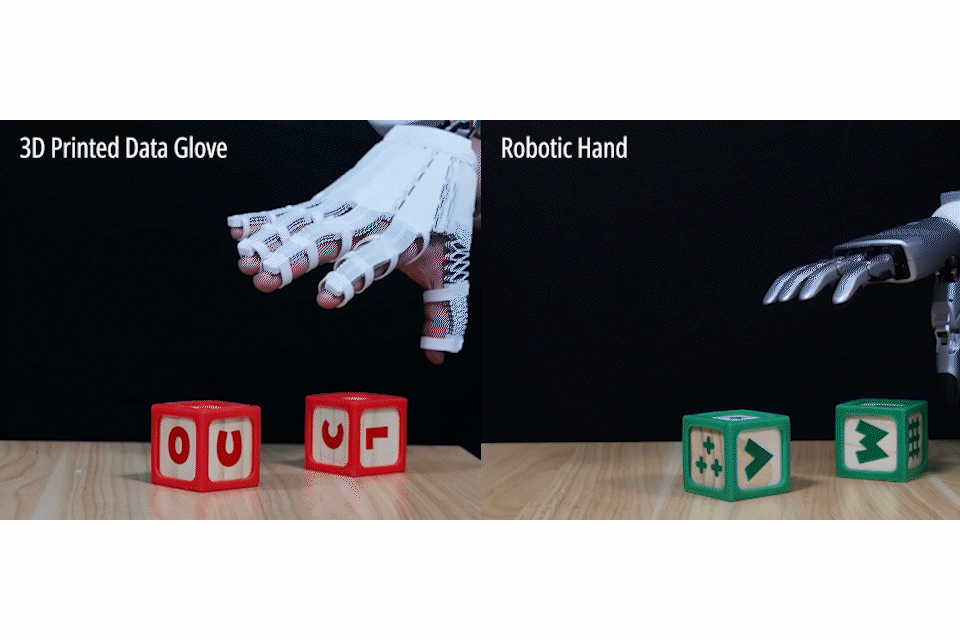
“X-Hinges” helps design and 3D print items like lamps and gloves with an interactive twist: automatically embedded sensors that perceive and adaptively respond to human contact.
We use cookies to run the site and, with your consent, for analytics and to show ads.
See our Cookie Policy.