Psychological scale development has traditionally required extensive expert involvement, iterative revision, and large-scale pilot testing before psychometric evaluation can begin. The \texttt{AIGENIE} R package implements the AI-GENIE framework (Automatic Item Generation and Validation with Network-Integrated Evaluati...
Lara Russell-Lasalandra, Hudson Golino, Luis Eduardo Garrido et al.· 0 citations
A bipedal robot cannot deviate from its path to avoid an obstacle without disturbing its balance, and this coupling is most severe on underactuated platforms such as the biped considered here, which has four actuated joints per leg and no hip or ankle roll. This paper presents a Hierarchical Reinforcement Learning (HRL...
J. Sahoo, Saurabh Kumar, Surya Prakash S.K. et al.· 0 citations
In this pictorial, we consider how the negotiation of creative boundaries with a co-creative AI system can create moments for personal creative reflection. We ground this in our experiences with Froggi-Draw, a single-initiative co-doodling system that gives users power to decide when and how much an AI"collaborator"(Fr...
Samia Menon, Samyukta Jayaram, Chetan Goenka et al.· 0 citations
Visual search is a fundamental cognitive ability. This study investigates whether Multimodal Large Language Models (MLLMs) exhibit human-like difficulty signatures in visual search tasks. We compared search performance of humans (n = 1,250) and MLLMs using identical 2D and 3D stimuli across different set sizes. Both gr...
Renchi Zhang, Joost C. F. de Winter, Dimitra Dodou et al.· 0 citations
Reach audiences
Advertise in front of researchers, engineers, and readers.
People write and sketch while speaking to explain, organize, and develop content together. Inspired by these practices, we investigate how voice agents can use a canvas alongside speech in multi-turn conversations with users. We conducted a two-part formative study: an observational study of how pairs coordinated speec...
Automated neurodevelopmental assessment increasingly combines computer vision, speech, eye tracking, physiology, and machine learning, yet multimodality and discrimination do not establish construct validity, clinical usefulness, or appropriate interpretation of behavioral variation. We propose a testable architecture...
Mateusz Pomianek, Anna Łężniak-Seruga· 0 citations
General turn-taking behavior in real-time dialogue systems requires deciding whether to keep listening or start responding while listening, and whether to continue or stop while speaking. Existing turn detectors use heterogeneous, task-specific label spaces and are often trained on limited annotations or evaluated on i...
Zhan-Xun Liu, Yi-Fan Duan, Heng-Tao Wu et al.· 0 citations
Large language models (LLMs) are increasingly deployed to simulate human behavior, acting as computational replicas of human subjects. Yet the lived psychological experience of humans is difficult to benchmark, particularly as it unfolds over time. We introduce a psychometric benchmark for computational replicas: perso...
Human-agent teams are collaborative systems where humans and agents work interdependently to achieve shared goals. The success of such teams is associated with the human's perception of the agent as a legitimate teammate. This perception is thought to depend not only on the agent's capabilities and reliability but also...
Lara Gauder, Martín Meza, J. Krick et al.· 0 citations
AI agents that send emails, edit files, and make purchases must decide when to act on their own and when to check with the user first. This decision is usually evaluated by showing a model a proposed action, asking whether it should proceed, and scoring agreement with human labels. We introduce DelegationBench to test...
The increasing availability of generative artificial intelligence (GenAI) tools, such as ChatGPT and code-completion assistants, raises questions about how learners integrate these tools into learning activities, particularly in MOOCs that attract diverse participant populations. This study examines the use of GenAI in...
As LLMs are increasingly deployed in high-stakes professional workflows, engineers and researchers require principled protocols to systematically track, monitor, and improve model performance across deployment cycles. We present a mathematical framework for iterative LLM evaluation and deployment, and demonstrate its a...
AI agents can generate code at a scale that’s hard for humans to review line-by-line. PDD Kit helps ensure the code is doing what the developer intended by creating formal specifications and testing against them. It converts developer intent into a Verus specification, proves AI-generated code meets it for every input, and uses tests where proofs aren't practical. Developers review intent, not every line. The post Formally verifying agent-written full-stack web apps with PDD Kit appeared first o…
Professor Paris Smaragdis develops computers with superhuman hearing for applications like speech recognition, music understanding, and environmental monitoring.
MIT News · Artificial Intelligence· news.mit.eduOct 23, 2026
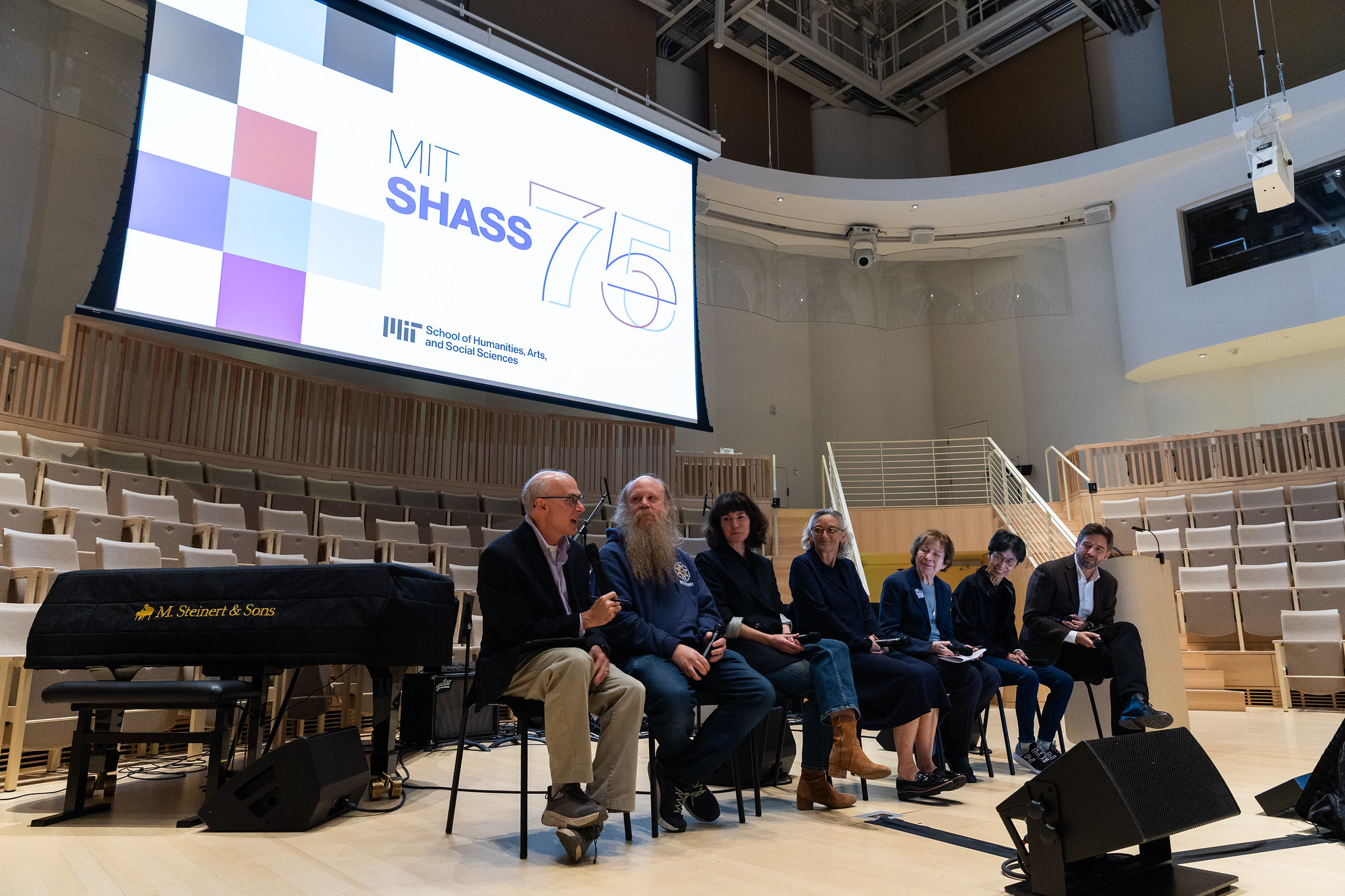
During the School of Humanities, Arts, and Social Sciences’ 75th Anniversary Symposium, President Sally Kornbluth said “MIT has never needed your particular insight and guidance more than we do now.”
MIT News · Artificial Intelligence· news.mit.eduOct 23, 2026
Assistant Professor Benjamin Lindquist studies how engineers deliberately injected randomness into early AI, giving rise to deep-learning models that sometimes hallucinate.
MIT News · Artificial Intelligence· news.mit.eduOct 22, 2026
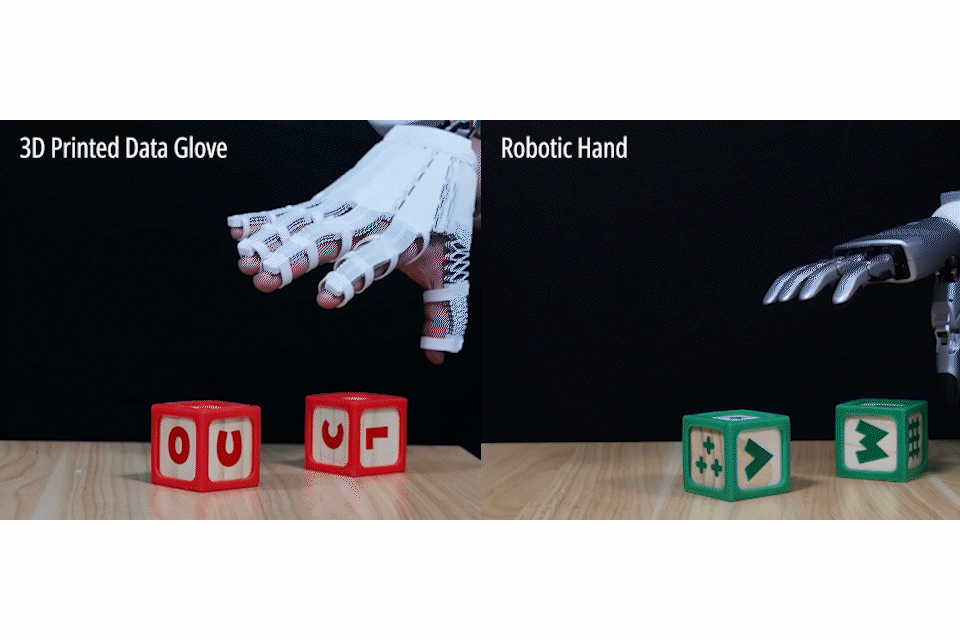
“X-Hinges” helps design and 3D print items like lamps and gloves with an interactive twist: automatically embedded sensors that perceive and adaptively respond to human contact.
We use cookies to run the site and, with your consent, for analytics and to show ads.
See our Cookie Policy.