Analysis of reasoning errors in vision language models and how they impact user trust and the ability to detect errors highlights how CoT explanations can simultaneously clarify and mislead, underscoring the need for NLP systems to provide explanations that encourage scrutiny and critical thinking rather than blind tru...
Eunkyu Park, Wesley Hanwen Deng, Vasudha Varadarajan et al.· arXiv.org· 6 citations
This work introduces NSV-Shift, a contrastive benchmark for evaluating whether speech-to-speech models can understand non-speech vocalizations (NSVs) and adapt their responses accordingly, and evaluates five models on NSV perception, emotion understanding, and response adaptation.
The results suggest that growth helps when its criterion can rank the candidate neurons, and that the rate of skipped neuron addition tells where a decoder can be grown small from scratch.
Adam Mounir, Stella Douka, A. Caillet et al.· 0 citations
Through a four-speaker attention decoding benchmark, it is shown that combining behavioral and physiological signals improves decoding performance over EEG-only approaches, enabling future advances in multimodal auditory attention decoding.
K. M. Naimul Hassan, Ali Alavi, D. Williamson· 0 citations
Reach audiences
Advertise in front of researchers, engineers, and readers.
Digits are thus predictable beyond familiar users and phone models under assumed segmentation, while acquisition-order shortcuts limit conclusions about practical privacy exposure.
C. A. Casado, Erkka Rantahalvari, Matteo Pedone et al.· 0 citations
This work explores how LLMs can be used to generate retrospective summaries from multi-modal tracking data for RFMs of older adults, and finds that RFMs'sensemaking shift from simply presenting''What''data were collected, to explaining''How''is my loved one doing and''Why''.
OmniGUI is introduced, the first step-level benchmark designed to evaluate GUI agents in omni-modal smartphone environments, and foundational omni-modal models capable of natively processing interleaved inputs are selected to serve as agent proxies for the initial baselines.
Felix Henry, Xia Lin, Jiang Zhu et al.· arXiv.org· 1 citation· ⚡1
Physical objects (e.g., plush toys) can transcend materiality to become emotional anchors and provide companionship. However, these bonds remain one-sided because most physical objects cannot reciprocate. AI companions offer responsiveness and personalization, but typically entail building bonds from scratch. We invest...
Zhihan Jiang, Mengyuan Millie Wu, Ruishi Zou et al.· 0 citations
AromaGen, an AI-powered 12-channel wearable olfactory system that maps free-form natural-language descriptions to 12 base odorants selected to cover a semantically derived olfactory space, while supporting iterative refinement through natural-language feedback, is presented.
MA-SAPO is proposed: a new Multi-Agent Reasoning for Score Aware Prompt Optimization framework that links evaluation outcomes directly to targeted refinements and ensures edits are interpretable, auditable, and controllable.
Juhyeon Lee, Wonduk Seo, Junseo Koh et al.· 1 citation· ⚡1
This survey collects, categorizes, and critically discusses the body of work produced as a result of the growing interest on coordinated online behavior, and proposes a comprehensive framework to study coordinated online behavior.
Lorenzo Mannocci, Michele Mazza, A. Monreale et al.· ACM Computing Surveys· 23 citations· ⚡1
It is argued that Fantasia interactions demand a rethinking of alignment research, where AI systems optimize how cognitive responsibility is allocated within an interaction, and highlights gaps in state-of-the-art alignment methods.
Nathanael Jo, Zoe De Simone, Mitchell Gordon et al.· arXiv.org· 0 citations
AI agents can generate code at a scale that’s hard for humans to review line-by-line. PDD Kit helps ensure the code is doing what the developer intended by creating formal specifications and testing against them. It converts developer intent into a Verus specification, proves AI-generated code meets it for every input, and uses tests where proofs aren't practical. Developers review intent, not every line. The post Formally verifying agent-written full-stack web apps with PDD Kit appeared first o…
Professor Paris Smaragdis develops computers with superhuman hearing for applications like speech recognition, music understanding, and environmental monitoring.
MIT News · Artificial Intelligence· news.mit.eduOct 23, 2026
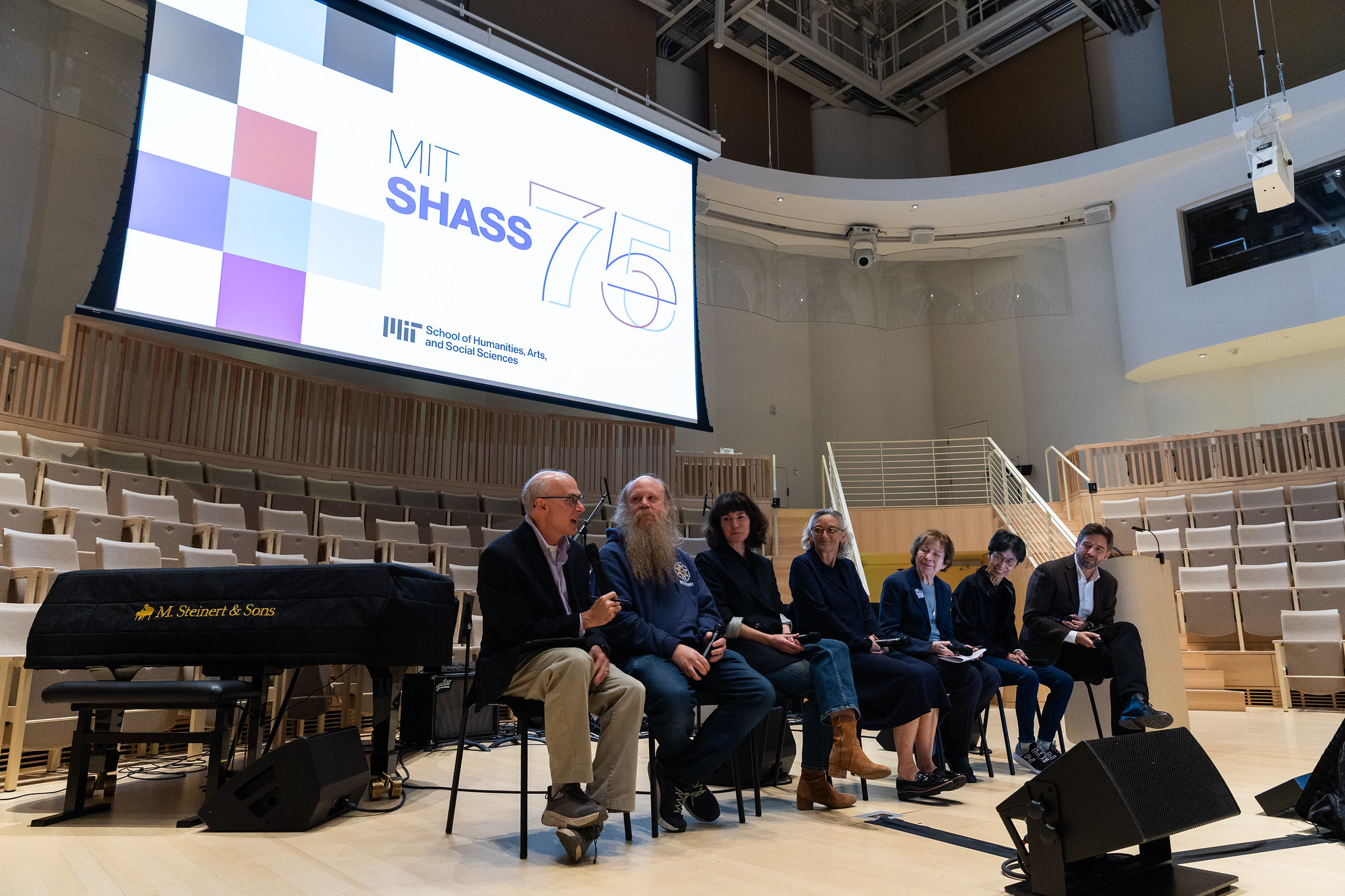
During the School of Humanities, Arts, and Social Sciences’ 75th Anniversary Symposium, President Sally Kornbluth said “MIT has never needed your particular insight and guidance more than we do now.”
MIT News · Artificial Intelligence· news.mit.eduOct 23, 2026
Assistant Professor Benjamin Lindquist studies how engineers deliberately injected randomness into early AI, giving rise to deep-learning models that sometimes hallucinate.
MIT News · Artificial Intelligence· news.mit.eduOct 22, 2026
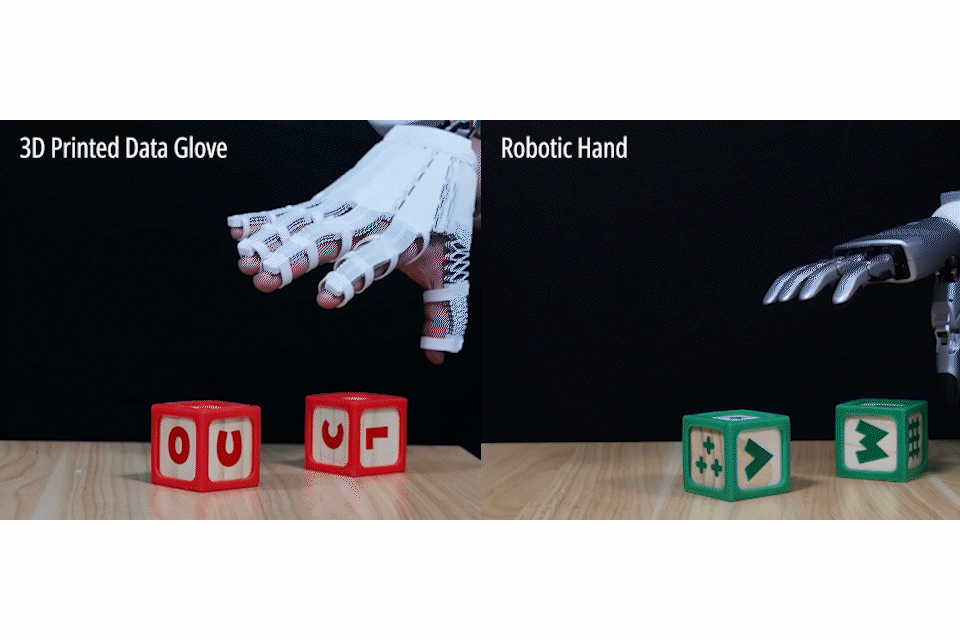
“X-Hinges” helps design and 3D print items like lamps and gloves with an interactive twist: automatically embedded sensors that perceive and adaptively respond to human contact.
We use cookies to run the site and, with your consent, for analytics and to show ads.
See our Cookie Policy.