Poor clinical communication can delay care, contribute to errors, and harm patients, yet opportunities for repeated practice with feedback remain limited. Our prior randomized trial showed that practice with the SOPHIE AI patient platform improved serious illness communication, but the system addressed a single clinica...
Masum Hasan, Ron Epstein, Thomas M. Carroll et al.· 0 citations
Eye-catching graphics, such as circular figure labels and word-scale visualizations, are increasingly being placed directly within long-form text paragraphs. Some research has claimed that inline visualizations can help readers understand data-rich passages more clearly. However, research in the science of reading call...
Song-Wen Hu, Chase Stokes, Marti A. Hearst et al.· 0 citations
Althea is introduced, a retrieval-augmented system for user-driven claim evaluation that matches standard pipelines on AVeriTeC while improving supported/refuted discrimination and cautioning against treating AI-delivered verdicts as a source of durable literacy gains.
S. Churina, Kokil Jaidka, A. Barik et al.· 0 citations
AMUSER is presented, a multimodal framework which simulates user behaviour and automatically generates prioritised UX improvement recommendations from resulting data and suggests an asymmetric role of multimodality: visual access during simulation improves recommendations through richer traces, while providing visual i...
Anurupa Chowdhury, Bin Wu, Hossein A. Rahmani et al.· 0 citations
Reach audiences
Advertise in front of researchers, engineers, and readers.
Long-context understanding remains a fundamental challenge for large language models, as excessively long inputs often lead models to forget salient information. This issue is even more pronounced in the speech domain, where audio, as a low-compression modality, requires substantially more embeddings than text to prese...
Debates about whether artificial systems can feel are often forced between two unsatisfactory positions: behavioral equivalence is treated as sufficient for emotion, or phenomenal consciousness is treated as a prerequisite that makes the question empirically inaccessible. This article develops a structural alternative....
This paper treats prompt engineering as a discipline for turning informal human intent into structured AI work specifications. It develops the practice as a sequence of reusable design moves: define the work, construct only the context the answer depends on, choose a role, or a moderated panel of roles, as an attention...
Erfan Loweimi, Hadi Daneshvar, Samira Loveymi et al.· 0 citations
It is found that following LLM supply shocks, unverified reviews shift toward greater negativity: more 1-stars, fewer 5-stars, and lower ratings, suggesting that strategic AI use may reshape platform competition dynamics.
Valeria Lermana, Oren Rigbi, Y. Dover· CESifo working papers· 0 citations
High-quality annotated datasets are crucial for advancing machine learning in medical image analysis. However, a critical gap exists: most datasets either offer a single, clean ground truth, which hides real-world expert disagreement, or they provide multiple annotations without a separate gold standard for objective e...
Yonghao Si, Xingyuan Zeng, Zhao Chen et al.· 0 citations
As humans delegate more tasks and decisions to artificial intelligence (AI), we risk losing control of our individual and collective futures. Relatively simple algorithmic systems already steer human decision-making, such as social media feed algorithms that lead people to unintentionally and absent-mindedly scroll thr...
Benjamin Sturgeon, Daniel Samuelson, Jacob Haimes et al.· 0 citations
Calpric, which combines automatic text selection and segmentation, active learning and the use of crowdsourced annotators to generate a large, balanced training set for privacy policies at low cost, and produces models that are accurate over a wider range of data categories, and provide more detailed, fine-grain labels...
Wen-Jun Qiu, David Lie, Lisa M. Austin· USENIX Security Symposium· 6 citations
We present onPanda, an interactive tool for efficiently annotating LLM alignment data and agent trajectories. onPanda adopts token-level correction as its core interaction: while reading a model response, the annotator locates the first inappropriate token and either picks a substitute from the model's candidate tokens...
Lei Yang, Meng-Yin Liu, Jia Wang et al.· 0 citations
AI agents can generate code at a scale that’s hard for humans to review line-by-line. PDD Kit helps ensure the code is doing what the developer intended by creating formal specifications and testing against them. It converts developer intent into a Verus specification, proves AI-generated code meets it for every input, and uses tests where proofs aren't practical. Developers review intent, not every line. The post Formally verifying agent-written full-stack web apps with PDD Kit appeared first o…
Professor Paris Smaragdis develops computers with superhuman hearing for applications like speech recognition, music understanding, and environmental monitoring.
MIT News · Artificial Intelligence· news.mit.eduOct 23, 2026
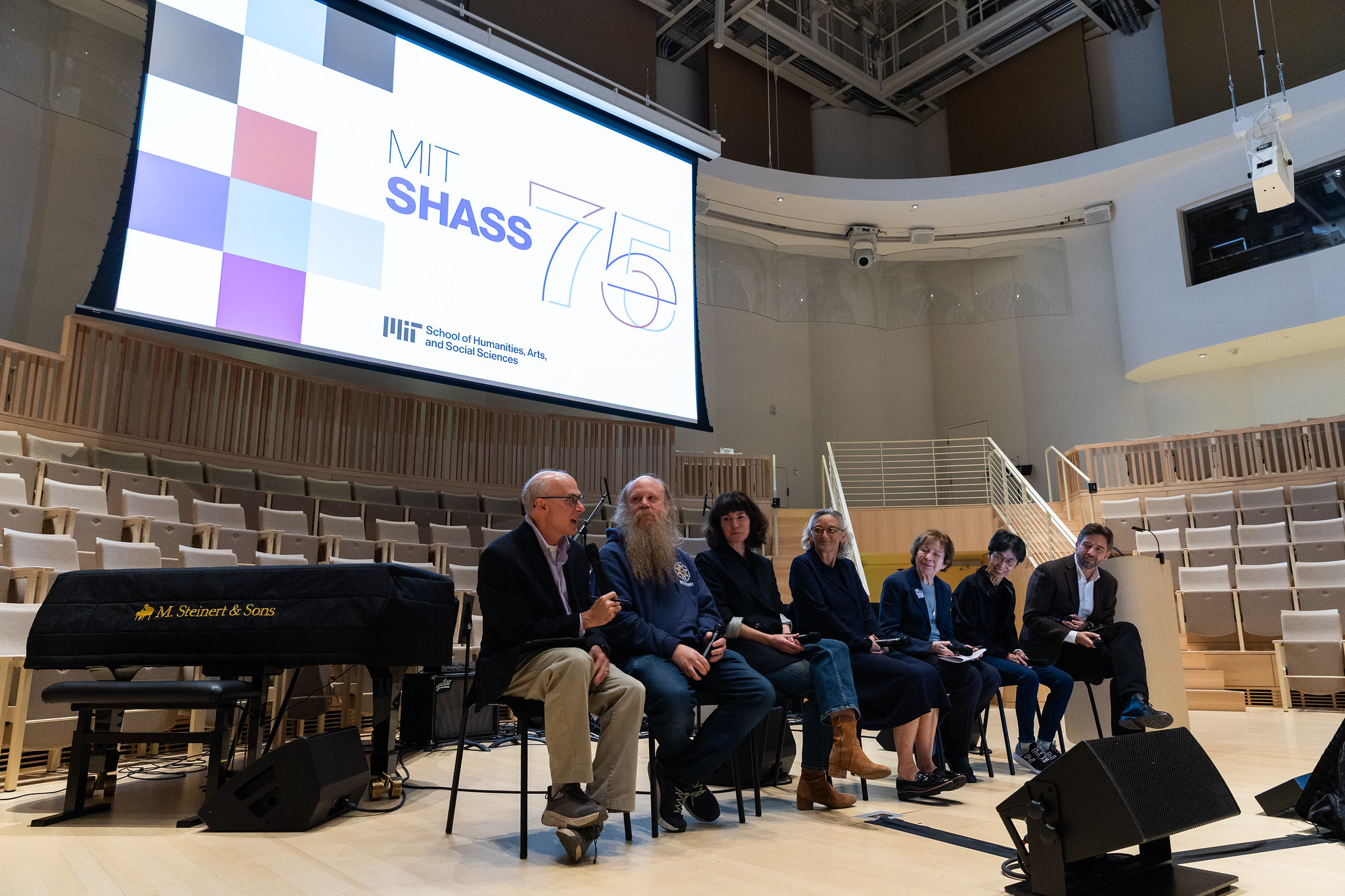
During the School of Humanities, Arts, and Social Sciences’ 75th Anniversary Symposium, President Sally Kornbluth said “MIT has never needed your particular insight and guidance more than we do now.”
MIT News · Artificial Intelligence· news.mit.eduOct 23, 2026
Assistant Professor Benjamin Lindquist studies how engineers deliberately injected randomness into early AI, giving rise to deep-learning models that sometimes hallucinate.
MIT News · Artificial Intelligence· news.mit.eduOct 22, 2026
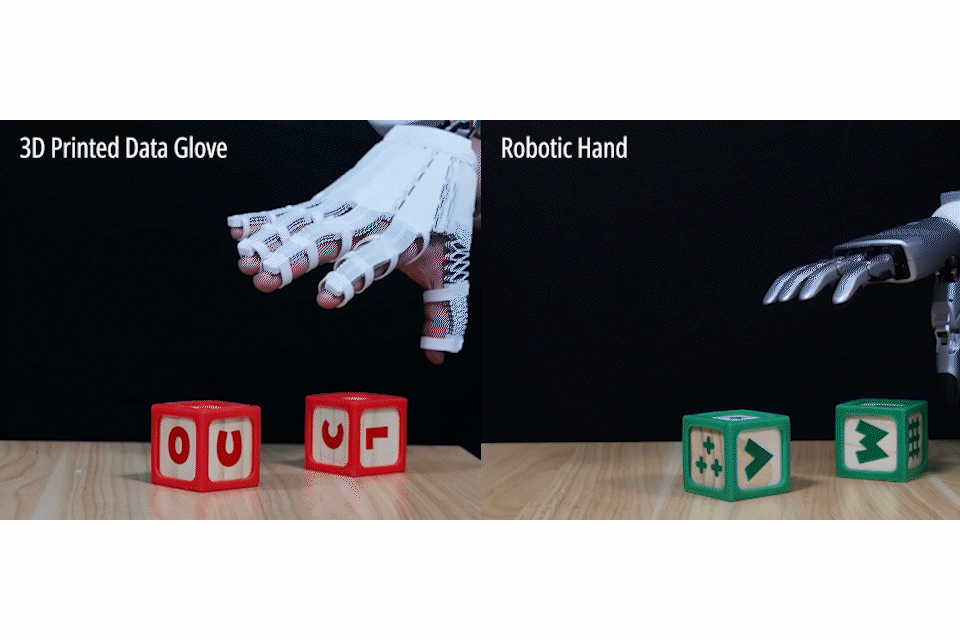
“X-Hinges” helps design and 3D print items like lamps and gloves with an interactive twist: automatically embedded sensors that perceive and adaptively respond to human contact.
We use cookies to run the site and, with your consent, for analytics and to show ads.
See our Cookie Policy.