Goal misgeneralization is a common failure mode in which an agent behaves competently out of distribution but does not pursue the intended goal. However, we still have a weak understanding of what happens to the intended goal in misgeneralizing agents. Across three Procgen environments and five robot tasks, we find thr...
Julia Barth, Armin Sommer, Kunvar Thaman et al.· 0 citations
Time-series foundation models provide strong zero-shot forecast, but deployment for real-world applications still requires task-specific designs for model inputs and outputs. Direct inference can leave domain knowledge and recurring forecast errors unaddressed, while tailored pipelines require substantial human experti...
Haoxin Liu, Deqing Fu, Lu-Cheng Fu et al.· 0 citations
Multi-session agents can switch between LLMs to balance performance and inference cost. Such switches require transferring a history for continuity, yet their effects on the recipient remain underexplored. Through controlled experiments with multi-session tasks, we uncover behavior transfer: recipients tend to adopt re...
Youngbin Choi, Sehyun Hwang, Suhyeon Jun et al.· 0 citations
Low-rank adaptation (LoRA) enables parameter-efficient fine-tuning by learning low-rank weight updates. Increasing rank expands adaptation capacity, but does not guarantee that all learned directions improve downstream performance. In a diagnostic experiment with rank-16 LoRA, we show that retaining only the top singul...
Fan-Yao Li, Yu-Xi Liu, Xiao-Hao Liu et al.· 0 citations
Reach audiences
Advertise in front of researchers, engineers, and readers.
Gaussian diffusion models offer a practical framework for generative modeling. Denoising L\'{e}vy Probabilistic Models (DLPM) introduce heavy-tailed perturbations with a fixed tail index throughout denoising. We introduce Annealed L\'{e}vy Diffusion (ALD). ALD varies the stability index $\alpha(t)$ to combine heavy-tai...
Yu-Ling Jiao, Li-Can Kang, Jerry Zhijian Yang et al.· 0 citations
This work introduces Function-Space Policy Optimization (FSPO), a single-policy framework that combines current privileged adaptation with function-space temporal consolidation, and introduces privileged disagreement correction to explicitly suppress locally overvalued actions.
Supervised fine-tuning (SFT) changes logit margins among non-target tokens at teacher-forced prefixes. Matching a local reference distribution keeps those probabilities and also penalizes margin expansions. We ask whether a soft auxiliary can preserve selected local non-target margin relations without freezing that dis...
Yuxuan Wang, Guangxiang Zhao, Xinyu Tan et al.· 0 citations
A memory-enhanced latent world model that augments JEPA-style prediction with a content-addressable memory bank is introduced that achieves state-of-the-art performance with a lightweight architecture, outperforming conventional latent world models on long-horizon planning tasks.
Recent work has sought to transfer first-order nonconvex optimization guarantees to zeroth-order methods through gradient estimators, typically incurring a factor linear in $d$. \citet{kornowski2024} obtained an $\mathcal{O}(d\delta^{-1}\epsilon^{-3})$ oracle complexity for nonsmooth nonconvex optimization and asked wh...
The scarcity of observed biodegradation reactions constrains the training of product and pathway predictors. We present enviGraph, a framework that generates and curates synthetic reaction data, uses these data to pretrain a graph-to-sequence predictor, and fine-tunes the predictor on observed environmental reactions f...
Irsyaad Rijwan, Liam Brydon, Aidan Jared et al.· 0 citations
Large language models (LLMs) hold broad knowledge in one set of weights, but lack interpretability and trustworthy reasoning, especially in high-stakes use cases. A neuro-symbolic model, with its interpretable architecture and System 2 reasoning capacity, is a promising alternative if built at the scale of LLMs; howeve...
Xiaocong Yang, Xuanyu Meng, Yuji Zhang et al.· 0 citations
This work reframe agentic trajectories as paths through a shared embedding space of actions and environmental observations, and introduces Precog-RM, a transformer-based model that meta-learns a representation in which outcome prediction can be performed in a few-shot setting.
Alexander Gill, Guram Gogia, F. Guzmán· 0 citations
A machine-learning approach called CheMeleon provides a practical way to develop new drugs or other molecules with much less detailed, expensive experimentation.
Research Manager Mike Walker reflects on a career spanning hacker culture, cybersecurity, and AI, sharing lessons about trust, teamwork, leadership, and why solving difficult problems requires curiosity, judgment, agility—and an understanding of the rules. The post Learn the rules: The hacker mindset appeared first on Microsoft Research.
Learn how Google Antigravity and our Cheminformatics Skills accelerate drug discovery workflows, search compounds, and propose novel rigidified macrocycles.
MIT News · Artificial Intelligence· news.mit.eduOct 28, 2026
Professor Paris Smaragdis develops computers with superhuman hearing for applications like speech recognition, music understanding, and environmental monitoring.
MIT News · Artificial Intelligence· news.mit.eduOct 27, 2026
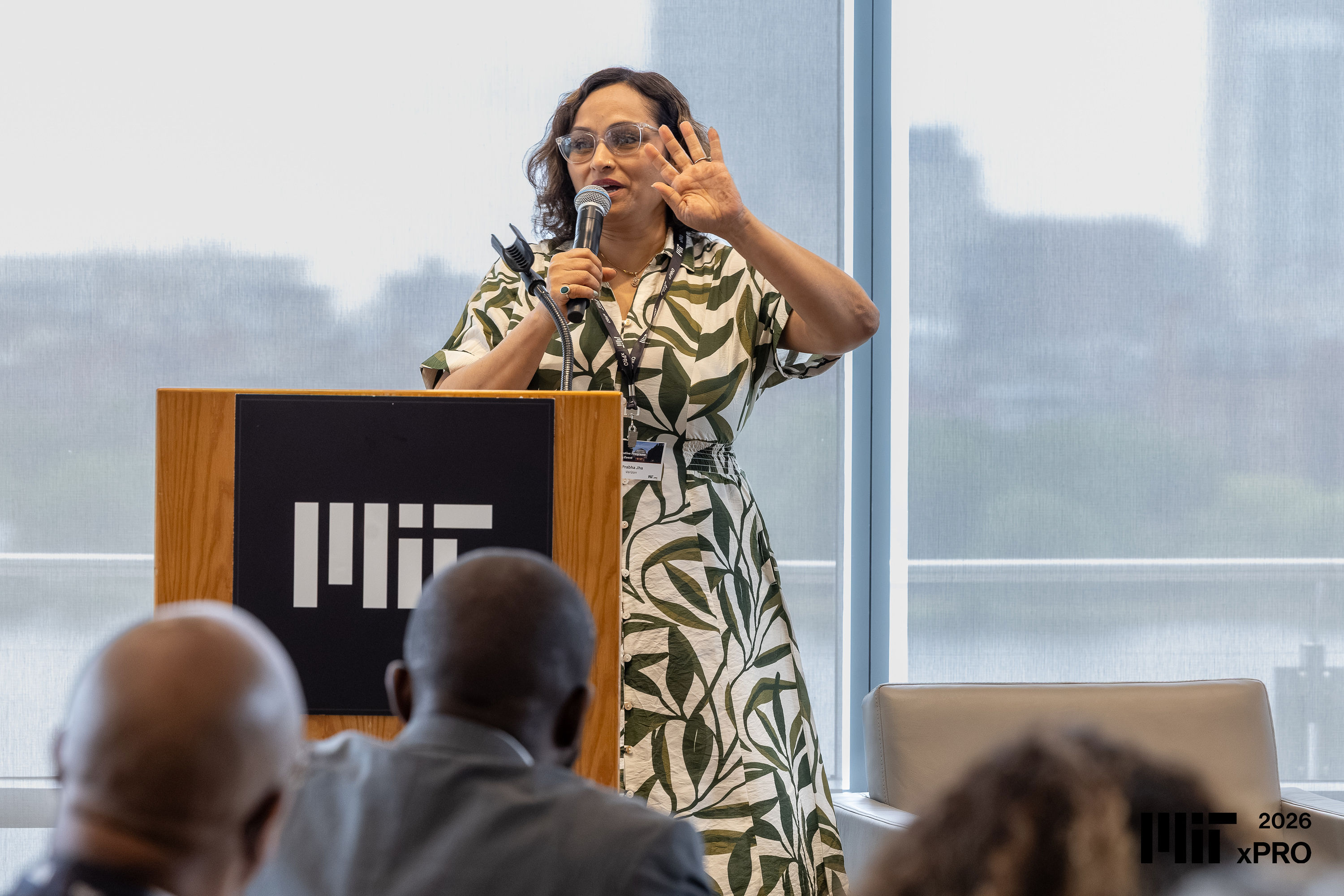
Prabha Jha used her experience with MIT Open Learning’s program for senior executives to develop AI solutions for her employer, Verizon, and to write a book.
We use cookies to run the site and, with your consent, for analytics and to show ads.
See our Cookie Policy.