Results show that recurrent models can provide competitive classification performance while also revealing the phenological periods and spectral regions that are most relevant for distinguishing closely related forest compositions, and provide additional insight into the spectral-temporal mechanisms underlying tree-spe...
Equivariant structure-prediction pipelines alternate coordinate updates with the construction of a k-nearest-neighbour (kNN) graph whose membership is a discrete, piecewise-constant function of the coordinates. Rebuilding that graph at every block boundary (PB) is the expensive part of an epoch, whereas reusing one fro...
Financial disclosures express the underlying relationships of double-entry accounting through unstructured text. While financial LLM benchmarks predominantly emphasize question answering and classification, schema-guided evidence discovery remains relatively under-explored. We investigate whether open-weight LLMs can e...
Ashman Mehra, Bryan Routledge, Jane JaeYeon Pyo et al.· 0 citations
Reach audiences
Advertise in front of researchers, engineers, and readers.
When writing code, the same computation can be expressed in different programming languages and through different implementation strategies. We show that the activations of LLMs capture this shared structure in reusable and composable abstract representations when they generate code. These representations emerge in the...
Casper L. Christensen, Kyle J. Ray, Dmitry Manning-Coe et al.· 0 citations
Large language models impose substantial memory demands and arithmetic costs during inference. Dense-to-mixture-of-experts (MoE) conversion is a model optimization technique that aims to reduce these arithmetic costs. Dense-to-MoE conversion partitions pretrained feed-forward network (FFN) neurons into experts and sele...
Zachary Broveak, Christian Kubicka, Thierry Tambe· 0 citations
The Continuous Thought Machine (CTM) is a recurrent network that attends to inputs and makes predictions based on the synchronization between its neurons. On tasks spanning many domains, it displays emergent thought processes that have not been explained. We report a number of findings about how the CTM classifies imag...
Large language models are increasingly deployed as teams of agents that hold different private information about a shared task. How should such agents concisely communicate in a way that promotes aggregation of decision-relevant information? Communicating only proposed actions can discard decision-relevant uncertainty:...
Mirah Shi, Marcel Hussing, Ira Globus-Harris et al.· 0 citations
Wildfire decisions are made in hours, yet most learned spread models predict daily on targets including burned area. We propose FireGraphNet which formulates 12-hour growth as node classification on directed H3 graphs, with candidates ahead of the front and wind alignment, terrain, fuel continuity and barriers on edges...
Aiyshwariya Paulvannan Kanmani, Miguel Esparza, Ali Mostafavi· 0 citations
Scientific imaging data involving medical (e.g., 3D radiographic, microscopic images) and astronomical sensors pose different challenges from natural images. One key challenge is that these datasets are often orders of magnitude larger than natural images. Efficient training and inference on such data is challenging du...
Shehtab Zaman, Aneesh Rangnekar, Nancy Lee et al.· 0 citations
Before deploying clinical prediction models, their reliability must be assessed to ensure safe use. Errors may arise from distribution shifts between training and deployment or from heterogeneous performance where the model systematically underperforms for certain patient subgroups. Yet most post-hoc diagnostic methods...
Olivier Lefebvre (Department of Computer Science, Universit\'e de Sherbrooke, Sherbrooke et al.· 0 citations
On-policy distillation (OPD) is increasingly studied as a cheaper alternative to reinforcement learning, yet it remains a form of knowledge distillation (KD) that relies on teacher supervision. We revisit OPD from the KD perspective by asking where the teacher's advantage lies along student-generated trajectories. Cont...
Yi-Ping Li, Fan Zhao, Zhi-Bo Hou et al.· 0 citations
A machine-learning approach called CheMeleon provides a practical way to develop new drugs or other molecules with much less detailed, expensive experimentation.
Research Manager Mike Walker reflects on a career spanning hacker culture, cybersecurity, and AI, sharing lessons about trust, teamwork, leadership, and why solving difficult problems requires curiosity, judgment, agility—and an understanding of the rules. The post Learn the rules: The hacker mindset appeared first on Microsoft Research.
Learn how Google Antigravity and our Cheminformatics Skills accelerate drug discovery workflows, search compounds, and propose novel rigidified macrocycles.
MIT News · Artificial Intelligence· news.mit.eduOct 28, 2026
Professor Paris Smaragdis develops computers with superhuman hearing for applications like speech recognition, music understanding, and environmental monitoring.
MIT News · Artificial Intelligence· news.mit.eduOct 27, 2026
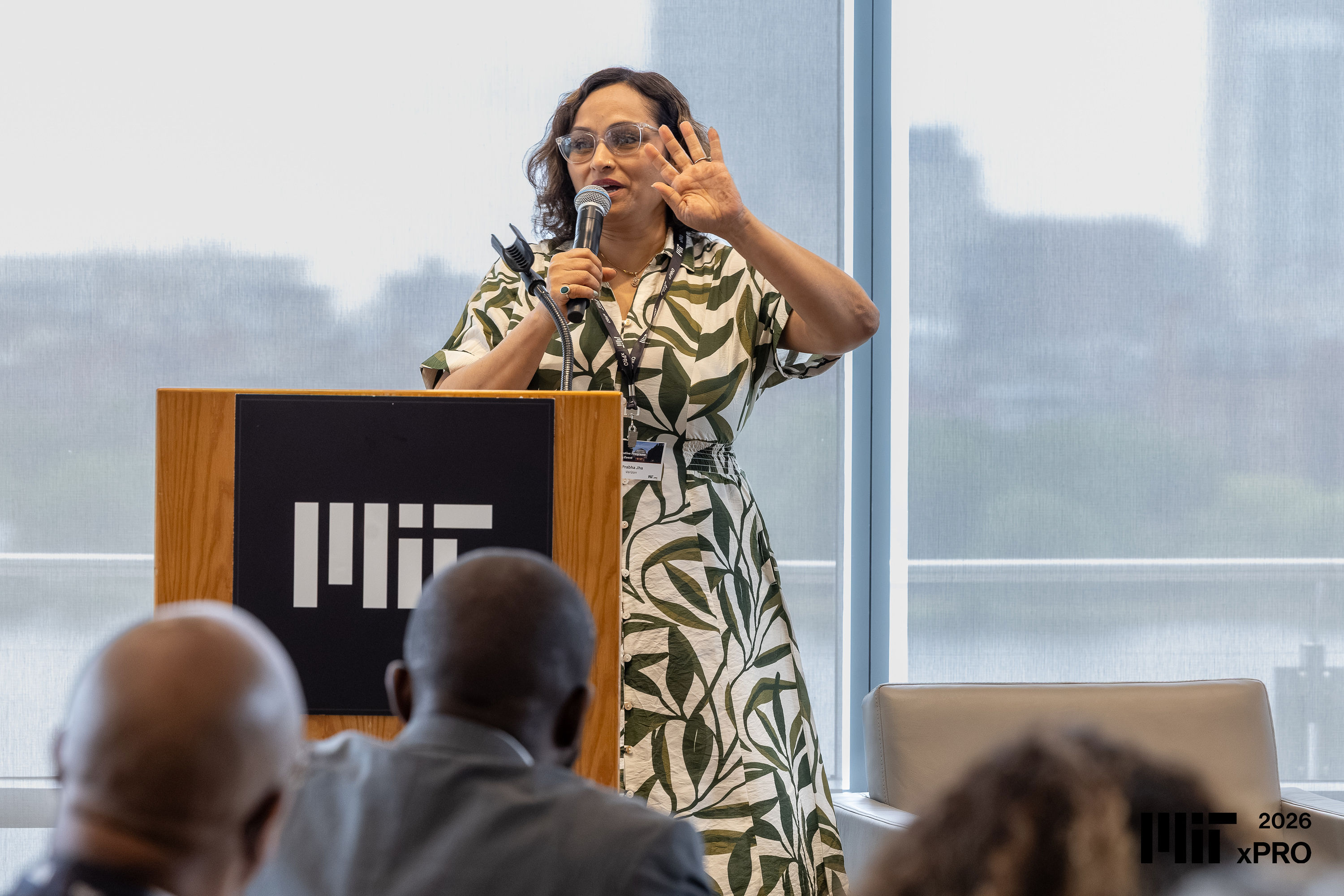
Prabha Jha used her experience with MIT Open Learning’s program for senior executives to develop AI solutions for her employer, Verizon, and to write a book.
We use cookies to run the site and, with your consent, for analytics and to show ads.
See our Cookie Policy.