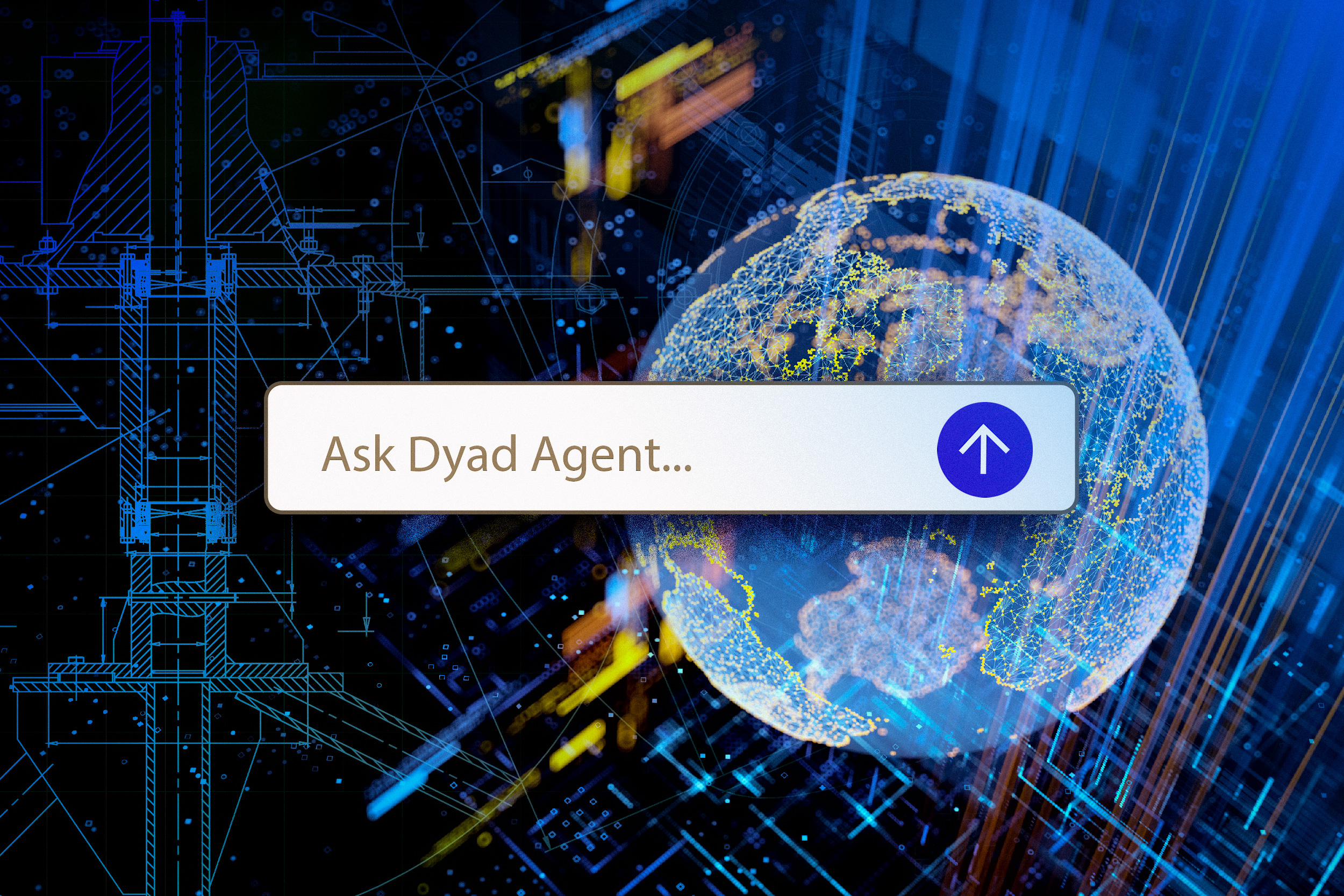
Vision foundation tools such as open-vocabulary detectors, segmentation models, and post-processing operators are powerful building blocks for computer vision, but their effectiveness depends heavily on how they are orchestrated: which tools are used, in what order, with what parameters, and under what visual conditions. Existing visual-programming agents typically generate a fixed solution pipeline, making them brittle under dense objects, occlusion, small targets, and domain shift. We introduce VTOS (Vision Tools Orchestration Search), a framework for adaptive visual tool orchestration through joint solution-observer search. VTOS co-searches executable solution programs that compose vision tools such as Grounding DINO, SAM, NMS, and slice-and-detect, together with observer programs that diagnose candidate solutions, identify failure modes, and generate actionable feedback. These observations are accumulated in a shared VisionThoughts knowledge base to guide subsequent search. We evaluate VTOS through two case studies: dense object counting on LVIS-Count and zero-shot plant-disease segmentation on PlantSeg-OOD, which stress different orchestration challenges including threshold calibration, NMS, slicing, mask refinement, and domain generalization. Across both tasks, VTOS outperforms static tool pipelines and agentic visual-programming baselines, specifically in complex settings such as dense, occluded scenes and out-of-distribution segmentation where static pipelines leave measurable headroom, rather than in standard tasks where a single well-calibrated tool already approaches its ceiling.
Jinchao Ge, Lingqiao Liu, Shuwen Zhao et al.· 0 citations
Personalizing large language models requires adapting model behavior to individual users while preserving robustness and deployment-scale efficiency. Existing approaches typically personalize LLMs either at the input level, by retrieving user histories or constructing profile prompts, or at the parameter level, by maintaining user-specific parameter-efficient modules. The former makes personalization sensitive to retrieval quality and prompt design, whereas the latter incurs storage and maintenance costs that grow with the user population. To address these limitations, we propose TAP-PER (Temporal Attentive Prefix for PERsonalization), a prefix-based framework that encodes user preferences as learnable representations, avoiding the serialization of user histories into prompts and replacing heavy per-user adapters with lightweight user-state prefix embeddings. Inspired by personalized recommendation systems, TAP-PER decomposes user modeling into user-state and query-conditioned components, and incorporates temporal signals to capture the evolving nature of user interests. Experiments on six LaMP tasks show that TAP-PER consistently outperforms prompt-based and model-based baselines across classification, rating, and generation settings. Moreover, TAP-PER uses 130x fewer per-user parameters than OPPU and roughly half the total parameter footprint of PER-PCS at the 1,000-user scale, demonstrating scalable personalization without prompt-serialized histories or heavy per-user adapters.
Online hate speech is associated with harms ranging from deteriorating mental health to violence, yet how consistently platforms moderate hate, and whether enforcement is feasible at scale, remain poorly understood. We audit hate speech moderation on Twitter (now X) using 540,000 tweets annotated by trained native speakers, representative of a full day on the platform. Five months after posting, 80% of hateful tweets, including violent ones, remained online. Removal was only marginally more likely than for non-hateful tweets, far below scams or adult content, and insensitive to severity and reach. Automated detection could not reliably classify hate but ranked it highly, enabling human triage. Simulating this workflow, current staffing curbed little exposure, yet substantial reductions proved financially feasible, far below applicable regulatory fines. Persistent hate reflects resource allocation, not technical limits.
Manuel Tonneau, Dylan Thurgood, Diyi Liu et al.· 0 citations
Large language models (LLMs) are increasingly used for hate speech moderation, often within human--AI workflows in which reviewers provide feedback before a final decision. Such feedback introduces two manipulation directions: whitewashing hateful content as normal and smearing normal content as hateful. This study examines the susceptibility of initially correct model judgments to annotator-style rebuttals and analyzes whether attack effectiveness differs across manipulation directions. We introduce a rejudge protocol that extends direct contradiction with decision-boundary perturbations and adversarial rationales. Experiments with multiple LLMs on two hate speech datasets show that annotator-style rebuttals substantially degrade moderation performance, with stronger effects in multi-turn settings. The results further reveal stable, model-specific asymmetries between whitewashing and smearing across attack configurations, indicating distinct directional vulnerability patterns. Explicit reasoning prompts and defensive instructions reduce these effects but do not eliminate them. These findings highlight the need for direction-aware safeguards and dedicated feedback-robustness evaluation in human--AI moderation workflows.
Junyu Lu, Kaiyuan Liu, Jingyi Kang et al.· 0 citations
Reach audiences
Advertise in front of researchers, engineers, and readers.
Long-term personalized dialogue agents must track user preferences as their personas evolve. Existing memory systems organize past events well, but store personas as flat profiles detached from the events that justify them. This loose coupling leads to the memory-persona validity gap and the persona-aware retrieval gap. We propose PGMem, a heterogeneous persona-memory graph that connects event and persona nodes through typed provenance and evidence edges, keeping each persona signal traceable to the events that support or revise it. At retrieval time, PGMem expands from query-relevant seeds and ranks signals by evidential validity. Across three benchmarks with small language model backbones, PGMem consistently outperforms summary-based, persona-aware, graph-structured, and agentic memory baselines, and improves performance as the context grows. The source code of PGMem is available at https://github.com/wonjunchoi23/pgmem/
Wonjun Choi, Yerim Kim, Yukyung Lee et al.· 0 citations
Climate disclosure classification is a fundamental task for analysing corporate climate disclosures, yet such disclosures appear in many different sources -- annual reports, press releases, and earnings calls -- that differ in length, purpose, and writing style. Existing evaluations are mostly conducted within a single source, leaving open whether common LLM adaptation strategies remain effective under source shift. We reframe climate disclosure classification as a cross-source adaptation problem and study three widely used adaptation strategies -- definitions, examples, and fine-tuning -- across eleven open- and closed-source LLMs, using two corpora that share the same label space but come from different sources. We find that all strategies bring positive cross-source gains on average, but the strongest in-source strategies are not the strongest cross-source ones: similarity-based retrieval and LoRA fine-tuning gain most in-source but lose most of that advantage under source shift; randomly selected few-shot examples, a weaker in-source baseline, retain their advantage more reliably; definitions transfer most consistently, though only when their granularity matches the target text. Across these strategies, when the source changes, simpler is often safer.
Guosheng Li, Fenghui Ren, Bin Liu et al.· 0 citations
Rubric-based scoring has become a widely used paradigm in model evaluation, typically with LLM-as-a-Judge (LaaJ) for rubric scoring. However, the reliability of LaaJ for rubric scoring remains underexplored. This concern is especially pronounced in agentic scenarios, where long, complex outputs further challenge reliable scoring. To address this, we conduct a systematic meta-evaluation of LaaJ reliability for rubric verification. We introduce RuVerBench, the first benchmark for assessing LaaJ reliability in rubric verification for agentic scenarios. RuVerBench covers two prevalent agentic domains, deep research and agentic coding, with 2,458 instances, each containing a model-generated output, a rubric, and a human-annotated label indicating whether the output satisfies the rubric. Using RuVerBench, we evaluate numerous frontier LLMs and find that even the most advanced models achieve strong performance but still exhibit substantial noise. We further analyze the impact of key LaaJ strategies, including prompt design, batching, and majority voting, on rubric verification. We find that weaker models are more sensitive to prompt variations, batched verification presents a trade-off between accuracy and efficiency, and majority voting yields effective but diminishing returns. We have released our dataset and code to facilitate future research: https://github.com/THU-KEG/RuVerBench.
Yangda Peng, Yunjia Qi, Haotian Xia et al.· 0 citations
Humans possess an innate ability to understand fine-grained interpersonal relationships, which is central to everyday social interactions. Although such reasoning is inherently multimodal, it remains largely unexplored by existing multimodal large language models (MLLMs). To address this gap, we introduce PIVOTS, the first benchmark built from Social-IQ 2.0 and YouTube data to evaluate MLLMs' ability to predict bidirectional interpersonal relationship dimensions grounded in established psychology research. In addition, PIVOTS includes auxiliary tasks that assess models' ability to identify and leverage the critical visual cues underlying such predictions. We evaluate both proprietary and open-source MLLMs and conduct detailed ablation studies to analyze the effects of visual modalities and explicit social role information in conversational utterances. We further examine how joint and pairwise prediction settings benefit MLLMs in scoring bidirectional PIVOTS dimensions. Project page: https://ciossayin.github.io/pivots-bench/
Shuxiang Zhang, Yiting Yin, Wenxuan Song et al.· 0 citations
Knowledge distillation transfers a teacher's competence to a small student but is brittle in the small-student regime: forcing the student to imitate logits from a much larger teacher concentrates it on the teacher's sharpest modes, hurting generalization on benchmark families beyond the training corpus. Reinforcement learning (RL) avoids logit imitation by training on the student's own rollouts. However, on questions where every rollout fails-yielding zero advantage and being silently discarded-injecting a stronger teacher's response into the policy gradient breaks the on-policy assumption and induces drift. We introduce Zone of Proximal Policy Optimization (ZPPO), inspired by Vygotsky's zone of proximal development, which keeps the teacher inside the prompt rather than the policy gradient. On hard questions, ZPPO constructs two reformulated prompts. A Binary Candidate-included Question (BCQ) pairs one correct teacher response with one incorrect student response as anonymized candidates the student must reason between. A Negative Candidate-included Question (NCQ) aggregates the student's wrong rollouts into a single prompt to surface their shared failure modes. A prompt replay buffer recirculates each hard question until it either graduates-the student's mean rollout accuracy on it reaches half or more-or is FIFO-evicted under finite capacity, amplifying BCQ and NCQ inside the student's current zone of proximal development. On the Qwen3.5 family at four student scales (0.8B-9B) with a 27B teacher, post-trained as vision-language models and evaluated on a 31-benchmark suite (16 VLM, 10 LLM, 5 Video), ZPPO outperforms off/on-policy distillation and GRPO, with the largest gains at the smallest scale.
Byung-Kwan Lee, Ximing Lu, Shizhe Diao et al.· 0 citations
Large language models often struggle with sensitive prompts. They may refuse outright, provide generic safety boilerplate, or fail to address the user's legitimate informational needs that can be answered safely. We introduce SHARD, a self-reframing distillation method to improve safe-helpfulness. It first rewrites sensitive prompts to surface benign intent using philosophical guidelines, then reframes its original responses into safe, more helpful ones, and finally fine-tunes the model on its self-reframed responses. Across DNA and the English subset of LINGUASAFE, SHARD improves helpfulness for most model families while preserving safety. It also remains competitive with distillation from a larger teacher model, suggesting that models can internalize safe and helpful behavior elicited from their own. Warning: This paper contains content that may be offensive or harmful.
Multilingual dictionaries are among the most valuable documentary resources for low-resource and endangered languages, yet many remain available only as scans. For many decades, their digitization and conversion into a machine-readable format was nearly impossible due to language-specific scripts, complex multi-column layouts full of entries with abbreviations and cross-references. Recent vision-language models offer a promising solution, but it is unclear how well they preserve characters, markup, and process lexicographic structure. We introduce MUDIDI, a two-stage framework for multi-lingual dictionary digitization. Stage One evaluates the quality of character recognition and markup preservation; Stage Two focuses on dictionary entry segmentation with subsequent mapping into a machine-readable lexicographic schema, SIL's Multi-Dictionary Formatter. We also release a dataset that consists of human-annotated lexicographic entries collected from 30 public-domain dictionaries featuring diverse writing systems, language families, and formats. We benchmark OCR systems, general-purpose Large Language Models (LLMs), and Vision Language Models (VLMs) on the dataset, demonstrating superior performance of LLMs across most writing systems and languages in both stages, and provide practical guidelines on improving the results for more challenging scenarios. Finally, we show that supplementing additional information, such as dictionary introduction, to the LLMs can improve the quality of the digitized dictionary. Github: https://github.com/naarm-nlp/mudidi
David Setiawan, Temuulen Khishigsuren, Milind Agarwal et al.· 0 citations
The morphological form of a word can often give cues to its meaning, but purely relying on these mappings can lead to overgeneralization in high-stakes domains. In the medical domain, for instance, LLMs can confidently reason about fictitious drugs from their affixes alone (e.g., wugcillin) and generate plausible-looking clinical content. We present a behavioral and mechanistic study of LLM "affix heuristics" in pharmacology. Using fictitious drug names built from real affixes, we show that affix signals alone elicit class-level pharmacological responses. We introduce a framework for identifying whether a model's drug semantics are driven mainly by the affix, the stem, or the drug name as a whole. Applied across 653 drugs, our framework reveals that models often induce drug meaning primarily through affix cues, yet rarely explicitly indicate this reliance, and sometimes incorrectly conflate properties among affix-sharing drugs. Activation patching across models further localizes this behavior to early-mid layers. These findings show that morphological shortcuts pose a subtle but measurable risk to safety.
Kaijie Mo, Thomas Yang, Chantal Shaib et al.· 0 citations
A new method, called CW-Net, translates the reasoning process of an autonomous vehicle’s AI system into understandable concepts that explain its behavior.
MIT News · Artificial Intelligence· news.mit.eduAug 31, 2026
With millions of users across the world, Julia has been used to conduct cutting-edge research and to design new drugs, jet engines, heat pumps, and more.
A new machine-learning framework aims to improve the success rate of computational protein design while moving away from results that reproduce sequences found in nature.
New MIT research could lead to better materials for a fossil-fuel-free process for making the chemical that's essential to fertilizer and other products.