Low-resource ASR remains difficult because scarce transcripts provide limited supervised evidence for target-side generation. To address this gap, we propose SAMA-ASR, a lightweight adapter mechanism that augments the decoder with semantic anchors from auxiliary translations and an acoustic anchor from speech; in principle, the mechanism can be applied to similar encoder--decoder multitask speech models. Through cross-modal adaptation, SAMA-ASR conditions decoder states on translation-derived semantic embeddings and a speech embedding, combining utterance-level meaning with speech-grounded evidence before token prediction. At evaluation time, these semantic anchors can be generated automatically by an upstream speech-to-text translator rather than supplied as oracle translations. Experiments on two 30-hour datasets covering the low-resource Sinitic varieties Taiwanese Hokkien and Hakka show that SAMA-ASR improves over acoustic, prior prompt-based, and semantic-only translation-guided baselines and remains effective in practical automatic semantic-anchor settings; translator-capacity analyses show that useful semantic anchors can be produced by a compact ST model.
Kuan-Tang Huang, Cheng-Yeh Yang, Chien-Chun Wang et al.· 0 citations
To effectively enable people to understand new topics, explanations should be tailored to their backgrounds and abilities. So far, prompting alone has been shown to be insufficient for creating such explanations and other computational methods are missing. Therefore, this paper investigates whether LLMs can be steered to generate explanations that are tailored to a specific group of people. To this end, we propose an approach that first identifies group-specific attributes in terms of explanatory style and knowledge of a specific target group. Building on activation engineering, it then computes attribute-based steering vectors and adds them to the internal activations of an LLM during inference to enable a fine-grained steering. In our experiments, we assess the steering effectiveness of our approach in terms of specificity and factuality of the generated explanations. Additionally, we evaluate the explanations in a study with human experts from different target groups. Compared to prompting and state-of-the-art steering baselines, our approach tailors the explanations significantly better to the target group while largely maintaining factuality.
In this paper, we examine how well AI-generated multimodal stories align with the lived practices, relationships, language, values, and visual expectations of the communities they represent. We conduct a community-grounded mixed-methods evaluation with 19 culture representatives across five African communities, combining quantitative annotations with qualitative focus group discussions. We find that cultural alignment depends not simply on recognizable cultural markers, but on how those markers fit social, linguistic, procedural, and visual context. From these evaluations, we develop a taxonomy of cultural alignment comprising five broader cultural marker categories and eight recurring mechanisms of misalignment. We additionally evaluate five multimodal LLM judges to examine whether automated evaluation can approximate community-grounded judgments at scale. Judge reliability and score calibration vary substantially across communities, with no single judge performing consistently across all five settings. These findings motivate community-calibrated evaluation pipelines in which automated judges are validated against community judgments to determine where they can be trusted and where human review remains necessary.
Millicent Ochieng, Felermino D. M. A. Ali, Elizabeth A. Ankrah et al.· 0 citations
This paper proposes the Sinitic Romanization Ecosystem, a cross-lingual Sinitic romanization design framework with supporting digital infrastructure and a community-driven open-source workflow. The design framework addresses the lack of systematic cross-lingual romanization alignment among Sinitic languages through four design principles: phonetic correspondence for representing similar sounds with similar romanized symbols, historical-phonological correspondence for aligning cognate romanization strings, one-phoneme-one-symbol, and basic Latin-letter use, with a balancing consideration recognizing trade-offs among these principles. For the main paired case study, we devel-op CantRomZJ1 and MandRomZJ1, Cantonese and Manda-rin romanization schemes following the design framework, respectively. We also develop schemes for several other Sinitic languages, including Meixian Hakka, Shanghai Wu, and Nanjing Jianghuai Mandarin, following the same de-sign framework. To bring the romanization schemes into practical use, we develop open-source infrastructure for structured romanization storage, conversion, parsing, dic-tionary construction, and input-method generation. Finally, we evaluate the design framework through speech-to-romanization experiments based on Meta's Massively Mul-tilingual Speech (MMS) fine-tuning. Compared with the Pinyin+Jyutping baseline, our Man-dRomZJ1+CantRomZJ1 condition reduces Cantonese WER and CER by 7.80% and 10.61%, respectively. These results suggest that cross-lingual romanization alignment can improve transfer in low-resource Sinitic speech technology.
Zijie Zhang, Tan Lee, Yong Cao et al.· 0 citations
Reach audiences
Advertise in front of researchers, engineers, and readers.
Synthetic data generation has become a cornerstone for advancing large language models. However, the lack of the quantitative analysis for error tolerance became a critical bottleneck. Consequently, current filtering strategies fluctuate between two extremes: they are either overly aggressive, risking the exclusion of potentially valuable samples, or overly permissive, failing to eliminate erroneous samples effectively. To bridge this gap, this paper introduces Atomic Tree Operation Modeling (ATOM), a framework that decomposes data into functional units ($f(x)\rightarrow y$). ATOM distinguishes benign Operand $x$ perturbations from fatal Operator $f$ perturbations. The former are needlessly discarded by aggressive filtering, while the latter slip through permissive filtering. Our experiments reveal a double dissociation: models are robust to operand perturbations but collapse under operator perturbations. By prioritizing operator over aggressive operand precision, our ATOM-synthesized data outperforms rigorous baselines (e.g., +3.1% gain over LIMA), suggesting that operator diversity matters more than operand precision. Our code is available at https://github.com/Lut-hub/ATOM.
Jiaxiang Liu, Chenhao Yuan, Shuwen Xu et al.· 0 citations
History is not preserved in complete, continuous form. Accounts of a person's activities, relationships and historical contexts are scattered across texts, chapters and narrative perspectives; historians must retrieve, identify and compare these materials to reconstruct temporal sequences and verify them against sources. Here we present AI Historian (AIH), an AI agent system that helps historians organize person-time evidence from dispersed biographical narratives. It takes source sentences as evidence units, identifies people and temporal cues, verifies candidate cross-text associations and infers comparable temporal ranges while preserving traceable source-text evidence. We evaluated AIH on six Shiji cases concerning Liu Bang, Xiang Yu and Xiao He. AIH Agent achieved a temporal-localization MicroIoU of 86.2%, compared with 81.3% for human-only annotation and 17.1% for direct large-language-model prompting; it required about 14 min, versus 1 h 32 min for human-only annotation. We further applied AIH to the Twenty-Four Histories and other ancient Chinese histories, ancient Japanese and Korean histories, and modern and contemporary historical materials, and released the results through Westlake Historian. These results indicate that AIH can reduce the cost of organizing historical materials at scale while turning connections obscured by chapter-based narration into traceable, revisable research questions for collaborative testing.
A2R, a 30B model optimized on Counterfactual Audio with Speaker-level Hard negatives (CASH), a dataset designed to guide the model to prioritize acoustic vocal cues over linguistic signals, achieves strong performance on HEAR and exhibits zero-shot generalization to diverse multi-speaker downstream tasks, demonstrating that learned speaker attribution unlocks the model's latent capacity for speaker-aware reasoning.
Dongwook Lee, Sangkwon Park, Eunwoo Song et al.· 0 citations
Large language models often answer structurally unanswerable questions, such as computing cot(-540{\deg}) or evaluating (1).startswith("1"), instead of abstaining. We ask whether this failure reflects missing recognition or failed routing from recognition to abstention. Across instruction-tuned models from 1.7B to 70B parameters, a single linear direction in the hidden state separates answerable from structurally impossible math and code prompts, showing that models represent impossibility before generation. Yet this recognition direction is nearly orthogonal to the canonical safety-refusal direction that mediates trained harmful-content refusal. An in-domain behavior-defined invalidity-aware direction is closer to recognition, but only partially aligned with it, and remains near-orthogonal to safety refusal. Generation-time steering along the recognition direction changes invalidity-aware behavior bidirectionally and dose-responsively on structural math and code cells, while random directions do not. Base/instruct comparisons further show that the low-cosine geometry is already present at the pretraining endpoint. The confident-on-impossible failure is therefore better explained as a routing failure than as an encoding failure: the model has a usable"no admissible answer"signal, but the safety-refusal pathway is not aligned to use it.
A novel method that dynamically leverages target-related statements for conversational stance detection by employing a stepwise, entropy-guided backtracking mechanism to selectively activate memory from historical conversations and dynamically constructs a target-aware graph to model the stance relations among utterances is proposed.
Yifan Xiang, Bin Liang, Yu-Qi Huang et al.· 0 citations
Dynamic sparse attention can reduce the quadratic cost of long-context prefilling without changing model weights. MInference assigns each attention head one pattern offline and estimates that pattern's sparse indices for every prompt. This design is efficient, but it assumes that a head's preferred pattern and sparsity budget remain suitable across inputs. We introduce RouteSparse, which routes each head and prompt segment among a small library of GPU-efficient sparse patterns. A low-cost probe estimates pattern utility and uncertainty; a latency-aware router then selects a pattern and budget, while uncertain cases fall back to a denser mask. We formulate routing as constrained risk minimization, derive an attention-output error certificate from omitted probability mass, and evaluate the method on long-context retrieval, question answering, summarization, and language modeling. On Llama 3.1-8B-Instruct with 128K-token prompts, RouteSparse achieves $6.5\times$ dense prefill speed with a 0.2-point RULER drop relative to dense attention, compared with $7.3\times$ speed and a 1.6-point drop for fixed per-head routing. Ablations confirm that input-conditional routing, hardware profiling, and selective dense fallback each contribute to the quality--latency tradeoff.
Chao-Li Zhang, Yi Ji, Zi-Yan Zhang et al.· 0 citations
This work proposes using Tensor Product Representations (TPRs) as a unifying hypothesis, and shows that TPRs can unify several prior interpretability methods: additive analogies, linear probing, sparse autoencoders, and activation patching.
LLMs often struggle with modern Korean poetry, producing outputs that resemble "line-broken prose." We address two coupled tasks: detecting whether a Korean poem is human- or LLM-authored, and guiding LLMs to generate poetry closer in form to human writing. We quantify the human-LLM gap along four form-level linguistic dimensions: output length (Volume), the diversity and connective use of line-final forms (Structure Variation), the irregularity of line lengths (Rhythmic Irregularity), and adherence to standard orthography (Normative Adherence). We operationalize these dimensions as five interpretable features. For detection, a logistic regression classifier over these five features attains an average AUC-ROC of 83.60 in zero-shot out-of-distribution detection across seven unseen LLMs, versus 75.84 for the strongest baseline in our comparison, KatFishNet, an absolute gain of 7.76 AUC points and a 10.23% relative improvement; one generator-specific punctuation pattern outside our taxonomy remains a boundary case. For generation, expert evaluation on GPT-5.2 prefers feature-guided poems over the unconstrained baseline, and analyses across GPT-5.2 and Gemini-3 show that targeted length, rhythm, and ending statistics move toward the human distribution. These results suggest that interpretable, language-specific features can bridge the diagnosis and guidance of LLM-generated poetry.
Keunhyeung Park, Seunguk Yu, YoungBin Kim· 0 citations
A new method, called CW-Net, translates the reasoning process of an autonomous vehicle’s AI system into understandable concepts that explain its behavior.
MIT News · Artificial Intelligence· news.mit.eduAug 31, 2026
With millions of users across the world, Julia has been used to conduct cutting-edge research and to design new drugs, jet engines, heat pumps, and more.
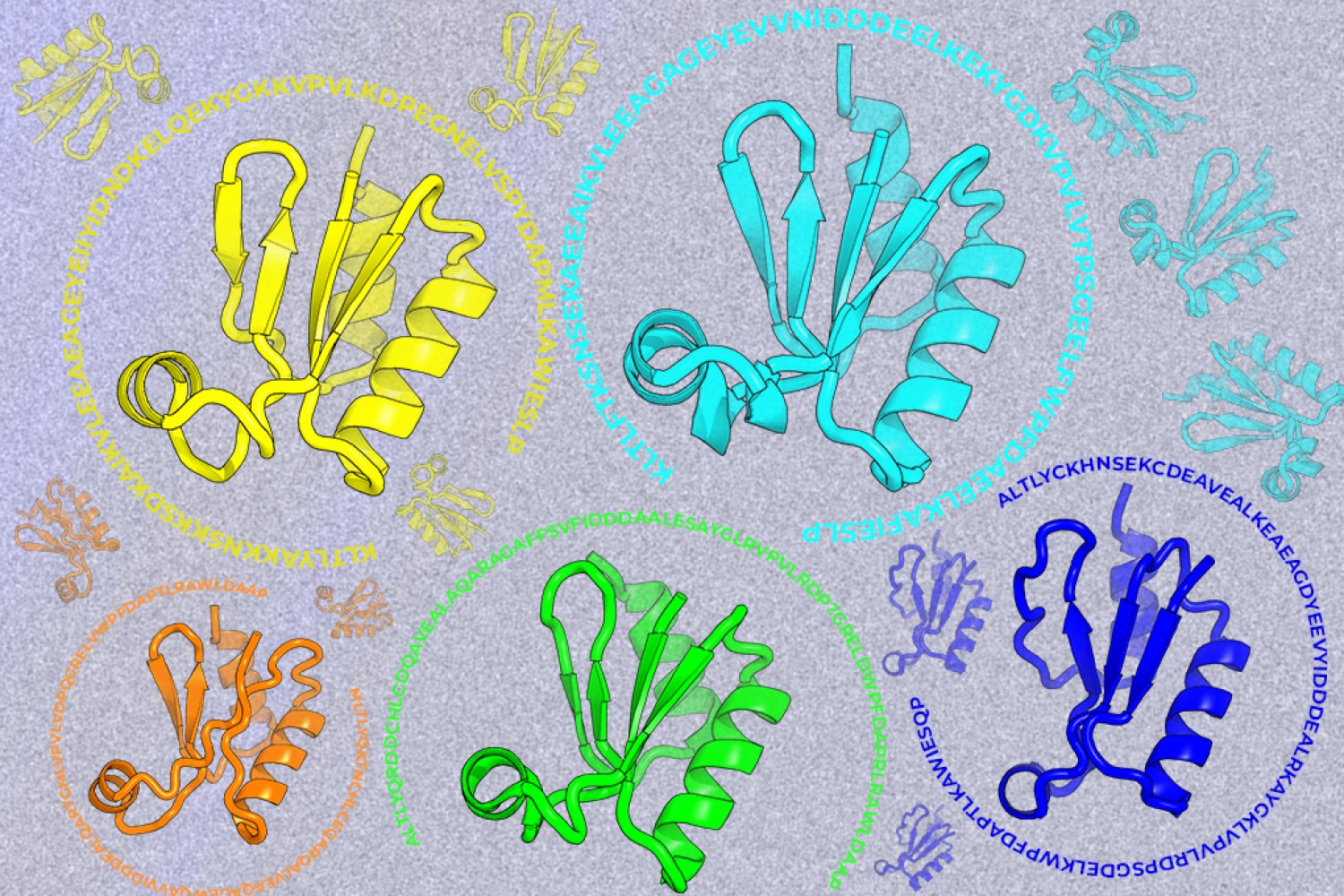
A new machine-learning framework aims to improve the success rate of computational protein design while moving away from results that reproduce sequences found in nature.
New MIT research could lead to better materials for a fossil-fuel-free process for making the chemical that's essential to fertilizer and other products.
We use cookies to run the site and, with your consent, for analytics and to show ads.
See our Cookie Policy.