Although performance of language-based models is improved by scaling, whether the gap to a structure-aware architecture can eventually be eliminated remains untested.
Because the signal spans a contiguous layer band, LayerMix aggregates it to match oracle-layer performance without oracle access, and characterize the geometry within the controlled paired-example paradigm.
We propose a multi-task learning approach for multi-party dialogue intent recognition that leverages an auxiliary task that models turn-taking dynamics. Specifically, we introduce turn-transition entropy, a self-supervised target computed from the sequence of speaker transitions, which quantifies the predictability of interaction patterns. Experiments on multiple pre-trained models demonstrate that incorporating this auxiliary task improves intent recognition performance, outperforming existing approaches which ignore multi-party interaction dynamics. We find that our proposed continuous target can be learned as a single-task objective, suggesting that it is an actual signal carrying useful information.
Galo Castillo-L\'opez, Alexis Lombard, Ga\"el de Chalendar et al.· 0 citations
The inference-time ledger that led here: a model-written schematic recap buys judged document integration and nothing buys development; a verifier written into the stream is imitated, 16.4 fabricated verdict lines per notebook.
Roberto I. Ono· 0 citations
Reach audiences
Advertise in front of researchers, engineers, and readers.
A rigor-matched, three-seed audit of two periodic-step, search-based methods that make this decision online at inference time and re-evaluate it every few generation steps: a confidence-gated early-exit baseline (ConfLayers) and genuine self-speculative decoding (SWIFT, Xia et al. 2024).
This work forms LLM-driven equation discovery as an iterative search process that unifies Best-of-N, sequential refinement, tree search, and evolution-style methods under a common compute-allocation view and finds that search width is the dominant allocation parameter.
Hao-Wei Lin, Hubert Lim, Xiang-Yu Wang et al.· 0 citations
It is shown that user-preferring conflict resolution can coexist with a readable internal arbitration signal, and successful intervention depends on the geometry of the readout rather than probe accuracy alone, while directions selected mainly for pooled separability steer poorly.
Enrique Balp-Straffon, Chih-Hao Hsu, Rushiraj Gadhvi et al.· 0 citations
AutoScientist-Quant, a self evolving search process that regards quantitative research as one budgeted search problem, is presented, a self evolving search process that regards quantitative research as one budgeted search problem.
Zong-Qian Li, Yaoyiran Li, Yao-Hui Guo et al.· 0 citations
This work introduces a conservative, fully auditable spell-correction reliability layer conceived as a safety-oriented preprocessing module rather than a maximal-accuracy corrector: under conditions of uncertainty, the system abstains from editing, in accordance with a medical do-no-harm philosophy.
Moustafa Mohamed Hassan, Sharon Wong, Woh Kai Xuan· International Conference on...· 0 citations
Large language models decode by projecting hidden states through a large vocabulary head at every step. This operation is computationally costly and forces all reasoning to be expressed in discrete tokens. We introduce Soft Latent Thinking, a method that replaces the LM head during reasoning with a lightweight projector, enabling autoregressive rollout in embedding space where reasoning steps remain continuous rather than tokenized. Experiments on DeepSeek-Qwen-1.5B and LLaMA-3.2-3B show that Soft Latent Thinking consistently improves pass@k across all k while reducing per-step compute during chain-of-thought. Our method achieves the highest pass@32 among all soft-thinking approaches, demonstrating that effective reasoning can be carried out in continuous space without discrete token generation.
N. Koriagin, Yaroslav Aksenov, George Bredis et al.· 0 citations
On-policy distillation (OPD) offers dense token-level supervision as an alternative to the sparse outcome-level advantages of reinforcement learning with verifiable rewards (RLVR). However, the teacher scores student-generated trajectories that are inherently off-policy for it, so the reliability of its supervision, and hence the source of the student's improvement, remains unclear. We quantitatively analyze teacher supervision during OPD training and find substantial noise whose prevalence increases with teacher scale. Surprisingly, the student policy is insensitive to such noise, converging to comparable performance regardless of whether noisy supervision is retained or removed. Does OPD distill at all? By analyzing what drives its gains, we find that learning concentrates on low log-probability tokens, and using a single fixed negative advantage matches the performance of teacher-provided ones. This suggests that OPD works largely by suppressing low log-probability tokens, which requires no teacher. These findings motivate On-Policy Self-Adaptation (OPSA), a supervision-free method using entropy-adaptive negative advantages. It assigns stronger learning signals to high-entropy positions, suppressing tail tokens, and evenly redistributing probability mass among head tokens. Compared with the base \texttt{Qwen3-1.7B}, OPSA improves Avg@32 by 35.41 points on AIME24, corresponding to a 263\% relative gain, and more than doubles Pass@32 across all three benchmarks. It also outperforms OPD by 16.77 points in Avg@32 on AIME24. Extensive experiments and analyses across model families and tasks further demonstrate its effectiveness and generalizability.
Activation steering has emerged as a lightweight approach for controlling model refusal at inference time. A growing line of research explores trainable rotations of activations to develop geometrically principled intervention mechanisms. However, existing techniques rely on auxiliary constructs, such as refusal vectors, to define these rotations. In our work, we develop a self-contained methodology for learning parameter-efficient rotational transformations based on Riemannian optimization. We empirically validate the proposed scheme, demonstrating its superiority in intervention efficiency. An extensive ablation study highlights the importance of key design choices in our method. Our results identify the proposed rotation-based steering scheme as a promising direction for more reliable control over the behavior of LLMs.
Kirill Bunin, Dmitry Bylinkin, Vladimir Aletov et al.· 0 citations
A new method, called CW-Net, translates the reasoning process of an autonomous vehicle’s AI system into understandable concepts that explain its behavior.
MIT News · Artificial Intelligence· news.mit.eduAug 31, 2026
With millions of users across the world, Julia has been used to conduct cutting-edge research and to design new drugs, jet engines, heat pumps, and more.
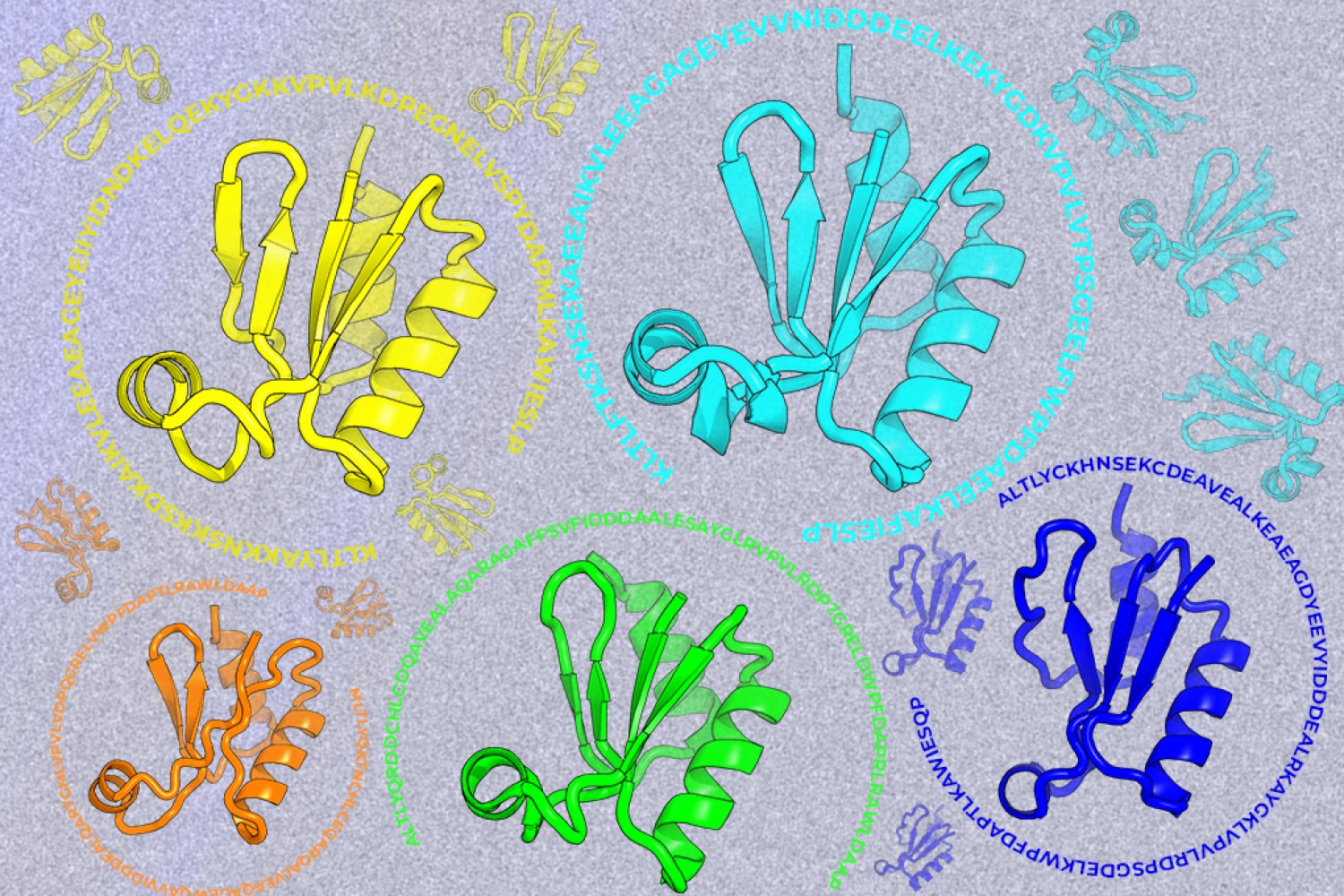
A new machine-learning framework aims to improve the success rate of computational protein design while moving away from results that reproduce sequences found in nature.
New MIT research could lead to better materials for a fossil-fuel-free process for making the chemical that's essential to fertilizer and other products.
We use cookies to run the site and, with your consent, for analytics and to show ads.
See our Cookie Policy.