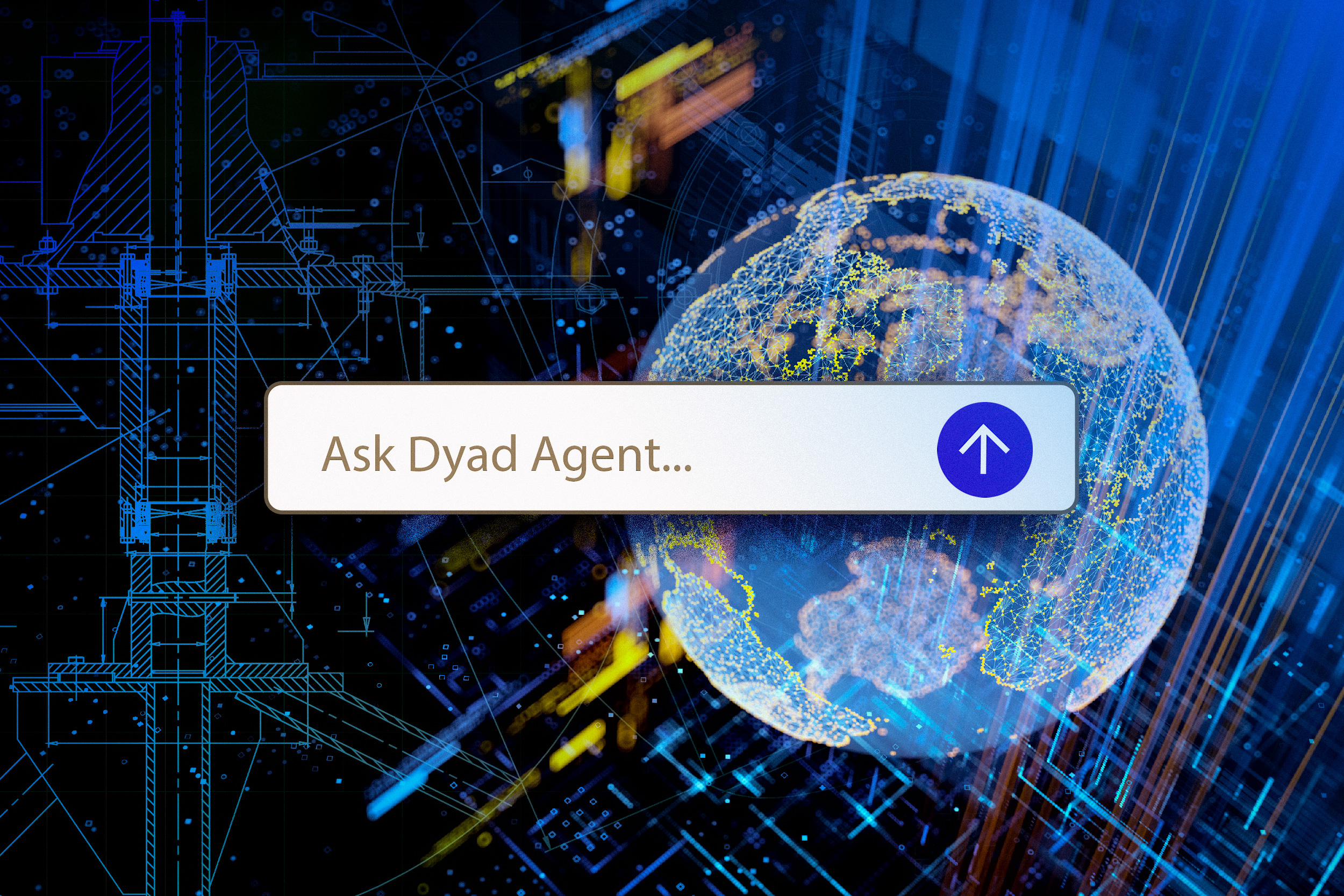
Large language model (LLM) agents need durable, faithful memory of everything a user or organization has said and stored, yet most memory systems commit to a single organizing structure (a fact store, a vector index, or a knowledge graph) and inherit its blind spots. We present Agent Zero Memory, a provenance-aware long-term memory system that distils a user's conversations, files, and connected sources into three parallel memory systems, each capturing a different facet of the same history: an episodic Memory Events timeline that makes when and what changed first-class, an associative entity-event knowledge graph that links people and projects across sessions, and a semantic, curated, citation-locked Hierarchical Documentary Memory (HDM) of durable facts. A retrieval turn runs an intent gate (so self-contained turns add no latency), a source router, and three concurrent agentic searches, one per system, each a tool-using loop over hybrid (embedding + lexical) search under agent-controlled filters; their grounded, cited answers are integrated into one answer with a single confidence. We formalize the reading discipline: every learned item is a provenanced item carrying its origin, timestamp, and evidence pointer, and every answer is read under a citation lock, so it may cite only evidence its reader actually opened; fabrication is structurally excluded and the system abstains rather than guesses. On two public benchmarks the system sets a new state of the art: 95.60% on LongMemEval and 93.60% on LoCoMo, improving over the strongest prior systems by +0.73 and +1.10 points. A controlled study across eight backbone LLMs characterizes the accuracy-cost-latency frontier: accuracy varies by only 3.4 points while per-query cost varies by ~30x, with near-state-of-the-art quality at up to 20x lower cost per query, the signature of memory-driven, rather than model-driven, quality.
Memory operations of long-horizon LLM agents are hard to supervise: an operation's value is unobservable when it is taken. But they are special -- they leave machine-readable evidence in the trajectory: retrieval hits and answer-time citations. Hindsight Memory-PRM exploits this audit trail twice: offline to train an operation-conditioned memory-utility critic, and online, where retrievals, citations, and one controlled deletion-and-reanswer per probe settle an intervention-calibrated entry-level presence credit, propagated along version chains as an action-level proxy reward -- no per-operation human labels, no Monte-Carlo replay of continuations. On held-out LoCoMo a local 8B policy reaches 77.5% under a fixed shared reader, surpassing its API teacher (65.1%) and all reproduced external systems, at one eighth the context of Mem0's official operating point; on LongMemEval, 79.0%. Ablations attribute the gain to causal calibration rather than signal density, and the policy converges to a multi-version memory organization whose gains no tested open-loop baseline reproduces.
H. Jia, Yang Liu, Yingguang Yang et al.· 0 citations
Users articulate the same advice-seeking request in different ways: some specify detailed constraints, others gesture at a vague need. Prior work treats this variation as noise to be averaged away; we instead treat it as a stable, measurable structure in the input distribution. We ask whether articulation (how people ask) forms latent dimensions separable from topic (what they ask about), and whether it is associated with how language models respond. We extract interpretable features from 16,447 advice-seeking prompts pooled from public chat corpora (WildChat, LMSYS, and ShareChat) and recover a small set of latent articulation factors that replicate across train/test splits and across corpora. Because this structure is largely separable from topic, the populations it defines cut across topics and stay invisible to topic- or task-based evaluation. The factors define a handful of recurring articulation styles, one of which stands out: a long-form but information-poor style, roughly one in six prompts in the largest corpus, where models return shorter, vaguer answers and do not ask for clarification even though under-specification is exactly the condition that warrants it. The contrast holds within every topic group and length quintile, and is not under-specification alone -- a second, equally under-specified style does draw clarifying questions. Two independent human annotators reproduce this contrast. We argue that benchmarks should stratify on articulation, and we offer the extracted structure as a measurement instrument for doing so.
SUP-MIMIC is proposed, a multi-task framework utilizing MIMIC-IV-v3.1 that comprises Basic Assessment, Diagnostic Divergence Task (DDT), and Diagnostic Convergence Task (DCT), designed to evaluate the model's"one-to-many"disambiguation capability among phenotypically similar cases, while DCT assesses the model's ability to identify"many-to-one" diagnostic patterns across different pathophysiological pathways
Yi Yu, Bo Wang, Chong Feng et al.· 0 citations
Reach audiences
Advertise in front of researchers, engineers, and readers.
Large language models are increasingly used to read documents and produce downstream text, creating a provenance problem when the document owner cannot control or inspect the model that performs the generation. We introduce SemTrace, a source-grounded semantic watermark for detecting whether a generated review was influenced by a known protected manuscript copy. Rather than biasing token probabilities or imposing surface-form patterns, SemTrace constructs a document-specific binary signature from factual propositions that are directly supported by the manuscript itself. A protected PDF invisibly carries a content contract that selects one fact from each binary pair and asks an instruction-following reviewer to express those facts in fixed review slots without changing its independent evaluation. A frozen natural language inference model then decodes the resulting semantic evidence with explicit erasures and scores the recovered bits against the codeword assigned to that copy. This design targets model-agnostic, assigned-copy exposure detection while keeping the watermark semantically tied to the source document.
Jun-Yan Zhang, Yuan Zeng, Yong-Wei Huang et al.· 0 citations
Flexible adaptation to context and shared pragmatic intuitions contribute to smooth human conversation. Iterated reference games---in which players repeatedly pick out novel referents using language---present a test case for agents'ability to perform context-sensitive pragmatic reasoning in multi-turn linguistic environments. We tested humans and vision--language models on their ability to identify the intended meaning of descriptions produced in iterated reference games, varying the provided context in terms of amount, order, and relevance. While humans performed well consistently, the models we evaluated could make use of prior context to interpret humans'referring expressions, but they struggled to build up the relevant context to interpret those expressions effectively. Our results suggest that the models we evaluated lack core skills needed for efficient linguistic collaboration.
A. W. M. Tan, Ben Prystawski, Veronica Boyce· 0 citations
TIDE-Bench is introduced, a benchmark for conversational text-to-SQL under chain ambiguity and intent drift evaluation, targeting two recurring patterns: chain ambiguity, where an underspecified question triggers layered clarification with conditional dependencies, and intent drift, where the user retracts and replaces a previously committed request element.
Yu-Jia Liu, Jia-Yan Lin, Zijin Hong et al.· 0 citations
It is shown that the vector representations of a variety of neural networks can be closely approximated with symbolic structures, providing a potential way to reconcile longstanding symbolic conceptions of intelligence with the vector-based nature of modern AI.
R. Thomas McCoy, Paul Soulos, Tal Linzen et al.· 1 citation
Preliminary evidence is given that argument structure is a useful intermediate representation for aligning specialized normative texts in cross-standard control mapping and a neuro-symbolic pipeline is built that combines neural text representations with Toulmin features.
Academic reviews, scholarly commentaries, and book reviews serve as sources of evaluative statements about theories, methods, literature, institutions, and policies, providing valuable evidence for scholarly evaluation. Existing scientific entity extraction methods mainly target research articles and are less effective for evaluation objects, which are often abstract, context-dependent, and characterized by ambiguous type boundaries. This study proposes an ontology-guided multi-agent framework for evaluation object extraction. The framework combines candidate discovery, ontology-constrained classification, and domain review. Experimental results show that it achieves a Precision of 90.33%, Recall of 84.55%, Entity-level F1 of 87.34%, Strict Typed F1 of 79.78%, and Type Accuracy of 91.35%, substantially outperforming rule-based and zero-shot baselines. Ablation results indicate that the multi-agent workflow improves recall and stability, while ontology-based boundary constraints enhance fine-grained classification and reduce category confusion. The framework supports the structured utilization of evaluative scholarly texts and provides methodological support for evidence-based research evaluation and STI mining.
Haolin Chen, Hongyi Dong, Yu Zhu et al.· 0 citations
Large language models (LLMs) are increasingly used as essay graders in learning analytics, evaluated almost exclusively with agreement statistics. Educational measurement warns that raters also differ in severity, show halo, and drift as instruments. We treat LLM judges as raters and run a pre-registered rater-effects battery (many-facet Rasch severity, residual halo, generalizability/decision studies, cross-version shifts, differential functioning) on public corpora in two languages (ENEM/Essay-BR; ASAP): 2,377 essays, 12 judges, 4 providers, 5 version contrasts, replicated cells, released as a score tensor. Judge severity spans 219 points on ENEM's 0-1000 scale; on ASAP the panel spread is 15-33% of the score range against a between-trained-human gap near 1%. Judge-human correlations sit in an undiscriminating .47-.56 band. All five version contrasts shift severity beyond a family-wise permutation null (up to 133 points), and one judge was deprecated mid-study, caught by identity canaries. Two pre-registered tests returned honest nulls: severity-adjusted leaderboard reversals did not survive a permutation null, and "silent drift" was refuted: agreement moved with severity in four of five contrasts. Replication yields self-consistency (phi>=.80 at k<=2) but not human-level accuracy, and a same-instrument check overturned our own halo comparison: matched on instrument and calibration, we find no credible evidence that judge halo exceeds the trained-human range.
Large Language Models (LLMs) often favor Western-associated entities across cultural contexts. Conventional debiasing methods aim for uniform neutrality, but cultural bias mitigation demands context-conditional behavior, preferring culturally appropriate entities when cultural cues are present and remaining neutral when they are absent. We propose CoCoA (Context-Conditional Cultural Alignment), a framework that learns this behavior through dual-context training on the same entity pairs under contexts with and without cultural cues. CoCoA combines a contrastive alignment objective with calibration and drift regularization, optimized through goal-aware gradient reconciliation. We evaluate CoCoA on CAMeL and Camellia, two entity-centric cultural bias benchmarks, across ten language settings and four LLMs. CoCoA reduces the Cultural Bias Score from 43 to 24 on average while maintaining near-neutral preferences at 50.2, with minimal impact on general performance across five standard benchmarks. These findings highlight that effective cultural alignment requires context-conditional modeling rather than uniform debiasing, and establish a new direction for mitigating entity-centric cultural bias in LLMs.
Kyungdon Lee, Wei Xu, Alan Ritter et al.· 0 citations
A new method, called CW-Net, translates the reasoning process of an autonomous vehicle’s AI system into understandable concepts that explain its behavior.
MIT News · Artificial Intelligence· news.mit.eduAug 31, 2026
With millions of users across the world, Julia has been used to conduct cutting-edge research and to design new drugs, jet engines, heat pumps, and more.
A new machine-learning framework aims to improve the success rate of computational protein design while moving away from results that reproduce sequences found in nature.
New MIT research could lead to better materials for a fossil-fuel-free process for making the chemical that's essential to fertilizer and other products.
We use cookies to run the site and, with your consent, for analytics and to show ads.
See our Cookie Policy.