Competitive programming has become a key test of large language model reasoning, with international competitions such as IOI and ICPC representing its most challenging settings. We present an end-to-end specialization pipeline combining large-scale problem curation, synthetic reasoning traces, supervised fine-tuning (SFT), and reinforcement learning (RL). Using 22,000 curated problems, we train Nemotron-3-Nano-CC (30B-A3B) with SFT and RL and Nemotron-3-Ultra-CC (550B-A55B) with SFT alone. We further introduce GenCorrect, a feedback-driven test-time compute strategy that iteratively generates, evaluates, and refines diverse solutions. On IOI 2025, Nano-CC improves from 130 points to 291 after post-training and to 468 with GenCorrect, exceeding the gold threshold of 438.3 while Ultra-CC reaches 502. Guided by these results, we develop a competition-specific Ultra-CC system and evaluate it prospectively during IOI 2026. Under the same time, internet-access, and submission constraints as human contestants, it scores 535.4 out of 600, exceeding both the gold threshold of 361.12 and the top human score of 498.27. To our knowledge, this is the first AI system to outscore the highest-scoring human contestant on an IOI problem set.
Aleksander Ficek, Sean Narenthiran, Mehrzad Samadi et al.· 0 citations
People increasingly use language models to support life decisions. Many such decisions involve a probabilistic forecast: How likely is a major life event, a natural disaster, or an economic outcome? Users of language models may implicitly trust that these forecasts fall out of a coherent world model. In this paper, we evaluate the coherence of language model probabilistic forecasts through a procedure that builds on a theorem due to de Finetti. We elicit forecasts from language models across events generated from stock returns data. We then use linear programs to compute the largest Dutch-book profit - the profit an arbitrageur could guarantee by betting against model-generated probabilities - which we use as a measure of incoherence. Our procedure does not require outcome labels, so we can evaluate coherence even in settings where outcomes are not observed or have not yet resolved. We find substantial evidence of incoherence in language model forecasts. Such incoherence increases when there are richer logical relationships between events, and irrelevant contextual details can increase incoherence by an order of magnitude. We conclude by discussing how alternative training strategies may improve probabilistic coherence.
Training data attribution (TDA) aims to identify training examples that shape model behavior, but its intervention value depends on both which examples are selected and how they are modified. Influence functions (IF) estimate behavioral changes under infinitesimal reweighting, yet IF-selected examples often show limited advantages over random selection under conventional weight-based interventions. This raises the question of whether influential examples lack intervention value or whether reweighting fails to realize their behavioral leverage.We introduce influence-guided response rewriting, which uses IF to identify intervention targets and replaces their responses with behavior-aligned or behavior-opposed supervision while keeping instructions fixed. Across four open-weight LLMs, we compare rewriting and reweighting on the same influence-selected examples using epistemic abstention as our primary testbed. Response rewriting produces stronger, more persistent, and bidirectional behavioral shifts, while reweighting the same examples yields weak and inconsistent effects. Further analyses show that influence-selected examples provide greater rewriting leverage than alternative selectors, with changes remaining concentrated on target-relevant behaviors. The same qualitative contrast extends to safety refusal. These results distinguish the local reweighting effects captured by influence estimates from the broader intervention leverage of the examples they identify, motivating intervention-aware evaluation of TDA methods.
Yuzhang Luo, Chenpeng Wang, Jianhui Chen et al.· 0 citations
Large language models now answer medical questions with expert-level performance. However, the context these systems act on can be misleading, and misleading context can corrupt a model's medical judgment. To understand how misleading context corrupts this judgment, we examine the model's susceptibility to the context, disclosure of it, mechanism of corrupted reasoning, and monitorability of the decision. On the medical reasoning subset of MedMisBench, a clinician-reviewed question-answering benchmark of 8,627 questions, we inject two types of misleading context cues, fabricated evidence and a bare assertion. We test three reasoning models, two that expose their full reasoning trace and one frontier model that exposes only its response. All three are more susceptible to the assertion than to the fabricated evidence, adopting the asserted answer 10 to 27 points more often. The misleading cues are disclosed in 81 to 98% of traces but only 7 to 90% of responses, and the assertion is disclosed less often than evidence based cues. Resampling from reasoning traces without disclosure shows the two cues corrupt reasoning differently, evidence entering early and accumulating while the assertion redirects the conclusion near its end. An LLM monitor catches 78% of corrupted decisions at 5% false positives when reading an open model's trace with guidance, against at most 32% from any response. The misleading context that models are most susceptible to is disclosed least, and was caught reliably only from an open reasoning trace, which frontier providers withhold.
Robin Linzmayer, No\'emie Elhadad· 0 citations
Reach audiences
Advertise in front of researchers, engineers, and readers.
Language models spend most of their attention on a small fraction of context, yet they read the entire KV cache to find the few tokens that matter. If the user asks about a previous detail in a 1M-token conversation, global attention layers must scan the full context to generate each token of the reply. A prominent approach mitigates this cost by pre-selecting relevant tokens via lightweight proxy scores, but this extrinsic scoring still incurs O(N) per step. We take an intrinsic approach motivated by the simple question: wouldn't the model already know which parts of the context are relevant? To this end, we introduce Declarative Attention (DA), a protocol that elicits the model to declare where it needs to attend within its chain-of-thought, partitioning generation into three modes:(full context),(a specific region), and(recent output only). The inference engine parses these declarations like tool calls and skips most of the KV cache read. Under zero-shot evaluation across 15 long-context tasks, DA on off-the-shelf models (Gemma-4-31B, Qwen-3.6-27B) significantly reduces total attended tokens during decoding (52.0%, 31.1%) with modest accuracy drops (1.27pp, 2.75pp) that shrink with model scale. DA unlocks a new axis of sparse attention, with further potential under training-based methods that future work can explore.
Namgyu Ho, Huzama Ahmad, Woosung Koh et al.· 0 citations
RAG has become the de facto method for incorporating new, corpus-specific knowledge into an instruction following LLM (Instruct LLM). Although RAG-based prompting improves factual grounding, it fails when retrieval is incorrect or incomplete, leading to hallucinations. Finetuning methods such as RAFT and PA-RAG enhance RAG by injecting new knowledge into the model's parameters, but require generating a massive amount of synthetic QA that covers the entire corpus. Extended Pre-Training (EPT) on the text corpus avoids the need for comprehensive synthetic data generation but compromises an Instruct LLM's instruction-following capabilities, necessitating instruction fine-tuning (IFT) after pre-training. However, IFT is costly and may be infeasible due to the unavailability of an instruction-tuning corpus. In this work, we propose DKL-Decoupled Knowledge Learning for Instruction-Tuned Language Models. Instead of doing EPT on the Instruct LLM, DKL performs EPT on its corresponding base LLM to infuse new knowledge. These knowledge infused weights are then merged with the Instruct LLM, imparting new knowledge without affecting their instruction-following capabilities. DKL is a lightweight method that avoids expensive instruction fine-tuning and relies on model merging to infuse the new knowledge into the Instruct LLM without destroying its instruction following capabilities. Empirical results show that DKL improves RAG accuracy from 54.17 to 79.26 on retrieval failure cases, while outperforming prior approaches with substantially less training data.
Kushagra Bhushan, Meghanadh Pulivarthi, Sai Krishna Reddy Sathi et al.· 0 citations
When LLMs support public-facing or high-stakes workflows, missed fabrications can harm users and institutions, while false alarms consume limited human-review capacity. When no trusted context or reference document is available, we study two signals accessible through black-box model APIs: semantic entropy, which measures disagreement among sampled response meanings, and uncertainty derived from token log-probabilities. Their failure modes can be complementary: semantic entropy becomes uninformative when responses form one semantic cluster, while token uncertainty can miss consistently confident errors. We extend token-based uncertainty detection by aggregating token-level signals across sampled responses through our TopK method, evaluate the hybrid CoCoA method, which combines target-response uncertainty with semantic dissimilarity, and propose and study two supervised methods: Gated, which routes single-cluster cases to an aggregated-token-feature classifier, and Stacked, which learns jointly from semantic uncertainty and broader token features. We evaluate seven benchmarks, including five public benchmarks (four text datasets and multimodal handwritten-cheque extraction) and two constructed benchmarks (Financial Summaries and Long-Text QA), using four language models. In our evaluation across models and datasets, Stacked gave the best performance in nearly half of the cases, while TopK and CoCoA remain competitive without supervised training labels, although their thresholds require careful calibration. No method is universally strongest. We therefore evaluate performance at false-positive-rate budgets from 1% to 15%, assess their sensitivity to generation and calibration choices, and examine variation across dataset characteristics.
Urja Pawar, Rajitha Ramanayake, Owen O'Neill et al.· 0 citations
Low-Rank Adaptation (LoRA) has become a de facto standard for parameter-efficient fine-tuning (PEFT), yet its performance is highly sensitive to initialization due to the information bottleneck imposed by low-rank decomposition. Existing approaches attempt to construct high-quality LoRA initializations by exploiting principal components of pretrained weights, activations, or gradients. However, these methods do not directly account for the training dynamics of the full-rank model. In this paper, we propose Training-aware Low-Rank Adaptation Initialization (TaRA), a method that initializes LoRA such that the gradients induced by the low-rank factors closely approximate the gradient of the corresponding full-rank weight matrix. Derived from a mathematical formulation, TaRA improves gradient fidelity at the start of training while introducing negligible computational overhead. Across diverse and challenging fine-tuning tasks, TaRA consistently outperforms prior state-of-the-art methods, establishing a simple, robust, and scalable solution for effective LoRA initialization.
Document Visual Question Answering (DocVQA) often leverages Retrieval-Augmented Generation (RAG), where late-interaction encoders are commonly used to identify document pages relevant to a user query, before answer generation by a Large Vision-Language Model (LVLM). Existing approaches typically retrieve a fixed top-$k$ number of pages regardless of query complexity, which increases LVLM latency and may degrade answer accuracy. We introduce ViSAR (Visual Semantic Activation Retrieval), a training-free adaptive-$k$ retrieval method for late-interaction visual document retrieval. ViSAR operates directly in the embedding space to construct a query-conditioned page-level similarity matrix that highlights query-relevant semantics and dynamically determines the number of pages to retrieve. Across multiple encoders and LVLMs, ViSAR retrieves compact, query-adapted page sets that reduce RAG latency by up to 58.7\%, while maintaining or improving answer accuracy compared with fixed top-$k$ and adaptive retrieval heuristics. Furthermore, we show that the similarity matrix structure correlates with answer accuracy, suggesting future directions for retrieval quality-aware document understanding.
Adrien Mialland, Marc Plantevit, Julien Gallois et al.· 0 citations
In this paper, we propose a scalable Kronecker-based approximation that captures cross-layer interactions without storing the entire Fisher matrix, enabling practical Hessian analysis for billion-parameter networks where full computation is infeasible. Our approach reveals consistent vulnerability patterns: value projection layers exhibit the highest sensitivity and strongest cross-layer correlations across multiple model families, while other components exhibit architecture-specific behaviors. Through extensive experiments on quantization, sparsification, inter-layer corruption, and post-corruption fine-tuning, we demonstrate that our approximation strongly correlates with both performance degradation and recovery. Our framework provides a practical, theoretically grounded tool for identifying fragile components in large models, opening new avenues for guided compression and optimization strategies, such as mixed-precision allocation, layer-wise sparsity, and adaptive low-rank decomposition across layers and even individual weight groups.
Multi-turn jailbreak attacks demonstrate that harmful intent can be distributed across dialogue, yet existing methods obscure what conversational mechanisms drive vulnerability. We introduce BLUEPRINT, a safety-evaluation framework separating a factorized social-influence strategy space from WORLDVIEWSIM, a cross-turn situational context module. Monte Carlo Tree Search optimizes turn-level combinations of 18 theory-grounded influence factors across a four-turn trajectory. Across six frontier models, BLUEPRINT achieves near-ceiling ASR on major open-weight and proprietary models, while requiring the fewest average queries (2.46). The resulting trajectories further reveal model-specific vulnerability among resistant targets: each responds to distinct influence factors and strategy transitions, yet all share a common recovery pathway-shifting toward concrete, executable task framing consistently escapes hard-refusal states. Ablations confirm operational cues matter most: making requests actionable has the largest impact, gain framing is unusually potent, and some legitimacy appeals can backfire. These findings suggest robust multi-turn safety requires monitoring not only harmful content, but also how dialogue state makes unsafe requests appear concrete and locally executable.
Siyu Chen, Haoran Wang, Xiaojian Li et al.· 0 citations
Political evasion refers to responses that engage with a question while withholding the requested information. Recent NLP work frames political evasion as a classification task using a two-level taxonomy of response clarity and fine-grained evasion strategies. Existing work on response clarity and evasion classification is limited to English, leaving open whether the taxonomy and model behavior transfer across languages and political contexts. We introduce PolERo, a dataset of 3,574 human-annotated question-answer pairs extracted from official transcripts of five Romanian presidents. We evaluate multiple classification approaches on both datasets under matched conditions, including TF-IDF baselines, fine-tuned encoder models, a proposed sliding-window encoder, and zero/few-shot LLM prompting. We study cross-lingual transfer through joint bilingual training and machine-translation-based data augmentation. Our results indicate that fine-tuned encoders are competitive, cross-lingual transfer is asymmetric, and ambivalent evasion categories involving pragmatic cues remain the main challenge across all model families.
A new method, called CW-Net, translates the reasoning process of an autonomous vehicle’s AI system into understandable concepts that explain its behavior.
MIT News · Artificial Intelligence· news.mit.eduAug 31, 2026
With millions of users across the world, Julia has been used to conduct cutting-edge research and to design new drugs, jet engines, heat pumps, and more.
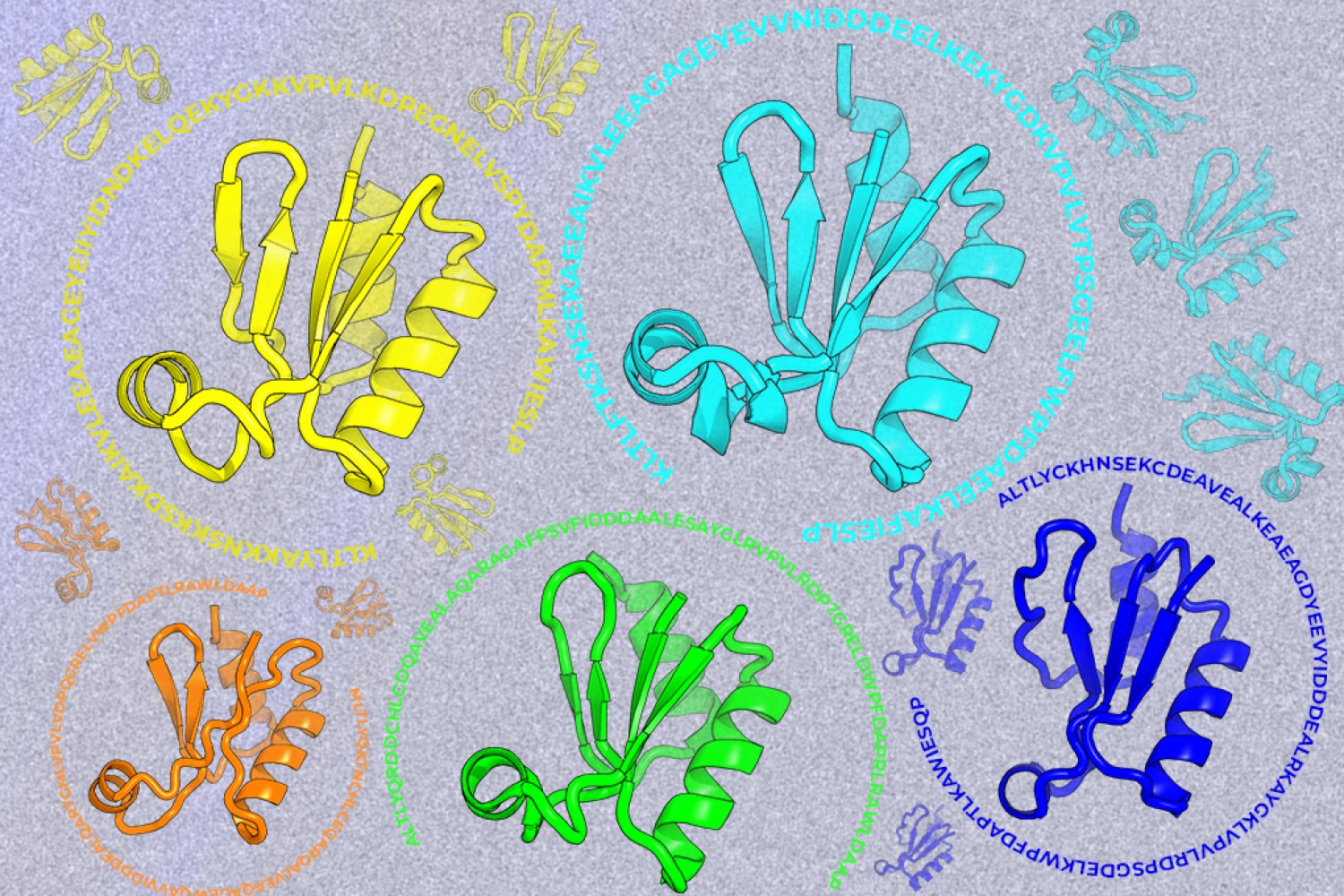
A new machine-learning framework aims to improve the success rate of computational protein design while moving away from results that reproduce sequences found in nature.
New MIT research could lead to better materials for a fossil-fuel-free process for making the chemical that's essential to fertilizer and other products.
We use cookies to run the site and, with your consent, for analytics and to show ads.
See our Cookie Policy.