A deep learning framework that integrates knowledge graph embedding and pre-training strategies to overcome the intractable cold start issue, achieving superior performance and interpretability in drug repurposing is introduced.
Kun Li, Jiacai Yi, Qing Ye et al.· Communications Chemistry· 1 citation
A comprehensive overview of how enhanced sampling methods are reshaping the field, with a particular focus on the data-driven construction of collective variables, is provided.
Kai Zhu, Enrico Trizio, Jintu Zhang et al.· Chemical Reviews· 58 citations
HiCLR is the first foundation model that can be broadly applied to various synthesis-related tasks, and it achieves state-of-the-art performance in reaction classification, reaction condition recommendation, reaction yield prediction, synthesis planning, and even molecular property prediction.
Jialu Wu, Yiheng Zhu, Xiaorui Wang et al.· JACS Au· 0 citations
RSGPT, a generative model pre-trained on ten billion data points, achieving state-of-the-art performance for synthesis planning, and introduces reinforcement learning to capture the relationships among products, reactants, and templates more accurately.
Yafeng Deng, Xinda Zhao, Hanyu Sun et al.· Nature Communications· 18 citations· ⚡2
Reach audiences
Advertise in front of researchers, engineers, and readers.
AntiBMPNN consistently outperforms AbMPNN, AntiFold, and ProteinMPNN in designing complementarity determining regions (CDR) 1‐3, yielding stronger binding affinities and confirming its potential to improve therapeutic antibody design.
Ze-Yu Sun, Jiayi Yuan, Divya Jaiswal et al.· Advancement of science· 9 citations
The AI-guided development of a first-in-class proteolysis-targeting chimera (PROTAC) designed to selectively degrade the CLIP1-LTK fusion protein is reported, providing a promising therapeutic strategy for overcoming acquired resistance in kinase-driven cancers.
Shi-Cheng Chen, Hai-Ting Duan, S. Zhong et al.· Proceedings of the National...· 0 citations
ERAM aligns pre-trained molecular representations from Protein Language Model with the knowledge of enzyme catalysis by modeling enzymatic reactions as multi-relational data, and demonstrates its potential as a versatile and effective tool for enzyme catalysis research.
BBBP-Atlas is proposed, a structure-aware BBB permeability prediction model designed for unified modeling of small molecules and peptides with the first cross-modal dataset OmniBBBP, which offers a versatile and cross-modal approach for single-compound prediction, batch screening, and dataset exploration for CNS drug d...
Xin Shen, Qun Su, Hao Luo et al.· bioRxiv· 0 citations
An integrated computational workflow that combines enhanced sampling techniques and machine learning collective variables to identify druggable conformations of the AR-NTD and elucidate the binding mechanism of its modulator, EPI-002 is introduced.
Kai Zhu, Huating Wang, Jin-Tu Zhang et al.· Nature Communications· 0 citations
Backtests covering 2014-2024 across seven equity indices show that the model achieves higher Sharpe ratios than the baselines while maintaining near-zero benchmark correlations and competitive drawdowns.
This paper investigates the application of a self-adaptive quantum simulation optimization algorithm to enhance the accuracy and efficiency of quantum simulations. Traditional simulation methods often rely on fixed parameters, limiting the potential for optimization. This research proposes a novel algorithm that dynami...
Jincheng Zhang· Zenodo (CERN European Organi...· 0 citations
Research Manager Mike Walker reflects on a career spanning hacker culture, cybersecurity, and AI, sharing lessons about trust, teamwork, leadership, and why solving difficult problems requires curiosity, judgment, agility—and an understanding of the rules. The post Learn the rules: The hacker mindset appeared first on Microsoft Research.
Learn how Google Antigravity and our Cheminformatics Skills accelerate drug discovery workflows, search compounds, and propose novel rigidified macrocycles.
MIT News · Artificial Intelligence· news.mit.eduOct 27, 2026
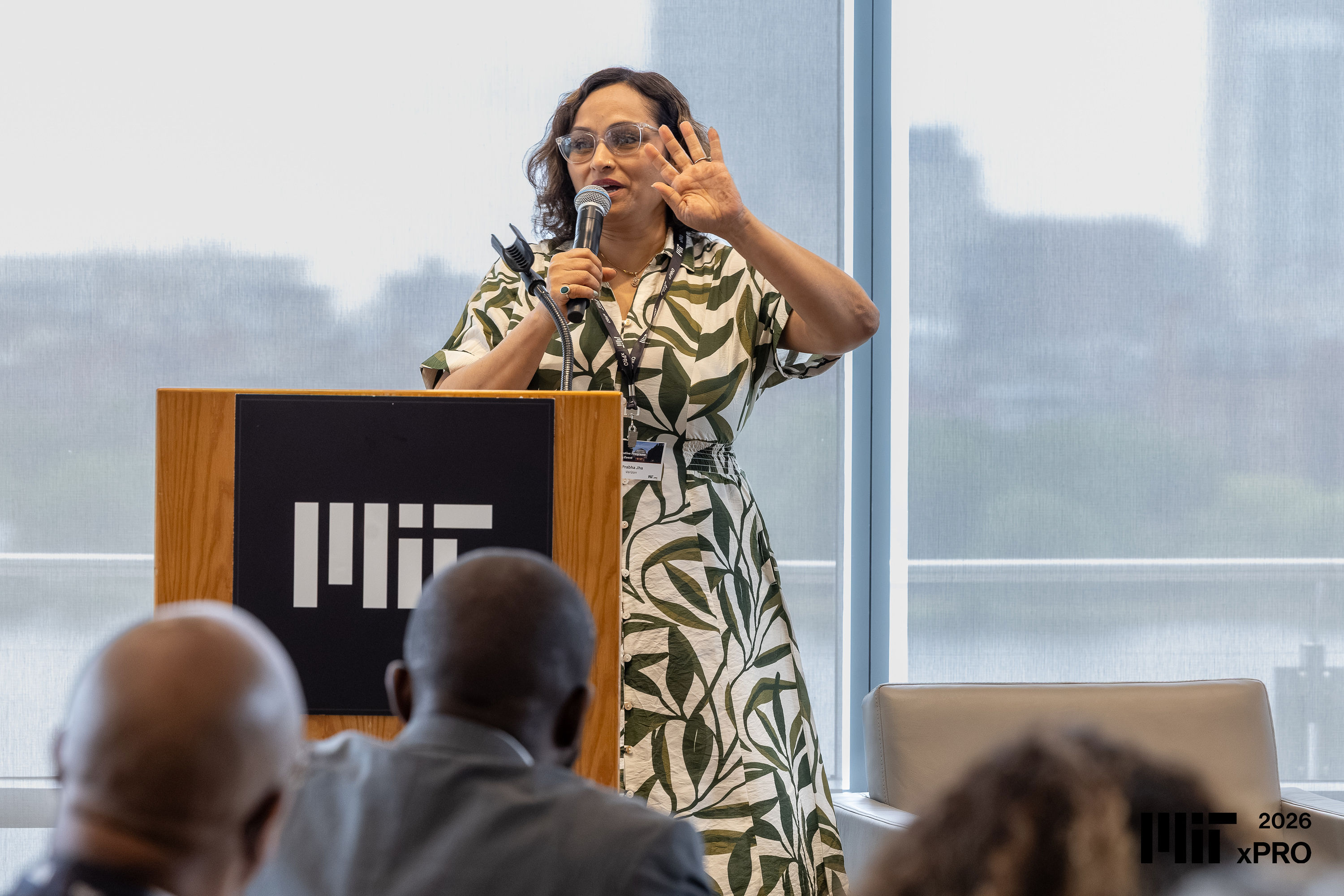
Prabha Jha used her experience with MIT Open Learning’s program for senior executives to develop AI solutions for her employer, Verizon, and to write a book.
Assistant Professor Benjamin Lindquist studies how engineers deliberately injected randomness into early AI, giving rise to deep-learning models that sometimes hallucinate.