Sycophancy is often treated as an undesirable interpersonal behavior involving flattery, excessive deference, or opportunistic agreement with powerful actors. This article argues that such a view is too narrow. Drawing on a critical qualitative literature review of organizational behavior, human resource management, le...
Loso Judijanto· Multitech Journal of Science...· 0 citations
This study presents a comparative analysis of proximal policy optimization (PPO) and soft actor-critic (SAC) for training autonomous delivery agents in high-fidelity 3D environments using Unity ML-Agents. Both algorithms were evaluated with identical hyperparameters and reward functions across five independent runs to...
Muhammad Fakhri Loebis, Andry Chowanda· Bulletin of Electrical Engin...· 0 citations
Purpose Maintaining student engagement with lecture content beyond the classroom remains a persistent challenge in higher education. While lecture recordings are widely used, they often require substantial time to revisit and may not align with students' study habits. This reflective article examines the introduction o...
Kingston Rajiah· Currents in Pharmacy Teachin...· 0 citations
This paper presents a conceptual literature review and qualitative comparative synthesis of two major families of Electronic Design Automation (EDA) logic-optimization techniques: modern classical heuristic logic synthesis, grounded in scalable multi-level DAG-based optimization frameworks (Mishchenko et al., 2018; Ama...
Mary Hyacinth Sarmiento· Zenodo (CERN European Organi...· 0 citations
Reach audiences
Advertise in front of researchers, engineers, and readers.
The coexistence of multimodal semantic communication and ultra-reliable low-latency communication (URLLC) creates a resource management challenge for next-generation wireless networks. Semantic communication reduces transmission redundancy by delivering task-relevant information rather than complete bit streams, wherea...
Ke LI, Lina Wang· DOAJ (DOAJ: Directory of Ope...· 0 citations
This paper investigates the optimal synchronization control problem for heterogeneous multi-robot systems with unknown dynamics under a model-free reinforcement learning framework. Heterogeneous multi-robot systems have attracted increasing attention due to their broad applications in intelligent manufacturing, coopera...
Qu Wang, Kaixuan Yin, Song Ruizhuo et al.· DOAJ (DOAJ: Directory of Ope...· 0 citations
Polymer science is undergoing a profound paradigm shift from labor-intensive, empirical trial-and-error experimentation to AI-guided, data-driven, and predictive material design. Owing to their multiscale structural diversity (spanning atomic connectivity, chain-packing behavior, and macroscopic morphology), polymer ma...
Haiyan GONG, Jingzhi Yang, Annan Kong et al.· DOAJ (DOAJ: Directory of Ope...· 0 citations
This textbook module examines the intersection of cognitive neuroscience, pedagogy, and artificial intelligence as they converge in the secondary school classroom. Beginning with the theory of mental rigor — the disciplined, sustained exertion of focused cognitive effort as a biological process with measurable neural c...
Xavier Honablue M.Ed· Zenodo (CERN European Organi...· 0 citations
Object detection, a task, in the field of computer vision faces obstacles when dealing with weather conditions such as fog, rain, snow, and low light situations. This paper provides an overview of advancements in the realm of object detection under challenging weather conditions. It delves into groundbreaking research...
Cloud robotics is an innovative field that leverages cloud technologies-including cloud computing (CC), cloud storage, deep learning, big data, and the Internet of Things to augment the capabilities of robotics. This integration facilitates the execution of robotic functions through a converged infrastructure and share...
Shahnawaz Ahmad, Shahadat Hussain, Khalid Anwar et al.· International Conference on...· 2 citations
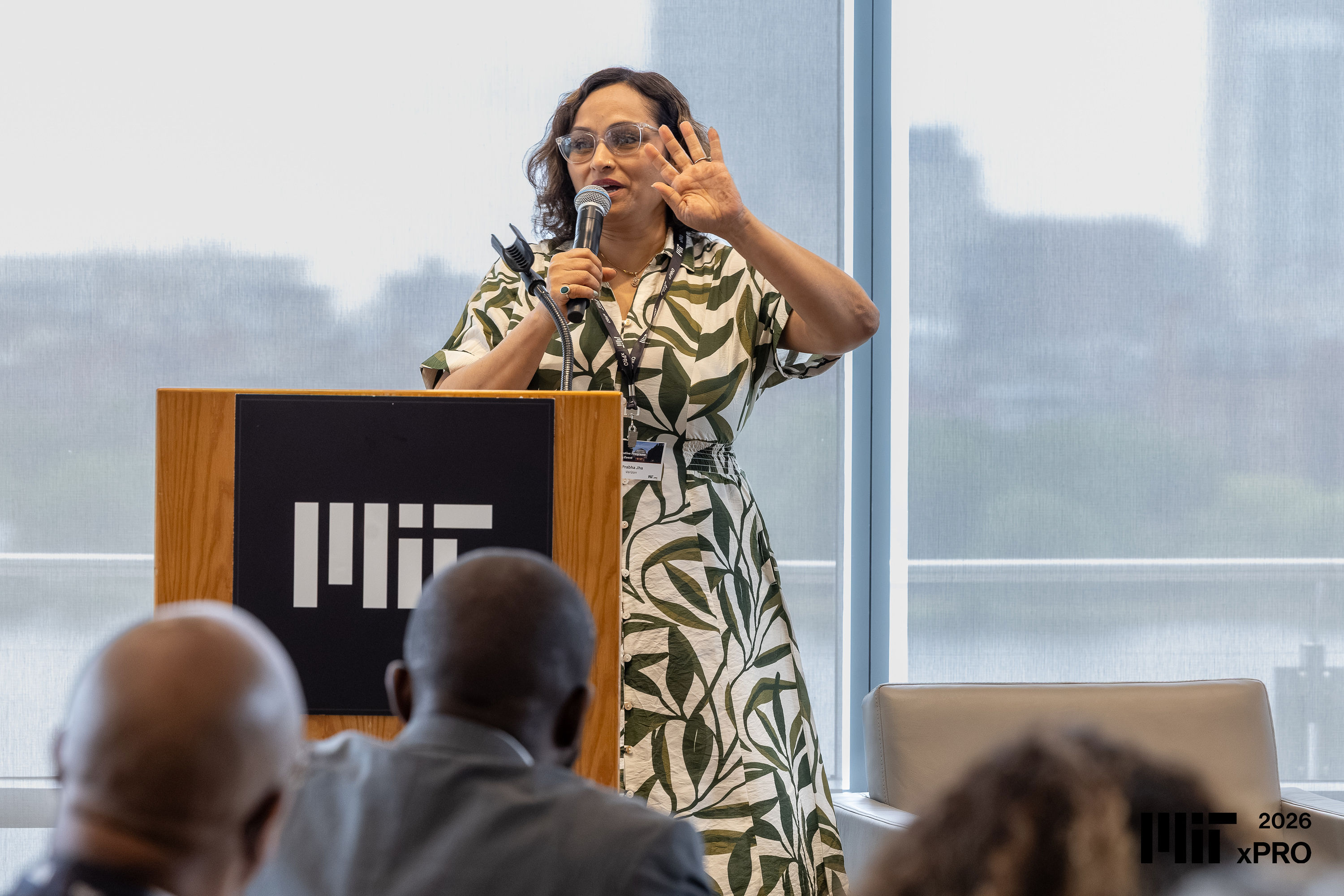
Prabha Jha used her experience with MIT Open Learning’s program for senior executives to develop AI solutions for her employer, Verizon, and to write a book.
Assistant Professor Benjamin Lindquist studies how engineers deliberately injected randomness into early AI, giving rise to deep-learning models that sometimes hallucinate.