ABSTRACT Modeling of longitudinal cohort data typically involves complex temporal dependencies between multiple variables. There, the transformer architecture, which has been highly successful in language and vision applications, allows us to account for the fact that the most recently observed time points in an indivi...
Kiana Farhadyar, Maren Hackenberg, Kira Ahrens et al.· Statistics in Medicine· 0 citations
Current LLMs can match or exceed dermatologists in completeness of guideline-based systemic psoriasis recommendations, particularly in low-risk contexts, however, they remain more prone to critical safety errors in complex, high-stakes scenarios.
K. Xia, L. Min, Dan Jian· Clincal and Experimental Der...· 0 citations
Findings are best viewed as preliminary evidence of high concordance under controlled conditions and should use transparent model reporting, repeated runs, consensus reference standards, and clinically representative multimodal cases before expert-level performance is inferred.
S. Misra, Rupsa Das· Australian Endodontic Journa...· 0 citations
Intent-based networking decouples desired outcomes from device-level configuration, but most systems still map intents to parameters of an algorithm selected in advance. Large language models (LLMs) create an opportunity to automate algorithm design, yet unrestricted generated code is unsuitable for transport-network c...
Behnam Ojaghi, R. Vilalta, Raúl Muñoz· 1 citation
Reach audiences
Advertise in front of researchers, engineers, and readers.
This work applies MRT to power outage report generation for the Outage Data Initiative Nationwide (ODIN), transforming heterogeneous reports into standardized XML compliant with CIM IEC 61968-3.
Hung D. Phan, Waqwoya Abebe, Youssef Hussein et al.· 0 citations
Direct Relational Set-Risk Pruning is introduced, which formulates agent-history compression as risk-constrained selection over deletion sets and shows that decision-conditioned relations, retained-context information, pair interactions, and abstention each contribute to reliable pruning.
Ming-Xuan Wang, Bo Wang, Fei Luo et al.· 0 citations
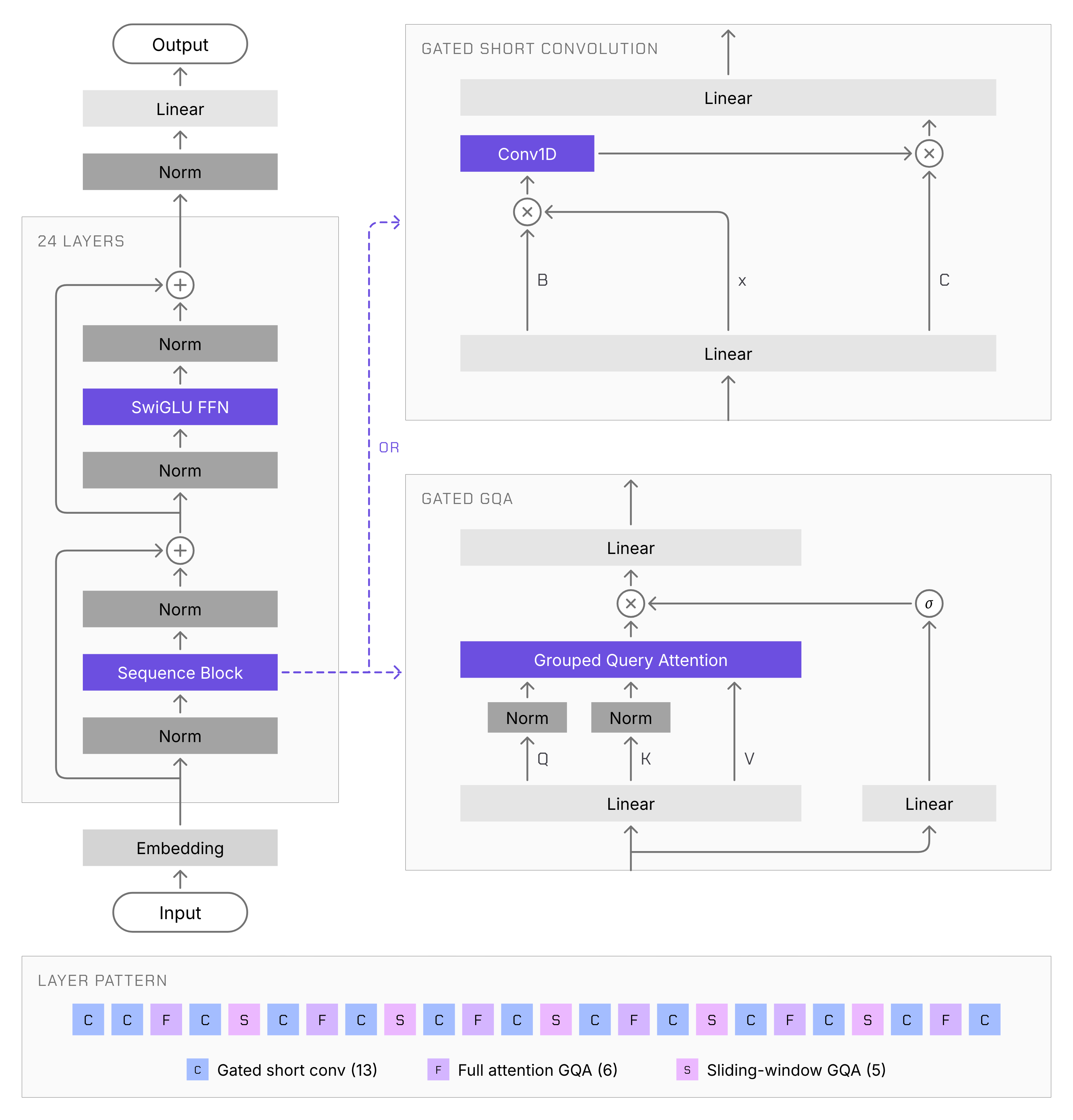
Mizar, a 159.3M-parameter ALM, is introduced, a recipe that brings together architecture, data, and three-stage training to build Mizar, a 159.3M-parameter ALM that surpasses the previous best-performing ALM below 200M parameters on all three benchmarks.
Kai-Yang Li, Shaobo Han, Yue Tian et al.· 0 citations
Decoupled Proactive Safety Monitoring is formalized along three dimensions: whether to intervene, when to intervene, and what the risk is, to address proactive intervention limitations in Large Language Models.
Jia-Peng Sun, Yu-Jin Zhou, Han Zhu et al.· 0 citations
Jev has the lowest cost and median response time among the evaluated configurations, while hosted language models achieve higher baseline accuracy and Rankings by baseline accuracy differ from rankings by correctness across every condition and repeat, although small differences in the latter do not establish a general...
Fan Zhang, Yan-Kai Chen, Zhuo-Han Xie et al.· 13 citations· ⚡1
This work isolates SLM graph reasoning from navigation and traceability capability by employing the THESEUS navigation and traceability framework and using frozen, off-the-shelf SLMs as local action policies, and results motivate evaluating SLM graph reasoning beyond endpoint accuracy alone.
Eduin E. Hernandez, Sergio A. Diaz, Luis F. Garcia et al.· 0 citations
A three-stage pipeline that transforms abundant unlabelled observation-trajectory pairs into a substrate for language-conditioned control and achieves a Driving Score of 87.98 and a Success Rate of 70.46%, matching or surpassing fully supervised baselines on the closed-loop Bench2Drive benchmark.
Alexey Zakharov, Kemal Oksuz, P. Dokania· 0 citations
Vision-language models (VLMs) are deployed as zero-shot judges of image aesthetics, and panels of several models are recommended, on thin evidence, as the way to make such judges reliable. On two human-rated datasets, EVA and PARA, we find that a panel of holistic judges never significantly beats its best member, wheth...
Amit Jadhav, Shaurya Beriwala, Beomjin Kim· 0 citations