Aug 2026· Microsystem Technologies· Vol 32· 0 citations· 56 references
TL;DR
This work presents a multi-mode energy harvesting-assisted edge computing architecture, integrated with a joint optimization of energy consumption and communication behaviour, aimed at enhancing the sustainability, reliability and autonomy of operation in an industrial IoT context.
Smart buildings increasingly depend on dense, distributed sensing infrastructures to improve energy efficiency, indoor environmental quality and operational flexibility. However, large-scale IoT/WSN deployment is still constrained by wiring effort, battery maintenance and limited access to sensing locations. Energy har...
The proposed intelligent energy harvesting framework provides an efficient and sustainable power solution for next-generation Internet of Things (IoT) devices by integrating multi-source ambient energy harvesting, Maximum Power Point Tracking (MPPT), hybrid energy storage, and machine learning-based energy management....
B. Vaishnavi, K. Siddhartha, B. Ramprasad· International Journal of Cre...· 0 citations
This letter investigates an uncrewed aerial vehicle (UAV)-enabled Internet of Things (IoT) architecture that integrates wake-up radio (WuR) and energy harvesting for sustainable device operation, and reveals a tradeoff between transmission frequency and energy consumption.
Anthony Khairallah, Nour Kouzayha, Tareq Y. Al-Naffouri et al.· IEEE Wireless Communications...· 0 citations
An Energy-Efficient IoT Sensor Network Framework that integrates intelligent energy harvesting techniques, adaptive sleep scheduling, edge computing, and Artificial Intelligence (AI)-based routing algorithms to optimize power consumption and extend network longevity is proposed.
Dabbeta Ganapathi Dabbeta Ganapathi, Halavath Vijaya Halavath Vijaya, P. K. P Kavitha· International Journal of Sci...· 0 citations
This survey provides an exhaustive analysis of the existing routing protocols, clustering, optimization and energy management techniques in WSNs and their benefits and drawbacks, with emphasis on EH-WSNs, Cognitive WSNs, and EH-CWSNs.
A. V. Anuja, B. Meena Preethi· International Journal of Sci...· 0 citations
An AI-driven framework integrates hybrid energy harvesting mechanisms with Deep Reinforcement Learning (DRL) to optimize energy efficiency in IoT systems and achieves up to 300% improvement in network lifetime under low-energy harvesting conditions.
Elkhatim Abuelysar Elmobarak Mohammed Ali· Islamic University Journal o...· 0 citations
Related blog posts
MIT News · Artificial Intelligence· news.mit.eduOct 15, 2026
A new computational approach reveals how cells communicate to assemble into tissues. This could accelerate stem cell engineering, improve disease models, and inform therapies.
Microsoft Research Blog· microsoft.comOct 15, 2026
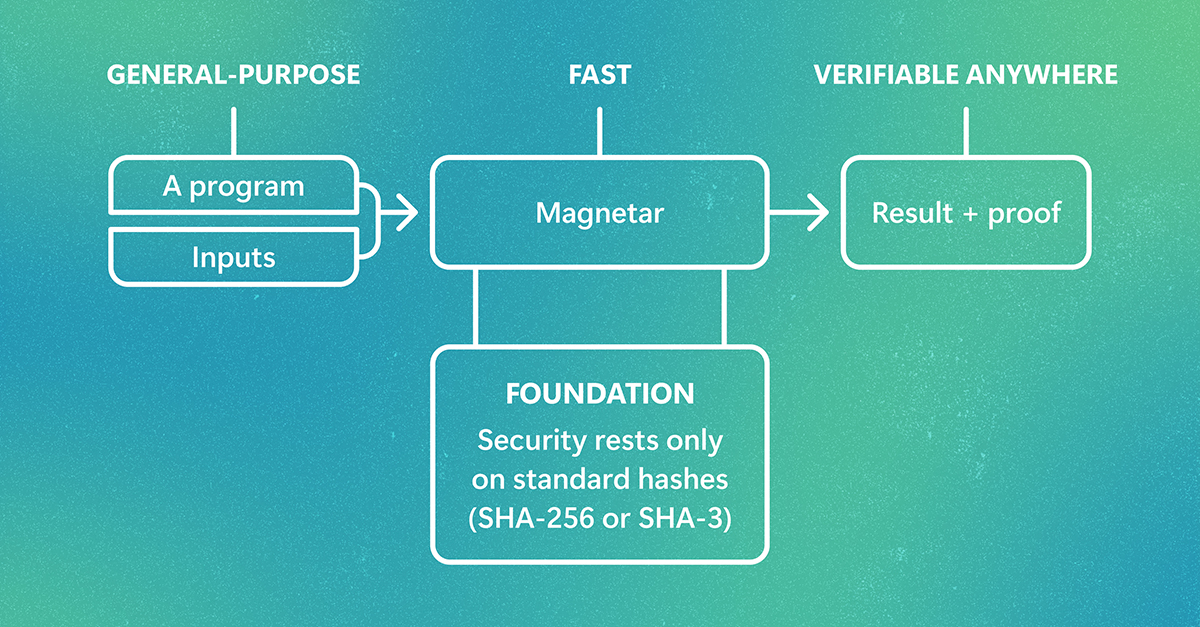
Zero-knowledge proofs can verify computing results without rerunning workloads or exposing sensitive data. Magnetar helps bring them into the mainstream with support for standard programming languages, major speed gains, and quantum-resistant security. The post Proof-based general-purpose computing with Magnetar appeared first on Microsoft Research.
MIT News · Artificial Intelligence· news.mit.eduOct 8, 2026