Serving as catalysts for real-time insight, predictive intelligence, and autonomous decision-making, digital twin (DT) systems are driving transformation in industrial domains. In global logistics supply chains, the coupling of DTs with AI/ML, edge computing, and 5G/6G connectivity offers powerful capabilities for market volatility warning and risk detection. However, these advantages also introduce profound cybersecurity, privacy, and trust challenges. Existing standards such as ISO/ IEC 27000, 3GPP TS 33.501, and ITU-T Y. 3172 partly address generic security and AI frameworks, but lack specificity toward dynamic, AI-driven DT ecosystems. This paper presents a next-generation AI-driven digital twin framework tailored for logistics supply chains, emphasizing security, interoperability, and standard alignment. We map cross-layer threats to curated countermeasures, and evaluate their alignment with international standards. We analyze standardization gaps and propose extensions and new research directions for DT-aware AI governance, cross-domain interoperability, and real-time assurance. A case study on logistics volatility detection demonstrates how this framework supports resilient, trustworthy operations. Finally, we delineate a roadmap for standardization-driven secure DT ecosystems, aiming to guide practitioners, standard bodies, and researchers.
Global supply chains are passing through a period of unusual volatility, in which lean, efficiency-first models have repeatedly failed to absorb systemic shocks such as pandemics and geopolitical disruption. This paper reviews how artificial intelligence (AI) and three of its closest enabling technologies, namely the Internet of Things (IoT), digital twins, and predictive analytics, are being used to build supply chains that are both more resilient and more sustainable. Drawing on peer-reviewed journal research published within the last five years, the study brings together streams of work that are usually examined separately and asks how they fit together within the emerging vision of Industry 5.0 and increasingly autonomous supply chains. The synthesis indicates that AI shifts supply chain management from a reactive posture to an anticipatory one. IoT supplies the real-time visibility that supports proactive risk management, predictive and prescriptive analytics turn that data into early warning of demand shifts and disruption and into recommended action, digital twins allow managers to stress-test recovery options before acting on them, and blockchain adds a layer of trust to the data exchanged between partners. The review finds that the value of these technologies appears when they are integrated into a coherent, layered architecture rather than adopted in isolation, and that their contribution to resilience runs through underlying capabilities such as visibility, flexibility, and collaboration rather than through the technology alone. It also examines the obstacles that continue to slow adoption, including implementation cost, cybersecurity exposure, a persistent digital skills gap, interoperability with legacy systems, and the limited interpretability of complex models. The paper proposes a layered reference architecture for autonomous supply chains and sets out recommendations for practitioners and policymakers seeking a technology-driven, human-centric, and environmentally responsible supply network.
Koo Kee Wai, Lee Man Yi, Saw Tsu Koon et al.· International journal of res...· 0 citations
The study explores how integrating AI, the Internet of Things (IoT), and big data analytics can enable the integration of DTs to support real-time operations management, informed decision-making, and the mitigation of vulnerabilities in logistics management.
Hiba Marva Kallidumbil Nachithadathil, Halaa Dhahi Al Waleed Al Maymani, D. Roy· Digital Technologies Researc...· 0 citations
The automotive industry is evolving rapidly, but many supply chains still operate through disconnected systems that limit visibility, delay decisions, and reduce resilience. This research presents a practical blueprint for transforming traditional supply chains into an AI-native synchronized ecosystem.
Readers will gain insights into how Multi-Agent Artificial Intelligence (MAAI), Digital Twins, Reinforcement Learning, predictive analytics, and mathematical optimization can work together to synchronize production, supplier collaboration, inventory, warehousing, yard operations, and transportation within a unified enterprise architecture.
The paper goes beyond theory by introducing a vendor-neutral reference architecture, implementation roadmap, governance framework, and technology stack that organizations can adapt to their own digital transformation journey. It also identifies key operational inefficiencies observed across global automotive OEMs and demonstrates how AI can improve visibility, resilience, planning agility, and enterprise-wide decision-making.
I look forward to engaging with researchers, supply chain professionals, and industry leaders to exchange ideas and shape the future of intelligent automotive supply chains.
P. Mishra· International Journal For Mu...· 0 citations
The convergence of AI, Blockchain, IoT, Digital Twins, quantum computing, and FKF spectral methods constitutes a decisive research direction for next-generation logistics, especially when examined through the lens of Smart Mobility and Intelligent Transportation Systems [9]. Future work must prioritize real-time fusion of connected-vehicle and smart-infrastructure data streams, construction of scalable multi-resolution Digital Twin environments that span both supply chains and urban mobility networks, development of trustworthy AI models for predictive and prescriptive control, realization of practical hybrid quantum–classical optimizers for the combinatorial problems that dominate intelligent transportation and logistics, and computationally efficient multi-scale spectral analysis of complex temporal dynamics. Empirical validation across transportation, inventory, energy, and disruption scenarios incorporating advances in battery technologies [5], [10], solar-assisted and hybrid vehicle architectures [12], [28], and Industry 5.0 human-centric automation [27]will be indispensable. Realizing these advances will transform intelligent logistics from a conceptual integration into operational, sustainable, and resilient supply-chain systems that fully exploit the emerging capabilities of smart mobility ecosystems [1]–[28].
S. A., Shinde S. M., Harle S. M.· International Journal of Cre...· 0 citations
A convergent supply-chain architecture is proposed by integrating Digital Twins with Artificial Intelligence (AI), Blockchain, Internet of Things (IoT), quantum computing, and FKF spectral analysis to address the growing complexity, uncertainty, and disruption risks in modern logistics. Digital Twins enable real-time virtual representation, simulation, monitoring, and disruption-response analysis, while AI extracts predictive and prescriptive intelligence from continuous IoT-generated data. Blockchain strengthens data integrity, transparency, security, and end-to-end traceability across supply-chain transactions. Quantum annealing supports computationally intensive logistics optimization problems, including routing, resource allocation, scheduling, and ULD configuration. FKF-based spectral features provide a mathematical representation of shifts, modulation effects, lead-time behavior, transient variations, and multiscale supply-chain dynamics. The integration of these complementary technologies enables information to flow from real-time sensing and trusted data management to spectral analysis, predictive intelligence, simulation, and advanced optimization. Together, the proposed architecture provides an adaptive, intelligent, sustainable, and resilient framework for monitoring supply-chain conditions, anticipating disruptions, evaluating alternative decisions, and improving overall logistics performance.
S. A., Shinde S. M., Harle S. M.· International Journal of Cre...· 0 citations
Global supply chains have grown into intricate, interdependent networks spanning continents, industries, and thousands of stakeholders. This complexity, combined with recent disruptions from pandemics, geopolitical conflict, and climate volatility, has exposed the fragility of traditional logistics management. Artificial intelligence (AI) has emerged as a transformative force capable of addressing these vulnerabilities by enabling predictive, adaptive, and autonomous decision-making across the supply chain lifecycle. This paper examines the current and emerging applications of AI in global supply chain logistics, including demand forecasting, warehouse automation, route optimization, predictive maintenance, and risk management. It further explores the challenges associated with AI adoptiondata governance, workforce displacement, cybersecurity, algorithmic bias, and infrastructure costsbefore considering the trajectory of AI-driven logistics over the next decade, including autonomous transportation, digital twins, and sustainability-oriented optimization.
Geeta Yadav· Journal of business and mana...· 0 citations
Related blog posts
MIT News · Artificial Intelligence· news.mit.eduSep 2, 2026
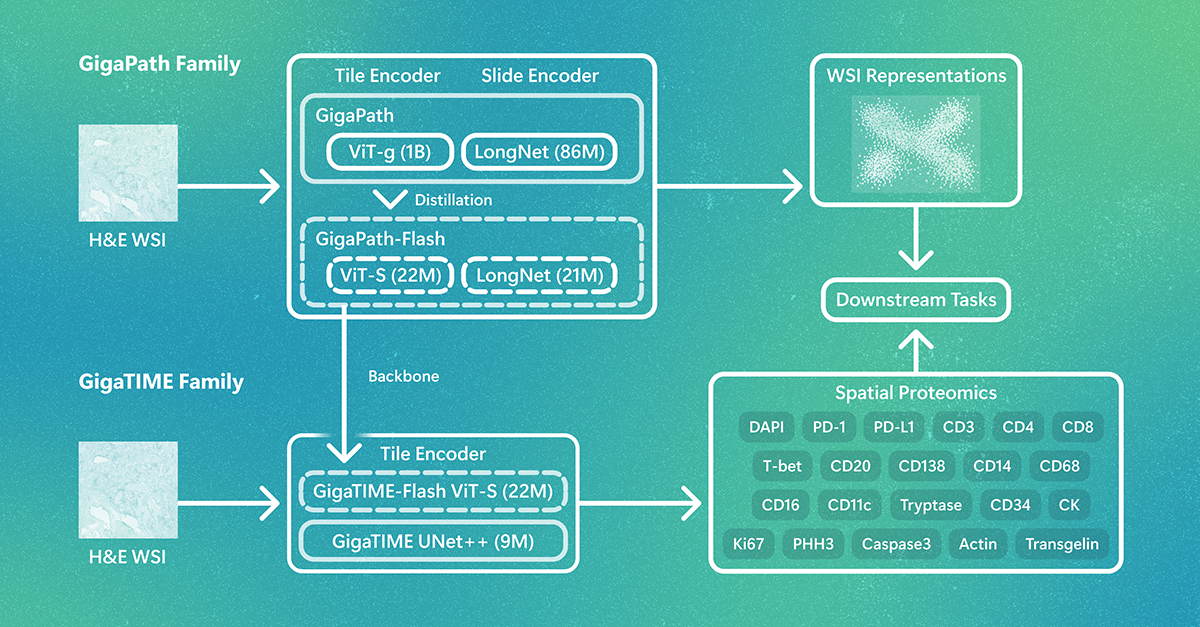
What if pathology foundation models could do more with less? GigaPath-Flash and GigaTIME-Flash cut computational demands while maintaining strong performance, opening the door to larger studies and broader exploration. The post GigaPath-Flash and GigaTIME-Flash: Toward population-scale discovery with efficient pathology foundation models appeared first on Microsoft Research.
MIT News · Artificial Intelligence· news.mit.eduAug 31, 2026
With millions of users across the world, Julia has been used to conduct cutting-edge research and to design new drugs, jet engines, heat pumps, and more.
MIT News · Artificial Intelligence· news.mit.eduAug 27, 2026
A new machine-learning framework aims to improve the success rate of computational protein design while moving away from results that reproduce sequences found in nature.