Skip to content

HADES: Heterogeneity-Aware Dependent Task Offloading in Collaborative Edge Networks

Oct 2026 · IEEE Transactions on Mobile Computing · Vol 25, pp. 15879-15896 · 0 citations · 58 references

Abstract

Regarding the computational intensity and stringent latency requirements of modern applications comprised of many dependent subtasks, collaborative edge computing (CEC) emerges as a solution to guarantee the service-level objectives (SLOs) by offloading subtasks to multiple distributed edge servers. However, existing offloading schemes remain inadequate in addressing the stochastic task arrival and diverse task-resource affinity that stems from computational efficiency differences when executing various tasks on heterogeneous resources, leading to suboptimal system performance. Moreover, due to continuous updates in both applications and resources (e.g., hardware and runtime environment) in practical environments, comprehensively evaluating task performance profiles across all resource configurations becomes prohibitively expensive. To address these challenges, we propose heterogeneity-aware dependent task offloading scheme (HADES). We first formulate the problem of minimizing the long-term system energy consumption while guaranteeing average application latency. To optimize task offloading policy without relying on prior knowledge of task-resource affinity, HADES adopts a novel generative diffusion model-based graph reinforcement learning approach. Specifically, HADES employs graph neural networks to handle the graph-structured states of both the edge network and dependent applications, and leverages diffusion model-based policy representation for efficient policy exploration in a large action space. In addition, a Sortino ratio-based latency reward is designed for HADES to achieve risk-aware latency optimization. Extensive evaluations on real-world datasets demonstrate that HADES can reduce the latency and energy consumption by at most 98.1% and 86.9% compared to existing baselines.

View source

Similar papers

#computer vision Review Sep 2017

Agile Software Development Methods: Review and Analysis

This publication proposes a definition and a classification of agile software development approaches and analyses ten software development methods that can be characterized as being "agile" against the defined criterion.

P. Abrahamsson, O. Salo, Jussi Ronkainen et al. · 727 citations · ⚡54
#computer vision Jun 2008

The impact of agile practices on communication in software development

The study shows that agile practices improve both informal and formal communication, but indicates that, in larger development situations involving multiple external stakeholders, a mismatch of adequate communication mechanisms can sometimes even hinder the communication.

M. Pikkarainen, Jukka Haikara, O. Salo et al. · 401 citations · ⚡48
#machine learning Review Open access Oct 2014

Software development in startup companies: A systematic mapping study

The results indicate that software engineering work practices are chosen opportunistically, adapted and configured to provide value under the constrains imposed by the startup context.

Nicolò Paternoster, Carmine Giardino, M. Unterkalmsteiner et al. · 394 citations · ⚡54

Related blog posts

Microsoft Research Blog Jul 13, 2026

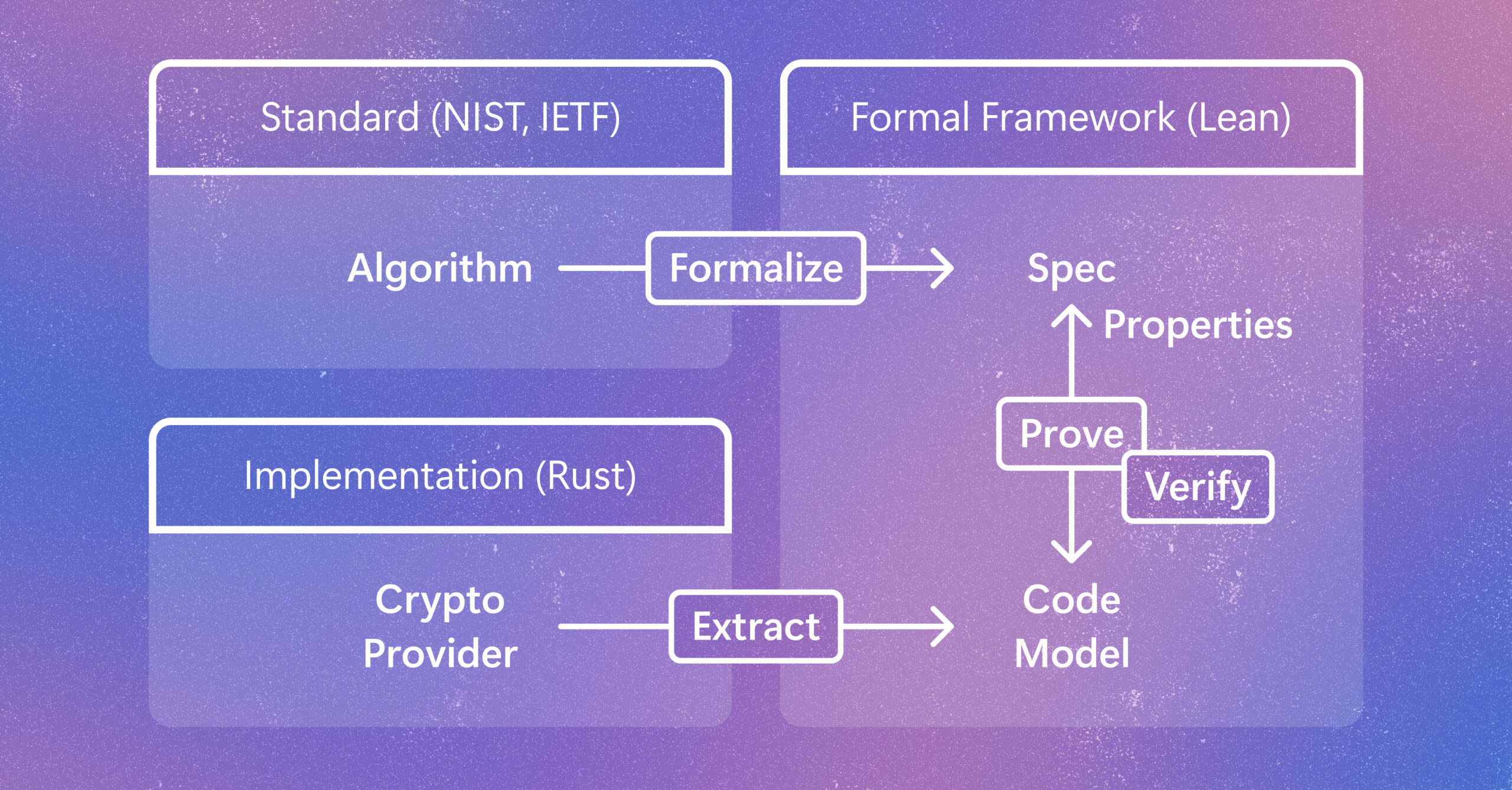
Verifying Rust cryptography in SymCrypt, from standards to code

Cryptographic code supports vital protections in modern computing systems. Learn how a new method helps verify code as developers write it while preserving speed and adaptability as it gets implemented and evolves. The post Verifying Rust cryptography in SymCrypt, from standards to code appeared first on Microsoft Research.

We use cookies to run the site and, with your consent, for analytics and to show ads. See our Cookie Policy.