Oct 2026· IEEE Transactions on Mobile Computing· Vol 25, pp. 16378-16394· 0 citations· 52 references
Abstract
The rapid proliferation of Internet of Things (IoT) and the diversity of services demand for a more efficient and intelligent resource allocation framework to enhance network performance. To this end, we construct a novel satellite-terrestrial integrated network (STIN) integrating multi-access edge computing (MEC) and millimeter wave (mmWave) technologies to explore the coordination gains of communication, caching, and computing resources from a perspective of joint optimization. To be specific, we first formulate the resource allocation issue of joint user association (UA), bandwidth allocation (BA), coded caching (CC), and computation allocation (CA), with the aim of maximizing the quality of experience (QoE) for heterogeneous services while guaranteeing diversified quality of service (QoS) requirements of user equipments (UEs). An alternating iterative optimization strategy is then developed, where convex optimization is applied to solve the CC and CA subproblems, while a multi-agent proximal policy optimization (MAPPO) algorithm is designed to jointly optimize UA and BA subproblem. Finally, extensive simulations demonstrate that our proposed algorithm achieves superior QoE performance compared to existing three benchmark algorithms.
An advanced Deep Reinforcement Learning (DRL)-based approach is proposed for efficient dynamic spectrum allocation in 6G MIMO systems and it is guaranteed that the recommended FMTQA-ADMRL-CA can allocate the spectrum efficiently and robustly in 6G MIMO systems than the existing methods.
Asha Aiyappan, Jafar A. Alzubi, M. P. Rajakumar et al.· Scientific Reports· 0 citations
This research is among the first to employ MARL to this extent, and it offers an end-to-end solution that combines cellular, Wi-Fi, and device-to-device (D2D) communications and considers practical network environments like user mobility and channel conditions.
Nabeel Abdolrazagh Yaseen Alrashedi, Rasool Sadeghi, Wael Hussein Zayer Al-Lamy et al.· Journal of universal compute...· 0 citations
Spectrum efficiency (SE) and energy efficiency (EE) are two fundamental problems in the wireless resource management that need to be jointly optimized. Deep reinforcement learning (DRL) allows near-optimal policy learning via continuous interaction with the environment, which is suitable in complex, dynamic, and high-d...
The ever-growing Wi-Fi data traffic and diverse quality-of-service (QoS) requirements of coexisting stations (STAs) exacerbate the challenges of coordinated resource sharing and spatial-temporal interference mitigation among neighboring access points (APs). This paper proposes a novel multi-AP multi-dimensional resourc...
Wudan Han, Xianbin Wang, Robert Schober· IEEE Transactions on Wireles...· 0 citations
JATO is presented, a framework to jointly tackle the problems of adaptive task offloading and transmission optimization using Deep Reinforcement Learning, and offers a mono-faceted solution, learning a policy to simultaneously determine the best offloading target and the transmission quality.
G. Purnama, Irma Amelia Dewi, A. Langi et al.· Journal of ICT Research and...· 0 citations
Satellite-terrestrial integrated communication and computing network (STICCN) faces the core challenge of supporting highly heterogeneous tasks with differentiated requirements, under stringent dual constraints of communication and computing resources. Most existing scheduling schemes focus on macroscopic system perfor...
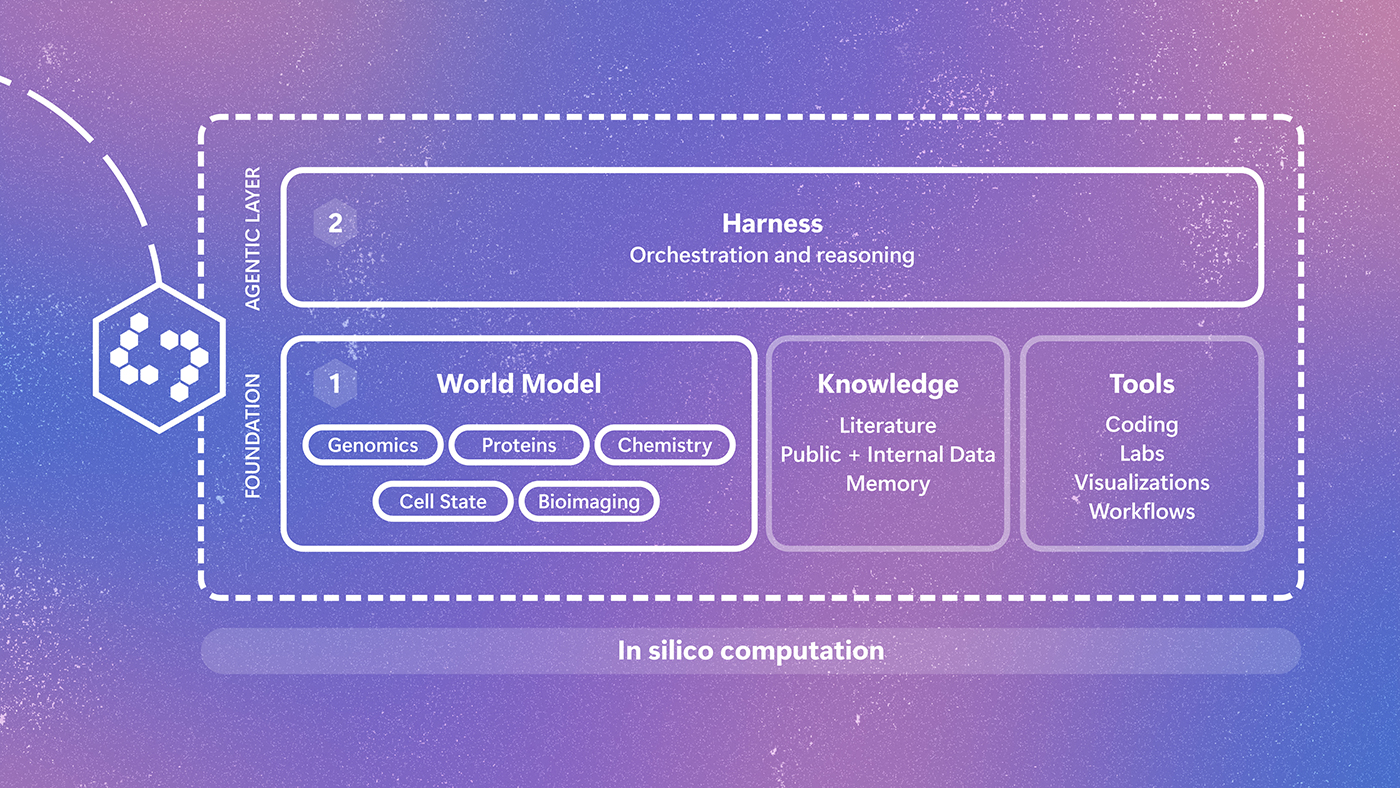
Biology doesn't operate in silos, and neither should the AI representation of it. Quine is an early-stage research effort to create a multimodal world model of biology. By connecting insights across biological scales and modalities, Quine helps scientists computationally search a space far larger than intuition allows and prioritize hypotheses before they reach the lab. Experimental results provide important feedback, helping researchers sharpen future research directions. The post Introducing Q…