Skip to content

Secure Split Offloading and Trajectory Design for UAV-Assisted Multi-Exit Collaborative DNN Inference

Oct 2026 · IEEE Transactions on Mobile Computing · Vol 25, pp. 18924-18939 · 4 citations · 41 references

Abstract

Collaborative inference (CI) has emerged as a promising paradigm in mobile edge computing, where deep neural network (DNN) models are split and collaboratively processed by wireless devices and edge servers to reduce communication overhead and improve inference efficiency. Unmanned aerial vehicles (UAVs) with agile mobility present significant potential as edge servers in such systems. However, the limited computation resources of UAV servers and the inherent security vulnerabilities of ground-to-air channels pose challenges to UAV-assisted CI. To address these issues, this paper proposes a novel UAV-assisted CI framework via multi-exit DNNs and cooperative jamming. Specifically, this framework integrates an early-exit (EE) mechanism to alleviate computational burdens and employs a cooperative UAV jammer to transmit jamming signals to ensure secure split offloading. Our objective is to minimize total energy consumption while maximizing inference accuracy, subject to inference delay requirements and secure offloading rate constraints by jointly optimizing dual-UAV trajectories, EE selection, DNN partitioning, and computation resource allocation. To solve the formulated mixed-integer nonlinear programming problem, we first derive a closed-form solution for computation resource allocation and reformulate the optimization problem accordingly. We then develop an efficient alternating optimization algorithm that employs the successive convex approximation method for UAVs’ trajectory design and a discrete whale optimization algorithm for EE selection and DNN partitioning. Extensive simulation results demonstrate that the proposed scheme outperforms baselines.

View source

Similar papers

Multi-Objective Optimization for Secure UAV-Assisted Data Collection via Intermittent Jamming

This paper forms a multi-objective optimization problem aimed at minimizing AoI and energy consumption while maximizing the eavesdropper’s Bit Error Rate by jointly optimizing UAV trajectories, time scheduling, and jamming parameters and develops an efficient iterative algorithm.

Xiujuan Zhang, Yujiao Han, Shiyu Wang et al. · 0 citations
Preprint Aug 2026

Resource Allocation for Secure Dual-UAV-Assisted ISAC System

This work investigates the secrecy performance of a dual-uncrewed aerial vehicle (UAV)-assisted secure ISAC system, and maximizes the average secrecy rate by optimizing user scheduling strategies, time allocation, transmit power, and UAV trajectories.

Hongjiang Lei, Jianshuo Geng, Ki-Hong Park et al. · 1 citation
Conference Aug 2026

Joint Secure and Energy-Efficient Computation Offloading: Trajectory and IRS Reflective Design for UAV-MEC Networks

Airborne edge computing built on unmanned aerial vehicles delivers viable solutions for heavy computational workloads in crowded metropolitan areas. Reconfigurable Intelligent Surfaces (RIS/IRS) eliminate radio signal obstructions from buildings and mitigate risks of unauthorized data eavesdropping. Two critical bottle...

Zhen-Qi Huang, Feng Yao, Xiang Lin et al. · 0 citations
#edge computing Open access Sep 2026

Utility Maximization Integrating Secrecy, Energy Consumption, and Latency for UAV-Assisted MEC Systems via Dual-Replay TD3

A utility maximization problem to jointly optimize UAV trajectory and task-offloading decisions in UAV-assisted MEC systems against multiple eavesdroppers is formulated and an enhanced twin-delayed deep deterministic policy gradient (TD3) framework integrating Hindsight Experience Replay (HER) and Prioritized Experienc...

Yi-Shan Zang, Ying Su, Jing Zhang et al. · 0 citations

Joint Optimization of Delay and Energy Efficiency for UAV Task Offloading and Cooperative Scheduling

The growing demand for multimedia services in Internet of Things (IoT) networks has significantly increased the traffic load on backhaul links, making Mobile Edge Caching (MEC) a key technology for reducing content delivery latency. Unmanned Aerial Vehicles (UAVs) can serve as mobile aerial caching nodes that complemen...

Tao Zhang, Tao Xu, Ze-Kai Liu et al. · 0 citations

Related blog posts

Microsoft Research Blog Sep 29, 2026

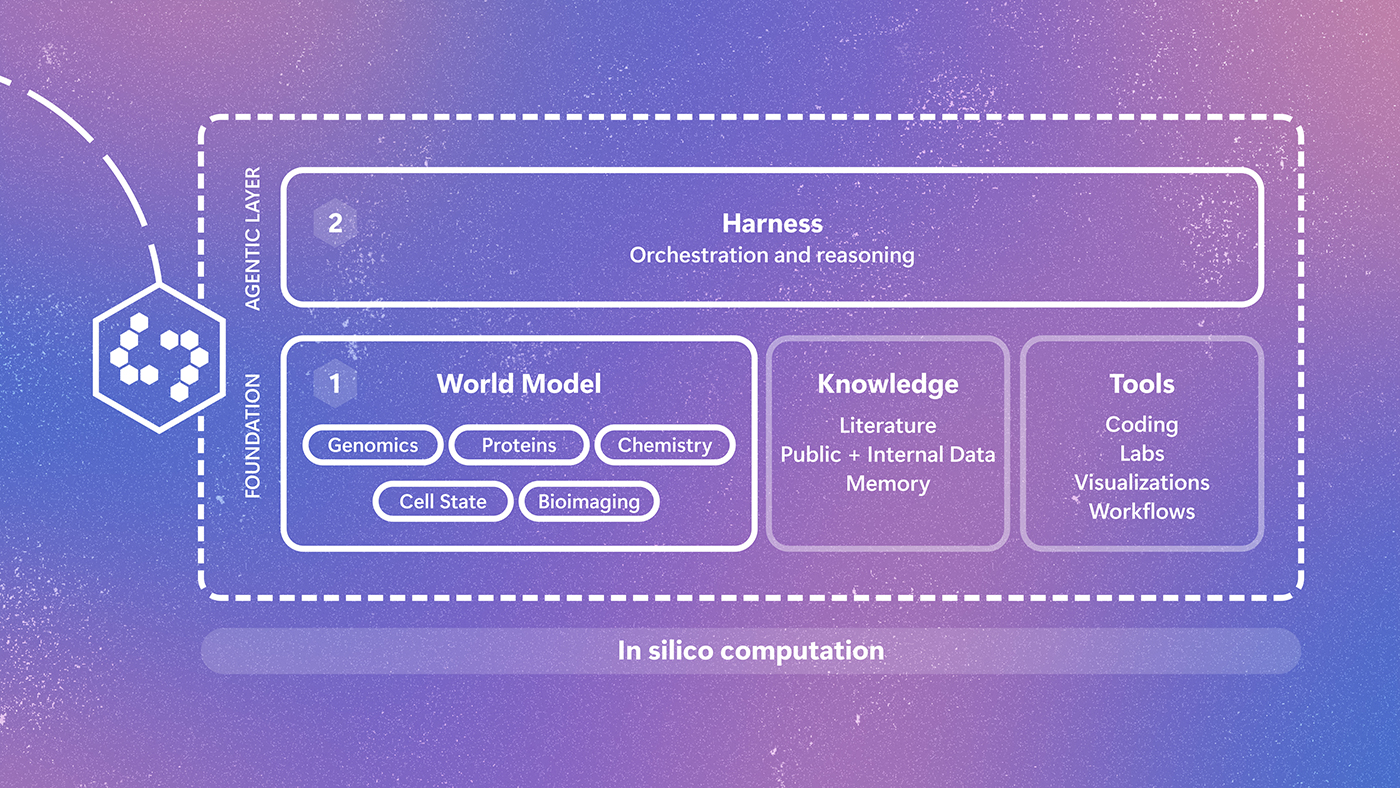
Introducing Quine: An AI research system designed for the complexity of biology

Biology doesn't operate in silos, and neither should the AI representation of it. Quine is an early-stage research effort to create a multimodal world model of biology. By connecting insights across biological scales and modalities, Quine helps scientists computationally search a space far larger than intuition allows and prioritize hypotheses before they reach the lab. Experimental results provide important feedback, helping researchers sharpen future research directions. The post Introducing Q…

We use cookies to run the site and, with your consent, for analytics and to show ads. See our Cookie Policy.