Single-cell foundation models (scFMs) increasingly rely on large-scale transcriptomic pretraining, yet expanding pretraining data can yield diminishing gains while substantially increasing computational cost. Our data scaling analyses showed that incorporating biological knowledge, including cell-level text annotation and gene-level regulatory information, provided additional scaling dimension than simply increasing data size. Motivated by this observation, we present scKITE, a simple yet effective scFM that integrates cell-annotation and gene-regulatory supervision into a shared transcriptomic Transformer encoder through lightweight auxiliary decoders. These decoders are used only during pretraining and subsequently discarded, yielding a general-purpose encoder enriched with biological knowledge for downstream applications. With only 179,067 pretraining samples, i.e., less than 0.5\% of those used by previous strong scFMs, scKITE outperformed these models across diverse downstream tasks, highlighting knowledge-enhanced pretraining as a promising paradigm for biologically grounded scFMs.
Evaluating four single-cell foundation models suggests that current single-cell foundation models provide useful representations for some downstream tasks in zero-shot conditions but do not yet offer a universal replacement for task-specific methods.
Yasmine Gaballa, Somaia K. Ahmed, T. Abdelaal· bioRxiv· 0 citations
It is shown that with the right training recipe, heterogeneous proteomics data can improve the learned representations of single-cell RNAseq samples, demonstrating strong out-of-distribution generalization and suggesting that multimodal pretraining is a promising path toward more informative biological foundation model...
Maximilien Burq, Peter Cimermancic, Charlie Kim et al.· bioRxiv· 1 citation
Single-cell foundation models (scFMs) are transforming computational biology by enabling generalizable, task-agnostic representations for versatile single-cell analysis. Despite their progress in facilitating rapid deployment for downstream tasks, off-the-shelf scFMs still have some overlooked concerns: (I) (Pretrainin...
Tian-Yu Liu, Fan Zhang, Jia-Yuan Chen et al.· 0 citations
Single-cell foundation models have shown strong potential for learning transferable representations from large-scale transcriptomic data. However, many existing approaches rely on reconstructing masked gene expression values, creating a potential mismatch between observation-space reconstruction and the goal of learnin...
Predicting cellular response to chemical perturbations is critical to build virtual cells, yet experimentally profiled compounds cover only a small fraction of this space. Existing models struggle to generalize to unprofiled compounds, as they typically treat drugs as isolated identifiers without encoding their mechani...
Despite the rapid progress of single-cell RNA sequencing (scRNA-seq), accurate cell type annotation remains a major challenge. Existing approaches often struggle with sparse and heterogeneous expression profiles, insufficient genelevel modeling, and complications such as zero inflation and class imbalance. To address t...
Ziqi Yuan, Hong-Wei Zhang, Cheng Liu et al.· IEEE transactions on computa...· 0 citations
With $2.1 million funding from Google.org, the open-source Public Transit Intelligence Hub will unify public transit monitoring, operations, and passenger communication.
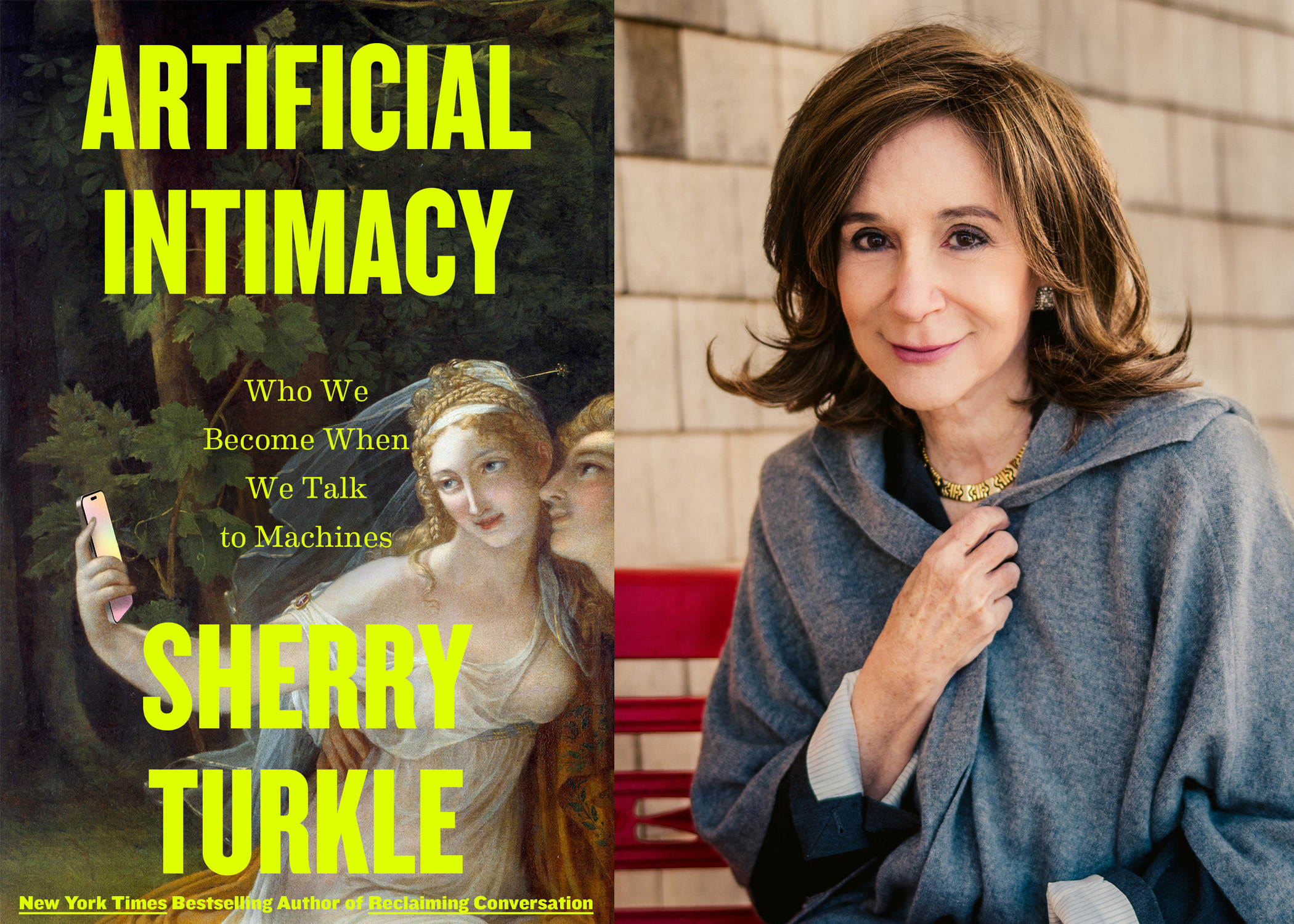
Professor Sherry Turkle’s new book, “Artificial Intimacy,” offers a withering critique of chatbots and the antisocial dynamics she believes they encourage.
We use cookies to run the site and, with your consent, for analytics and to show ads.
See our Cookie Policy.