Skip to content

Evaluating AI Tutoring at the Speed of Innovation: Practitioner-Led Micro-Randomised Trials of an AI Tutoring Platform in GCSE Science

Sep 2026 · 0 citations · 16 references
Computer Science

TL;DR

It is argued that the value of micro-RCTs for educational AI lies not in replacing definitive evaluation with small studies, but in enabling a rapid, cumulative evaluation architecture in which randomised estimates can be generated, replicated and updated as technologies and their implementation evolve.

Abstract

Artificial intelligence (AI) systems in education are developing on timescales that sit uneasily with conventional evaluation. By the time a large-scale trial has been designed, delivered, analysed and published, the technology under study may have changed materially. This creates a temporal problem for evidence-informed education: the need for timely evidence can encourage reliance on weak observational or usage data, while conventional rigorous evaluation may produce evidence too slowly to guide rapidly evolving practice. We examine teacher-led micro-randomised controlled trials (micro-RCTs) as one response to this problem. The empirical case is a four-week multisite individually randomised evaluation of Medly, an AI-powered tutoring platform, in GCSE Biology, Chemistry and Physics in English secondary schools. Of 929 students completing baseline assessment, 644 completed post-testing. In the primary ITT analysis, students allocated to Medly achieved higher post-test attainment than students undertaking business-as-usual self-directed revision (Hedges'g = 0.33, 95% CI 0.18 to 0.48). Positive estimates were observed in Physics (g = 0.31), Chemistry (g = 0.32) and Biology (g = 0.52), with no evidence of differential impact by disadvantage status. Greater platform engagement was associated with higher attainment, but these post-randomisation analyses are treated as exploratory rather than causal. Attrition was substantial (30.7%), outcome measures were curriculum-aligned rather than standardised, and process evaluation response was limited. We therefore interpret the findings as preliminary. We argue that the value of micro-RCTs for educational AI lies not in replacing definitive evaluation with small studies, but in enabling a rapid, cumulative evaluation architecture in which randomised estimates can be generated, replicated and updated as technologies and their implementation evolve.

View source

Similar papers

#computer vision Review Sep 2017

Agile Software Development Methods: Review and Analysis

This publication proposes a definition and a classification of agile software development approaches and analyses ten software development methods that can be characterized as being "agile" against the defined criterion.

P. Abrahamsson, O. Salo, Jussi Ronkainen et al. · 727 citations · ⚡54
#computer vision Jun 2008

The impact of agile practices on communication in software development

The study shows that agile practices improve both informal and formal communication, but indicates that, in larger development situations involving multiple external stakeholders, a mismatch of adequate communication mechanisms can sometimes even hinder the communication.

M. Pikkarainen, Jukka Haikara, O. Salo et al. · 401 citations · ⚡48
#machine learning Review Open access Oct 2014

Software development in startup companies: A systematic mapping study

The results indicate that software engineering work practices are chosen opportunistically, adapted and configured to provide value under the constrains imposed by the startup context.

Nicolò Paternoster, Carmine Giardino, M. Unterkalmsteiner et al. · 394 citations · ⚡54

Related blog posts

Microsoft Research Blog Nov 5, 2026

Formally verifying agent-written full-stack web apps with PDD Kit

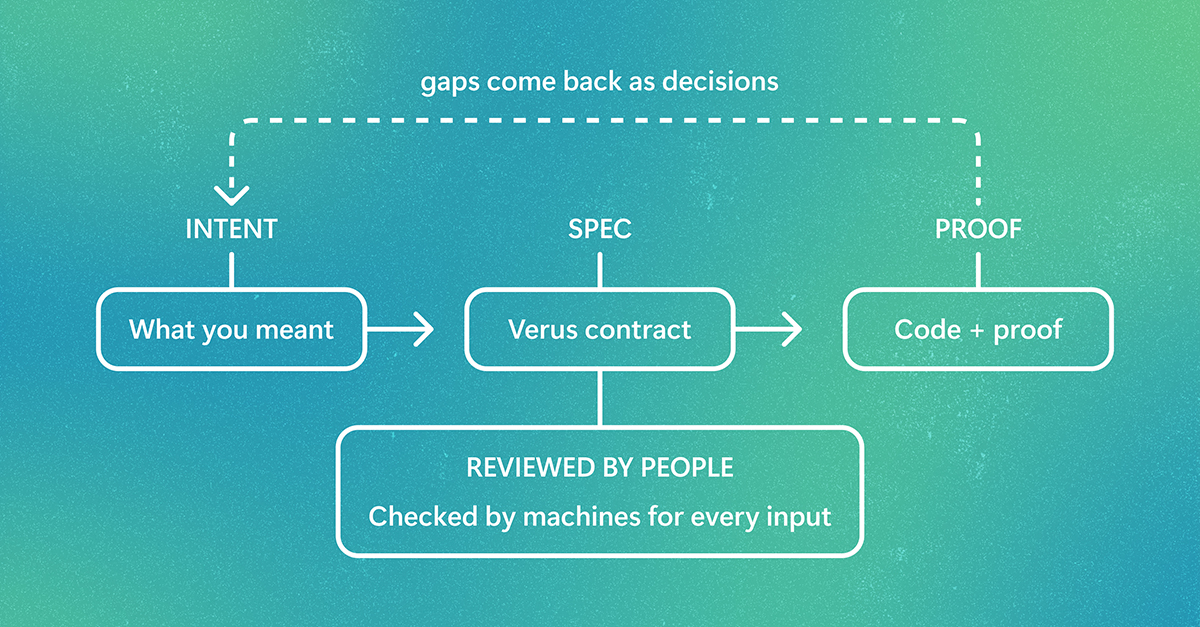
AI agents can generate code at a scale that’s hard for humans to review line-by-line. PDD Kit helps ensure the code is doing what the developer intended by creating formal specifications and testing against them. It converts developer intent into a Verus specification, proves AI-generated code meets it for every input, and uses tests where proofs aren't practical. Developers review intent, not every line. The post Formally verifying agent-written full-stack web apps with PDD Kit appeared first o…

MIT News · Artificial Intelligence Oct 28, 2026

Making machines that can listen

Professor Paris Smaragdis develops computers with superhuman hearing for applications like speech recognition, music understanding, and environmental monitoring.

MIT News · Artificial Intelligence Oct 23, 2026

Reinforcing the value of human understanding at MIT

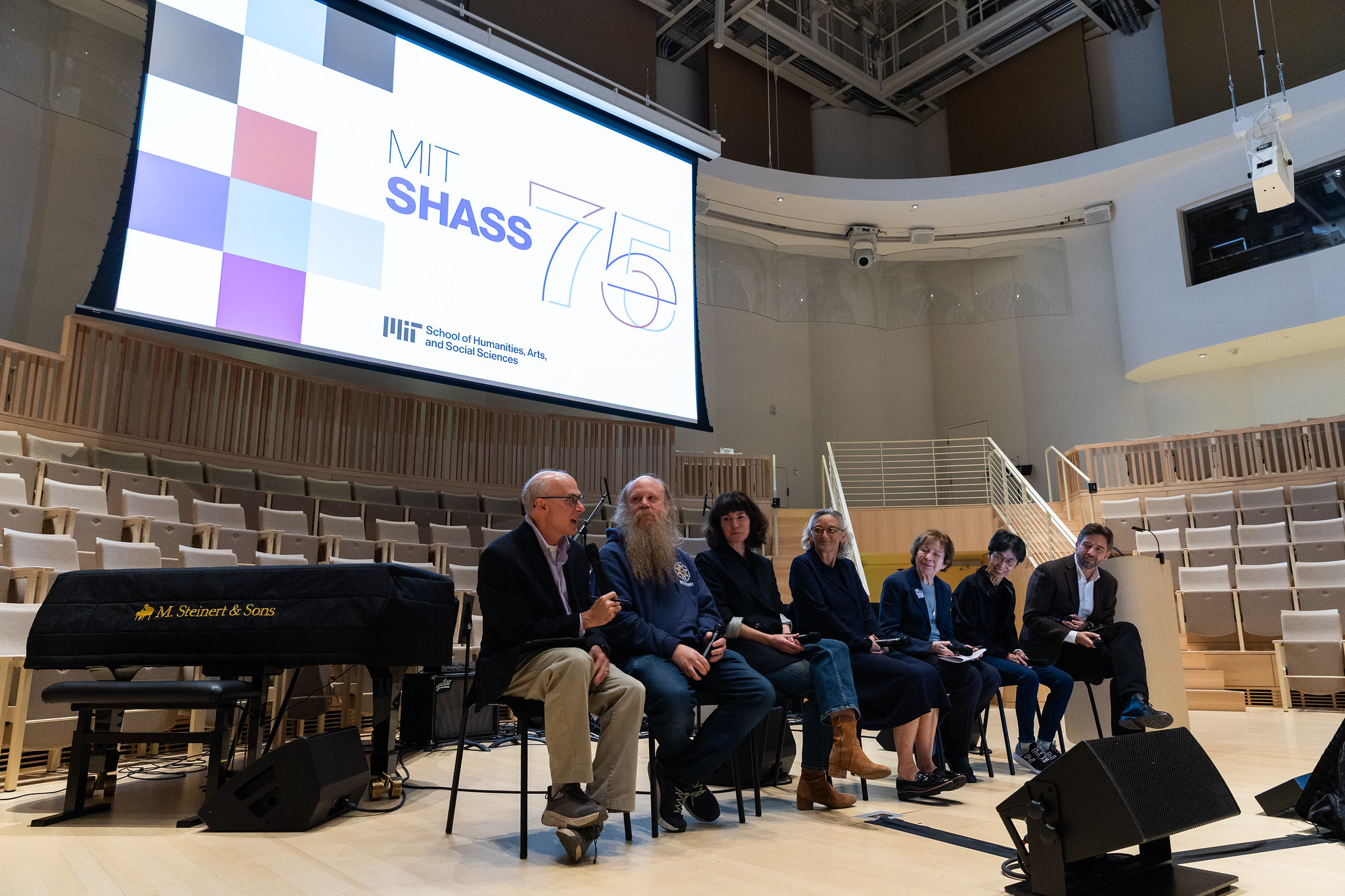
During the School of Humanities, Arts, and Social Sciences’ 75th Anniversary Symposium, President Sally Kornbluth said “MIT has never needed your particular insight and guidance more than we do now.”

We use cookies to run the site and, with your consent, for analytics and to show ads. See our Cookie Policy.