Ultra-low-dose computed tomography (ULDCT) reduces radiation exposure but suffers from severe noise that degrades diagnostic image quality. Existing deep learning-based denoising methods are typically trained in an organ-specific fashion, resulting in limited generalization across heterogeneous multi?organ imaging scenarios. Foundation models present a promising all-in-one paradigm for unified multi-organ denoising. However, their architectures suffer from poor interpretability and rely on heuristic training strategies. To address these limitations, we propose an architecture?interpretable foundation model based on the deep dictionary network (DDN) for unified multi-organ ULDCT denoising. Inspired by multilayer sparse representation theory, DDN cascades convolutional sparse coding layers with iterative soft-thresholding, providing inherent architectural interpretability. Furthermore, a dynamic dictionary module and a threshold generation module are embedded within each layer to enhance representation ability. We conduct DDN pre-training on more than one million multi-organ normal-dose CT images by recovering clean images from Gaussian-noised inputs. Sparse regularization is additionally imposed on latent feature representations, guiding the network to learn compact and noise-robust priors. The complete architecture is jointly fine-tuned on multi-organ ULDCT datasets, enabling a single unified model to perform denoising across diverse anatomical regions. Extensive experiments validate that our proposed method achieves state-of-the?art performance and consistently surpasses competing ULDCT methods across all mul
This publication proposes a definition and a classification of agile software development approaches and analyses ten software development methods that can be characterized as being "agile" against the defined criterion.
P. Abrahamsson, O. Salo, Jussi Ronkainen et al.· arXiv.org· 727 citations· ⚡54
The study shows that agile practices improve both informal and formal communication, but indicates that, in larger development situations involving multiple external stakeholders, a mismatch of adequate communication mechanisms can sometimes even hinder the communication.
M. Pikkarainen, Jukka Haikara, O. Salo et al.· Empirical Software Engineeri...· 401 citations· ⚡48
The results indicate that software engineering work practices are chosen opportunistically, adapted and configured to provide value under the constrains imposed by the startup context.
Nicolò Paternoster, Carmine Giardino, M. Unterkalmsteiner et al.· Information and Software Tec...· 394 citations· ⚡54
The possibility of inferring high-dimensional data inference in a model that consists of a prior and an auxiliary differentiable constraint given some additional information is considered, thereby allowing a range of potential applications in adapting models to new domains and tasks.
Alexandros Graikos, Esmeralda S. Whitammer, N. Jojic et al.· Neural Information Processin...· 316 citations· ⚡15
It is proved that any global minimizer of the trajectory balance objective can define a policy that samples exactly from the target distribution, and empirically demonstrate the benefits of the trajectories balance objective for GFlowNet convergence, diversity of generated samples, and robustness to long action sequenc...
Esmeralda S. Whitammer, Moksh Jain, Emmanuel Bengio et al.· Neural Information Processin...· 302 citations· ⚡60
Related blog posts
Microsoft Research Blog· microsoft.comAug 11, 2026
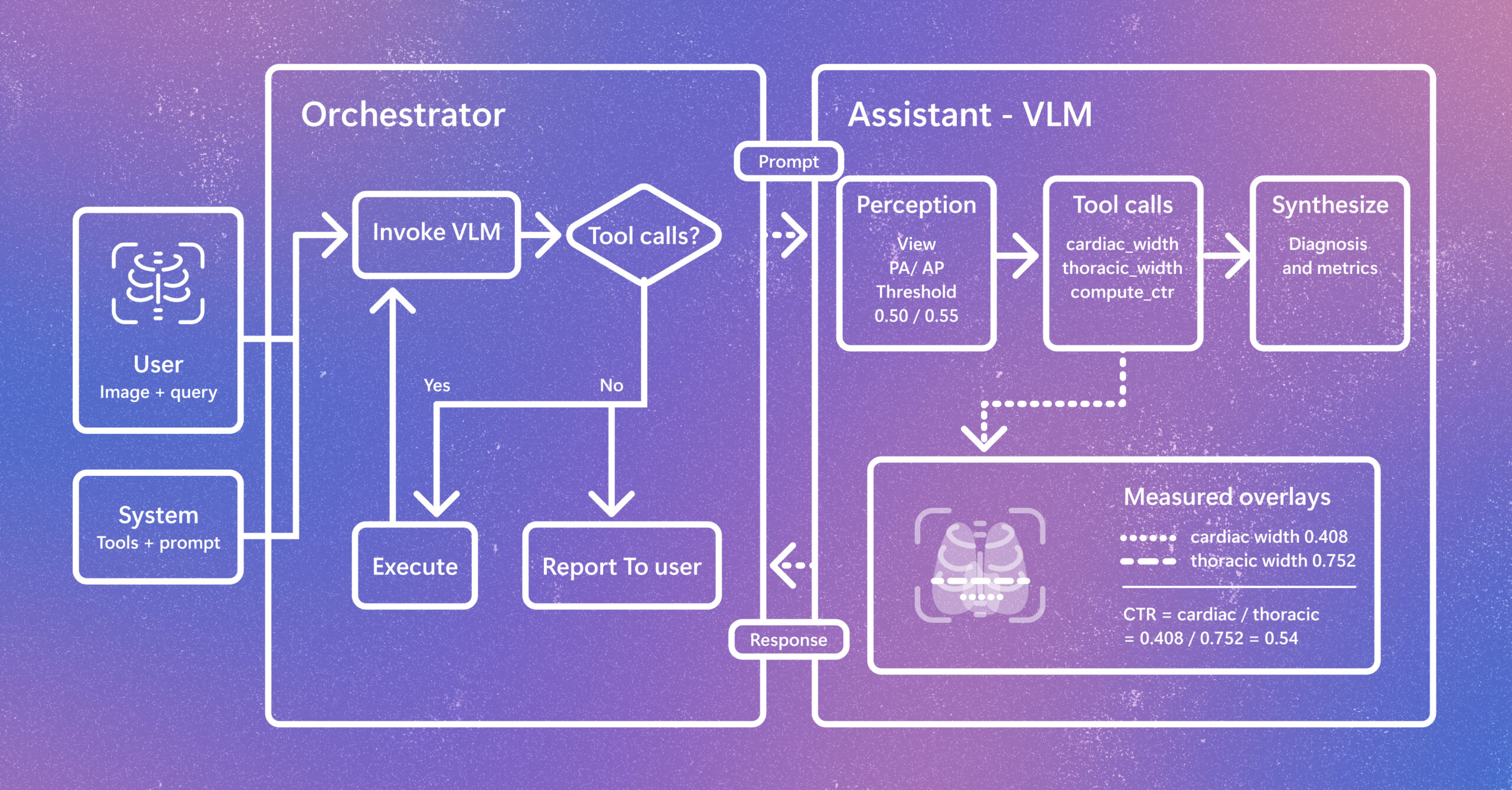
Radiology AI is evolving beyond report generation. CARE-X explores a unified approach that combines flexible reasoning, calibrated predictions, and measurement-based tools for chest X-ray interpretation. The post Introducing CARE-X: Towards Clinically Useful Radiology VLMs with Auxiliary Supervision, Reward-Aligned Learning, and Tool-Augmented Measurement appeared first on Microsoft Research.
Jennifer Neville did not want to go into computer science—but that’s exactly where she landed. Neville discusses the starts and stops that led to her professional sweet spot and her work identifying “surprising failures” making it hard for AI to handle complexity. The post What AI gets wrong and what failure teaches us appeared first on Microsoft Research.
MIT News · Artificial Intelligence· news.mit.eduOct 6, 2026