Skip to content
#machine learning #computer vision Preprint Open access

Can Knowledge Transfer Parameters Be Learned? LePoKet for Efficient Robotic Vision

Yanick C. Tchenko Felix Mohr Hicham Hadj-Abdelkader Hedi Tabia
Sep 2026
Machine Learning Computer Vision

Abstract

Efficient perception is central to robotic systems operating under constrained computation, memory, and latency budgets. Knowledge transfer from larger pretrained models offers a practical route to stronger compact perception networks, but existing approaches commonly rely on fixed distillation objectives or manually designed interaction mechanisms. Building on Hereditary Knowledge Transfer (HKT), we propose LePoKet (Learnable Parameter Optimization for Knowledge Transfer), a structural transfer framework that embeds knowledge inheritance directly into the forward computation. LePoKet introduces a block-wise Extract-Transform-Mix interface whose interaction parameters are optimized jointly with the child network through a Learnable Genetic Attention (LGA) operator, without auxiliary distillation losses or temperature scaling. We first characterize the mechanism on CIFAR-10 and CIFAR-100 using ResNet parent-child pairs, obtaining relative error reductions of 24.57% and 25.1%, respectively, over standard child training. We then evaluate LePoKet for dense motion estimation by integrating it into a compact RAFT-based optical-flow model trained only on FlyingChairs and FlyingThings3D. LePoKet improves the compact RAFT baseline from 2.21 to 1.92 EPE on Sintel Clean, from 3.35 to 3.01 on Sintel Final, and from 7.51 to 6.39 on KITTI. A direct comparison with HKT further shows that LePoKet improves CIFAR-10 accuracy from 92.40% to 93.40% while achieving the best Sintel Final and KITTI errors among the evaluated compact transfer variants, with comparable performance on Sintel Clean. These results demonstrate that learnable structural transfer generalizes across recognition and motion perception tasks and provides a promising approach for efficient robotic vision.

View source

Similar papers

#computer vision Review Sep 2017

Agile Software Development Methods: Review and Analysis

This publication proposes a definition and a classification of agile software development approaches and analyses ten software development methods that can be characterized as being "agile" against the defined criterion.

P. Abrahamsson, O. Salo, Jussi Ronkainen et al. · 727 citations · ⚡54
#computer vision Jun 2008

The impact of agile practices on communication in software development

The study shows that agile practices improve both informal and formal communication, but indicates that, in larger development situations involving multiple external stakeholders, a mismatch of adequate communication mechanisms can sometimes even hinder the communication.

M. Pikkarainen, Jukka Haikara, O. Salo et al. · 401 citations · ⚡48
#machine learning Review Open access Oct 2014

Software development in startup companies: A systematic mapping study

The results indicate that software engineering work practices are chosen opportunistically, adapted and configured to provide value under the constrains imposed by the startup context.

Nicolò Paternoster, Carmine Giardino, M. Unterkalmsteiner et al. · 394 citations · ⚡54

Diffusion models as plug-and-play priors

The possibility of inferring high-dimensional data inference in a model that consists of a prior and an auxiliary differentiable constraint given some additional information is considered, thereby allowing a range of potential applications in adapting models to new domains and tasks.

Alexandros Graikos, Esmeralda S. Whitammer, N. Jojic et al. · 316 citations · ⚡15

Related blog posts

Microsoft Research Blog Aug 11, 2026

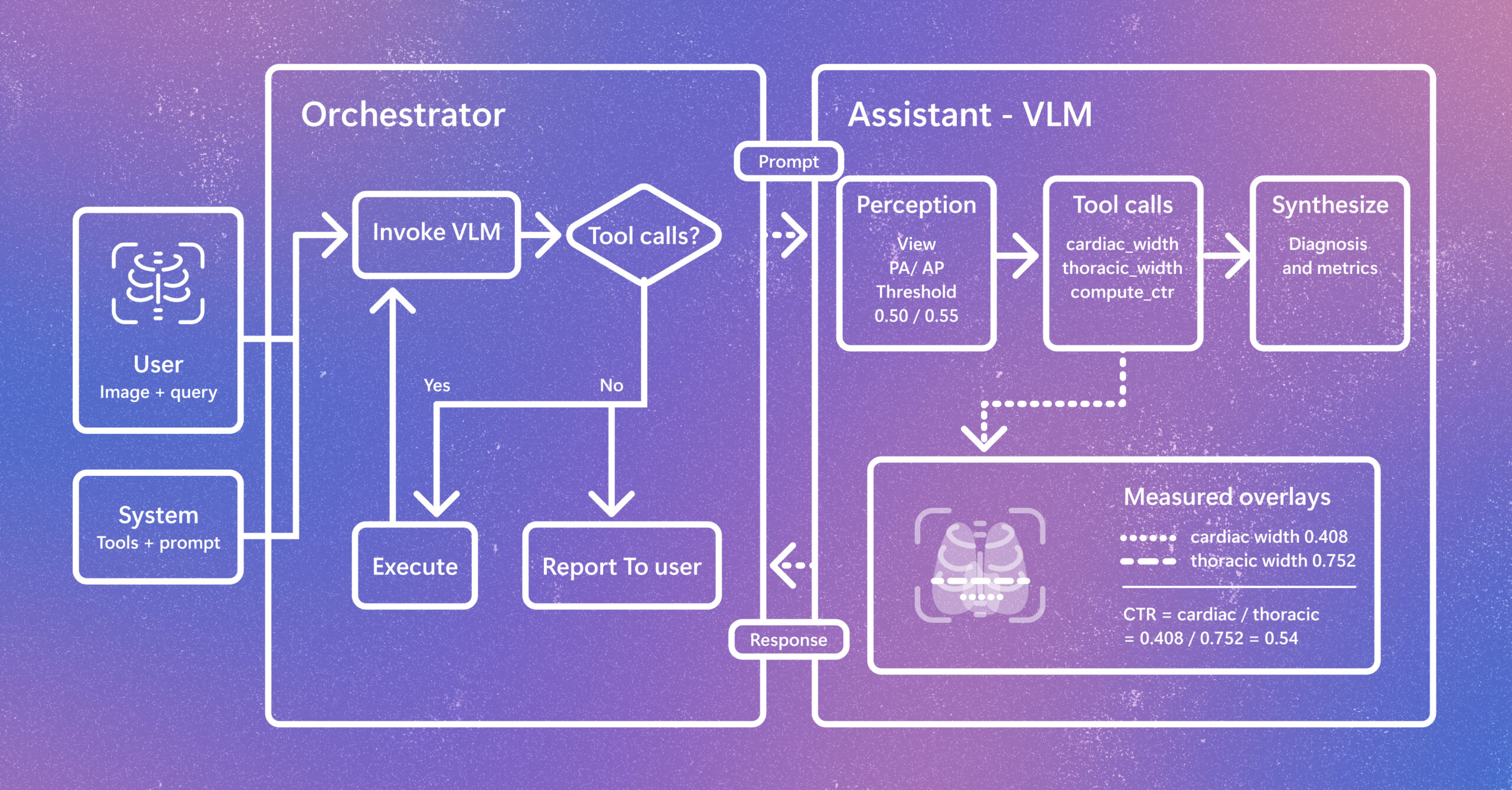
Introducing CARE-X: Towards Clinically Useful Radiology VLMs with Auxiliary Supervision, Reward-Aligned Learning, and Tool-Augmented Measurement

Radiology AI is evolving beyond report generation. CARE-X explores a unified approach that combines flexible reasoning, calibrated predictions, and measurement-based tools for chest X-ray interpretation. The post Introducing CARE-X: Towards Clinically Useful Radiology VLMs with Auxiliary Supervision, Reward-Aligned Learning, and Tool-Augmented Measurement appeared first on Microsoft Research.

We use cookies to run the site and, with your consent, for analytics and to show ads. See our Cookie Policy.