Skip to content

Statistical Inference for Bivariate Functional Causal Discovery

Sep 2026 · 0 citations · 46 references
Mathematics

TL;DR

This paper formalizes a test-based approach for bivariate causal discovery by repurposing goodness-of-fit and independence tests within a hypothesis-testing framework and demonstrates the use and behavior of the inferential framework through simulations that vary the degree of assumption violation, as well as through real-data applications.

Abstract

Causal discovery methods aim to determine the causal direction between variables using observational data. Functional causal discovery methods rely on structural and distributional assumptions to determine directionality but typically lack statistical inference. This paper reviews the statistical guarantees of existing functional causal discovery methods in theory, software, and applied use, highlighting a key gap: the absence of a unified inferential framework that applies broadly across model classes. As a first step toward addressing this gap, we formalize a test-based approach for bivariate causal discovery by repurposing goodness-of-fit and independence tests within a hypothesis-testing framework. Because directionality is determined through two disjoint hypothesis tests, corresponding to four causal discovery outcomes, the approach provides explicit uncertainty quantification and diagnostic insight into assumption violations. Resampling is further used to estimate the rates of causal discovery outcomes, offering an additional layer of inference. We demonstrate the use and behavior of our inferential framework through simulations that vary the degree of assumption violation, as well as through real-data applications. We conclude with practical lessons and recommendations for advancing statistical guarantees in functional causal discovery.


View source

Similar papers

Preprint Aug 2026

Interpretable Causal Discovery via Causal-Effect Constraints

This work considers the task of conditional causal discovery as a Bayesian inference problem, in which the posterior is targeted over causal graphs and parameters conditional on an event such as a causal-effect constraint, and adapts rare-event estimation techniques to perform inference the joint graph-parameter space.

Cixuan Zhang, Guy Van den Broeck, Benjie Wang · 0 citations
Preprint Sep 2026

Functional Causal Discovery via Conditional Covariance Ordering

We study causal discovery where each node is a random function. Previous studies on this topic rely on structural assumptions, e.g., linearity or non-linearity, and distributional assumptions, e.g., Gaussianity or non-Gaussianity. In contrast, we make use of covariance operators to avoid these assumptions. Under functi...

Ke-Yu Li, Ruo-Xu Tan · 0 citations
Preprint Sep 2026

Statistical Inference for Causal Discovery under Selection and Latent Variables via Single-Target Interventions

This work develops a model-free and constraint-query optimal statistical inference framework for causal discovery under latent variables and selection using single-target interventions, and introduces the system-induced subgraph (SIS) to capture the causal relations among system variables while accounting for context v...

Xiao-Tian Hou, Kwangmoon Park, Hong-Zhe Li · 1 citation
Open access Aug 2026

Targeted maximum likelihood estimation for psychological research: From causal identification to statistical inference.

Causal questions have long been central to psychological research, particularly in randomized experiments, while formal causal-inference methods are increasingly being applied to observational and quasi-experimental data. Common outcome-regression and propensity-score approaches can be sensitive to nuisance-model missp...

Devansh Pandey · 0 citations
Preprint Oct 2026

A Formal Graphical Inference Framework for Combining Effect Size with Statistical Significance: Application to Multivariate and Functional Linear Models

To address the critical need for statistical methods that evaluate practical magnitude alongside statistical significance, we introduce a formal graphical inference framework that intrinsically combines effect size with uncertainty. Built upon resampling and global envelopes, this approach provides universality and dir...

Tomáš Mrkvička, M. Kuronen, M. Myllymäki · 0 citations
#machine learning Preprint Sep 2026

Decoupled Causal Discovery

Decoupled Causal Discovery is proposed, a novel decoupling-based perspective that does not rely on conditional independence tests, structure scores, or restrictive functional assumptions, and establishes the theoretical identifiability, soundness, and completeness of DCD.

Zheng Guan, Fei Wu, Kun Kuang · 0 citations

Related blog posts

Microsoft Research Blog Nov 12, 2026

Microsoft Research Focus – Edition #98

What's new in research at Microsoft? Host Anson Ho explores the latest, including AI-powered universal translation, a breakthrough in a 31-year-old mathematics challenge, and advances making AI coding agents faster and more efficient.  The post Microsoft Research Focus – Edition #98 appeared first on Microsoft Research.

Microsoft Research Blog Nov 5, 2026

Formally verifying agent-written full-stack web apps with PDD Kit

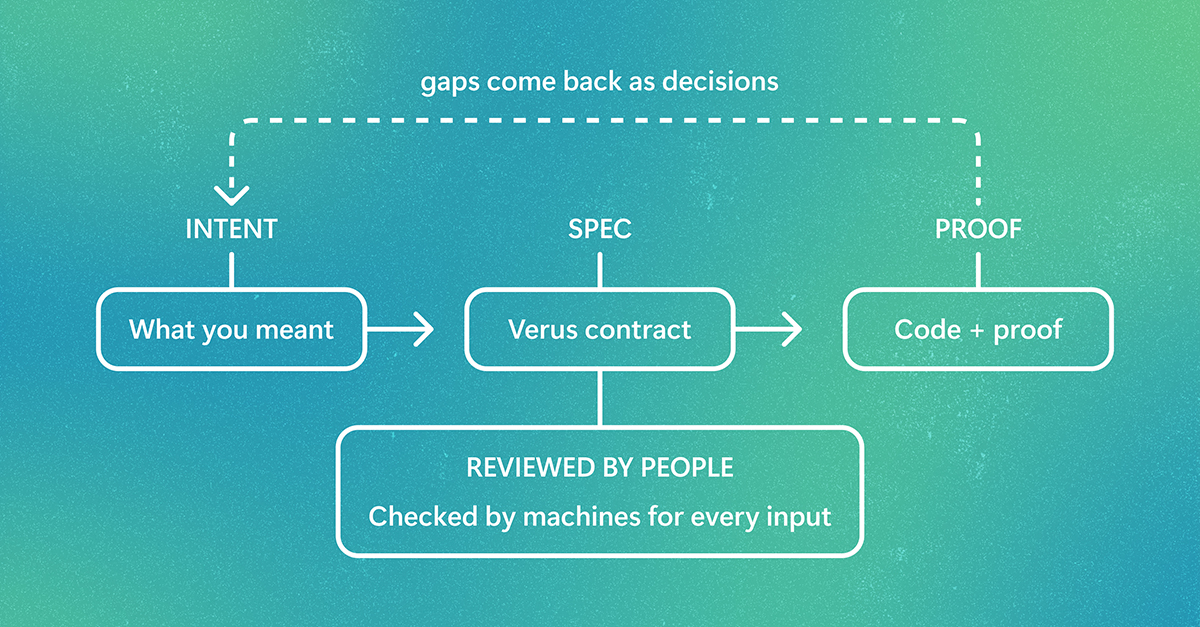
AI agents can generate code at a scale that’s hard for humans to review line-by-line. PDD Kit helps ensure the code is doing what the developer intended by creating formal specifications and testing against them. It converts developer intent into a Verus specification, proves AI-generated code meets it for every input, and uses tests where proofs aren't practical. Developers review intent, not every line. The post Formally verifying agent-written full-stack web apps with PDD Kit appeared first o…

We use cookies to run the site and, with your consent, for analytics and to show ads. See our Cookie Policy.