Skip to content

Prior-matched evaluation of operational Earth-observation classifiers: a three-number reporting method demonstrated on Sentinel-1 internal-wave detection

Jul 2026 · arXiv.org · Vol abs/2607.07146 · 0 citations · 15 references
Computer Science Engineering

Abstract

The Internal Waves Service screens the Sentinel-1 Wave-mode archive for internal solitary waves, routing detections to experts whose adjudication time is the resource the effort exists to conserve. Because attention is the cost of error, precision leads. Its classifier was trained and reported at a one-to-one class balance, fixed before the operational rate could be known. That rate has since emerged at roughly one scene in twenty, and a balanced-test score badly overstates the precision a validator meets. A model that scores 0.794 balanced-test precision scores 0.192 in real operation: the gap is a systematic artefact of reporting at the wrong prior, invisible to the metric most work quotes. We show the mismatch to be an evaluation problem in the costume of a training one at a fixed recall, prior correction and calibration cannot move precision, and answer it with a prior-matched reporting method based on three numbers: balanced-test, operational-prior, and real post-deployment, whose contrast is the honest measure. A precision-first, leakage-controlled development cycle then improves the classifier lever by lever, each promoted only against a pre-registered margin; negative variety and the aggregation head lifting, capacity paying once then stopping, calibration inert, so the honest negatives are as much a result as the gains. Holding recall at a floor of 0.80 and certifying against a sealed, single-read lockbox, the promoted model reports 0.927 precision at the operational prior; an out-of-time check confirms discrimination transfers to unseen periods while a fixed operating point does not. Prior-matched reporting, begin balanced, then move to the prior as the stream reveals it, transfers to any operational Earth-observation service bootstrapping a rare-event detector under a prior it has yet to discover.

View source

Similar papers

#computer vision Review Sep 2017

Agile Software Development Methods: Review and Analysis

This publication proposes a definition and a classification of agile software development approaches and analyses ten software development methods that can be characterized as being "agile" against the defined criterion.

P. Abrahamsson, O. Salo, Jussi Ronkainen et al. · 727 citations · ⚡54
#computer vision Jun 2008

The impact of agile practices on communication in software development

The study shows that agile practices improve both informal and formal communication, but indicates that, in larger development situations involving multiple external stakeholders, a mismatch of adequate communication mechanisms can sometimes even hinder the communication.

M. Pikkarainen, Jukka Haikara, O. Salo et al. · 401 citations · ⚡48
#machine learning Review Open access Oct 2014

Software development in startup companies: A systematic mapping study

The results indicate that software engineering work practices are chosen opportunistically, adapted and configured to provide value under the constrains imposed by the startup context.

Nicolò Paternoster, Carmine Giardino, M. Unterkalmsteiner et al. · 394 citations · ⚡54

Diffusion models as plug-and-play priors

The possibility of inferring high-dimensional data inference in a model that consists of a prior and an auxiliary differentiable constraint given some additional information is considered, thereby allowing a range of potential applications in adapting models to new domains and tasks.

Alexandros Graikos, Esmeralda S. Whitammer, N. Jojic et al. · 316 citations · ⚡15

Related blog posts

Microsoft Research Blog Aug 11, 2026

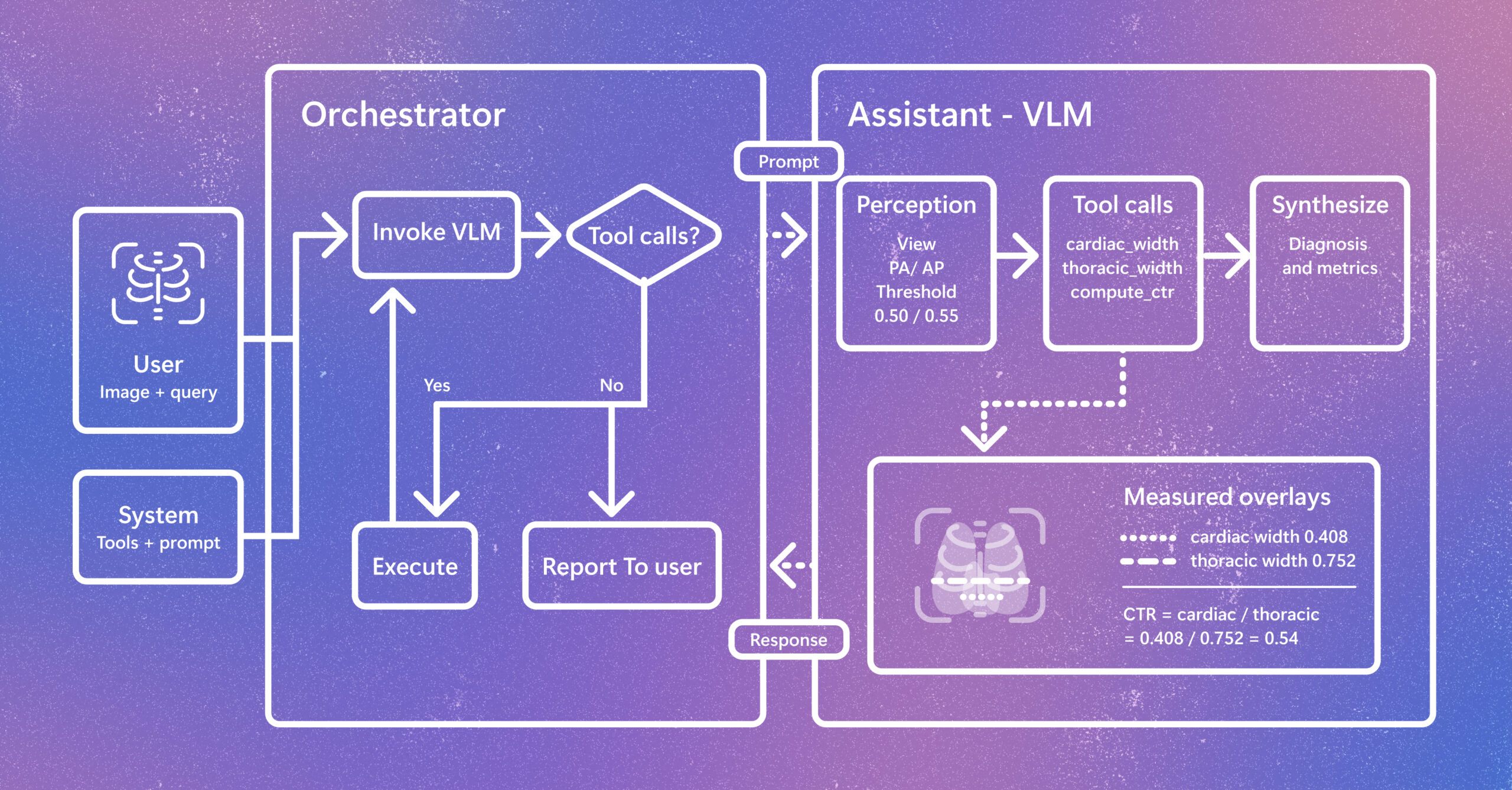
Introducing CARE-X: Towards Clinically Useful Radiology VLMs with Auxiliary Supervision, Reward-Aligned Learning, and Tool-Augmented Measurement

Radiology AI is evolving beyond report generation. CARE-X explores a unified approach that combines flexible reasoning, calibrated predictions, and measurement-based tools for chest X-ray interpretation. The post Introducing CARE-X: Towards Clinically Useful Radiology VLMs with Auxiliary Supervision, Reward-Aligned Learning, and Tool-Augmented Measurement appeared first on Microsoft Research.

MIT News · Artificial Intelligence Oct 23, 2026

Q&A: How AI came to model the “messy” human mind

Assistant Professor Benjamin Lindquist studies how engineers deliberately injected randomness into early AI, giving rise to deep-learning models that sometimes hallucinate.

We use cookies to run the site and, with your consent, for analytics and to show ads. See our Cookie Policy.