FAMOS: Feed-Forward 3D Articulation Modeling from Sparse Observations
Kevin QuTao SunMassimiliano ViolaLiyuan ZhuZhizhuo ZhouSayan Deb SarkarKonrad SchindlerIro Armeni
Sep 2026
Artificial IntelligenceComputer VisionRobotics
Abstract
Modeling articulated objects from sparse monocular views is challenging because each observation reveals only partial geometry and motion evidence. Most feed-forward methods infer articulation from a single observation and therefore rely heavily on learned category-level shape priors. We present FAMOS, a feed-forward model that predicts movable-part segmentation and joint parameters from a sparse, unordered set of partial point clouds. Our model jointly reasons over multiple observations and naturally supports a variable number of inputs, including a single view. To aggregate articulation cues across observations, we introduce a Multi-state Articulation Transformer with alternating state-wise and global attention. We further propose an observed articulation span objective that supervises the motion range each part exhibits across the input observations, encouraging the model to leverage the full observation set. To overcome the limited scale and diversity of existing datasets, we introduce a procedural data generator that synthesizes self-annotated assets during training. Experiments on PartNet-Mobility, ACD, and ArtiCraft-10K demonstrate consistent improvements over both feed-forward and optimization-based baselines. Project page: https://kevinqu7.github.io/famos

This publication proposes a definition and a classification of agile software development approaches and analyses ten software development methods that can be characterized as being "agile" against the defined criterion.
P. Abrahamsson, O. Salo, Jussi Ronkainen et al.· arXiv.org· 727 citations· ⚡54
The study shows that agile practices improve both informal and formal communication, but indicates that, in larger development situations involving multiple external stakeholders, a mismatch of adequate communication mechanisms can sometimes even hinder the communication.
M. Pikkarainen, Jukka Haikara, O. Salo et al.· Empirical Software Engineeri...· 401 citations· ⚡48
The results indicate that software engineering work practices are chosen opportunistically, adapted and configured to provide value under the constrains imposed by the startup context.
Nicolò Paternoster, Carmine Giardino, M. Unterkalmsteiner et al.· Information and Software Tec...· 394 citations· ⚡54
The possibility of inferring high-dimensional data inference in a model that consists of a prior and an auxiliary differentiable constraint given some additional information is considered, thereby allowing a range of potential applications in adapting models to new domains and tasks.
Alexandros Graikos, Esmeralda S. Whitammer, N. Jojic et al.· Neural Information Processin...· 316 citations· ⚡15
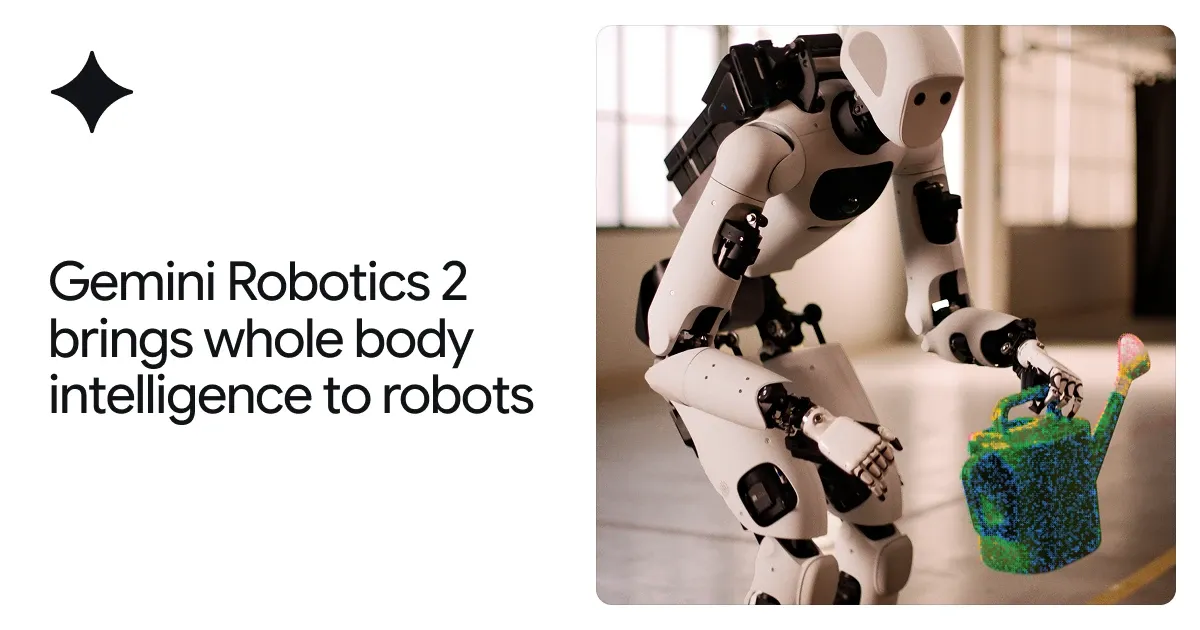
From feet to fingertips — we are teaching robots intelligent whole-body control, fine dexterity, and teamwork to complete a broad range of complex tasks.
Known for his clear and elegant writing style, Bertsekas shaped fields from control and optimization to large-scale computation and artificial intelligence.
We use cookies to run the site and, with your consent, for analytics and to show ads.
See our Cookie Policy.