Sep 2026· AI and Ethics· Vol 6· 0 citations· 36 references
Computer Science
TL;DR
A tiered regulatory framework is developed based on the AI system's function and capabilities, manuscript sensitivity, institutional governance capacity, disclosure, human accountability, reviewer education, and proportionate oversight, which should be governed according to how, where, and for what purpose it is used.
Artificial intelligence (AI) in scholarly peer review has the potential to simplify the work of editors and reviewers through faster triage, automated reporting completeness checks, and scalable synthesis of reviewer comments. However, it also presents practical, ethical, and technical limitations that may place implem...
A. Babker· Frontiers in Artificial Inte...· 1 citation
Generative artificial intelligence (AI) in peer review raises questions of permission, human judgment, and fair participation. This normative and conceptual analysis proposes an author-authorised, journal-authorised, version-synchronised public-preprint pathway for bounded external-AI assistance. It aims to broaden opp...
Kenjiro Shiraishi· IEEE International Software...· 0 citations
Generative artificial intelligence (GenAI) is reshaping scholarly research faster than journals have developed stable norms for its use. This article presents an edited thematic account of a 2026 Joint Statistical Meetings panel that brought together editorial perspectives from mathematical statistics, data science, bi...
Jun Yan, M. Glickman, P. Albert et al.· 0 citations
It is argued that fabricated references constitute falsification, undermiing reproducibility, distorting evidence hierarchies, distorting evidence hierarchies, and compromising scientific integrity.
Mary-Louise E. Millett· Journal of Scholarly Publish...· 0 citations
Artificial intelligence is being integrated into genetics and genomics at a pace that outstrips existing governance mechanisms. This article identifies a structural threat: AI systems operating within the incentive architecture of scientific publishing face systematic pressure to optimize for publishability rather than...
Generative AI (GenAI) is reshaping public sector decision-making, yet empirical understanding of how it reconfigures governance remains limited. Drawing on 24 semi-structured interviews with public officials in Kenya, this interpretive qualitative study examines how GenAI reshapes decision-making authority, accountabil...
Gideon Mekonnen Jonathan· Digital Government: Research...· 0 citations
Enforcing physics-based constraints prevents AI models from generating unreliable predictions for complex nonlinear systems in weather, climate, and turbulent flows.
MIT News · Artificial Intelligence· news.mit.eduNov 20, 2026
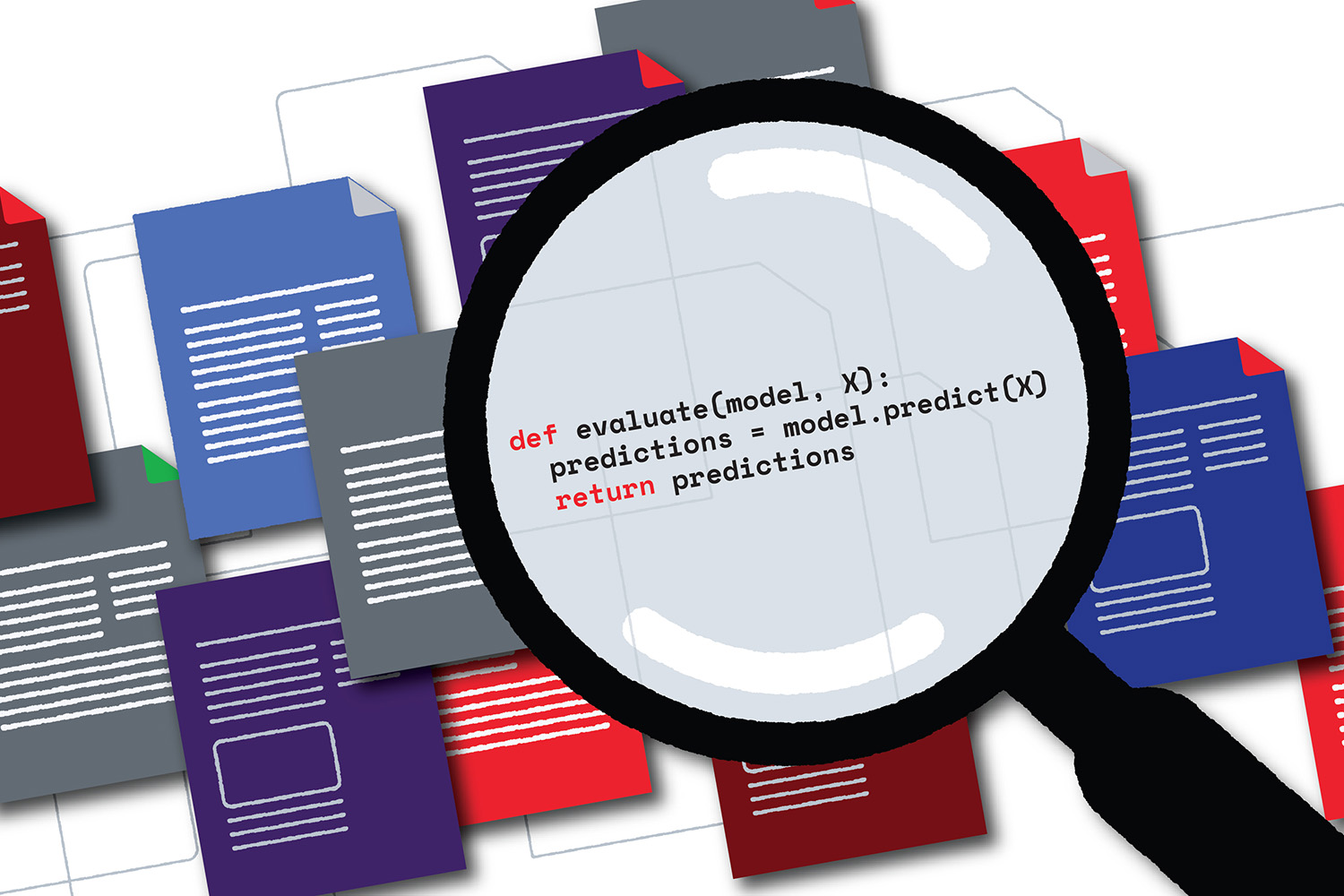
An MIT and Dana-Farber Institute-led team used large language models to examine nearly 4,000 studies and hundreds of code repositories, revealing gaps in the information needed to scrutinize and reuse published research.
We use cookies to run the site and, with your consent, for analytics and to show ads.
See our Cookie Policy.